Affordable World-class Treatment - Accredited Hospitals - Free Treatment Plan in 24 Hrs

Share your details to receive a personalised treatment plan, estimated costs, hospital recommendations, and expert guidance, “completely free.”
Your information is protected with HIPAA-compliant security standards. We only share your details with hospitals after your consent.
The cost of Microwave Endometrial Ablation in Thailand typically ranges between USD 4000 - USD 7500.
However, this cost can vary depending on several factors, including the type and severity of the condition, treatment techniques chosen, the healthcare facility's location and reputation, the treating professionals' experience and specialisation, and the patient's overall health status.
Additionally, factors like the duration of treatment, the need for follow-up care, and the use of advanced technologies or specialised treatments can further influence the overall cost.
A minimally invasive surgical technique called microwave endometrial ablation (MEA) is used to treat menorrhagia or heavy menstrual bleeding. This second-generation endometrial ablation (EA) technique uses microwaves to remove the uterine lining.
Microwave endometrial ablation is a quick, cost-effective, and efficient alternative to hysterectomy, involving a microwave probe to heat and destroy the uterus lining.
| City | Cost (USD) | |
|---|---|---|
| Bangkok | $4,000 – $7,500 | Explore More |

Dr. Shagufta Parveen is a Clinical researcher and medical writer with expertise in clinical pharmacology and pharmacotherapeutics. She holds a B.Pharm and Doctor of Pharmacy (Post-Baccalaureate) degree from Teerthanker Mahaveer University, Moradabad.
During her clinical stint at BLK-Max Super Speciality Hospital and Indraprastha Apollo Hospital, she gained hands-on experience in the Clinical Pharmacology Department. Combining scientific knowledge with strong medical writing skills, Dr. Shagufta develops evidence-based healthcare content, treatment guides, and patient education resources.
Her work focuses on simplifying complex medical concepts while maintaining scientific accuracy, helping readers better understand healthcare advancements and treatment options.
In addition to her writing expertise, she is actively involved in scientific research and has contributed to peer-reviewed publications.
Her research work is accessible through the following links:
https://scholar.google.com/citations?user=lMVK1eIAAAAJ&hl=en
https://carcinogenesis.com/index.php/JOC/article/view/870

General & Laparoscopic Surgeon
33 Years of Experience
Last Reviewed - June 2026
Our dedicated Medical Patient Advisors are here to answer your questions, help you compare treatment options, estimate costs, and guide you through every step of your healthcare journey.
Endometrial ablation is a procedure aimed at destroying the lining of the uterus, known as the endometrium. Its primary goal is to reduce menstrual flow, and in some cases, it may even stop menstruation altogether.
The procedure is minimally invasive, requiring no cuts. A healthcare provider inserts thin instruments through the vagina and into the cervix, which is the natural opening of the uterus.
Various methods are used to ablate the endometrium, including extreme cold, heated fluids, microwave energy, or high-energy radio frequencies, depending on the specific technique chosen.
Endometrial ablation can be performed either in a healthcare provider's office or in an operating room. Factors such as the size and condition of the uterus, the patient's overall health, and the preferences of the healthcare provider determine which method of endometrial ablation is most suitable.
Why it is performed
Endometrial ablation is recommended as a treatment for severe menstrual bleeding. You may consider this procedure if you experience:
Exceptionally heavy periods are often characterized by needing to change a pad or tampon every two hours or less.
Prolonged bleeding lasting more than eight days.
Anemia is defined as a decreased red blood cell count caused by significant blood loss.
In addition to endometrial ablation, your healthcare provider might also suggest birth control pills or an intrauterine device (IUD) to help reduce menstrual flow. These options aim to alleviate heavy bleeding and improve the quality of life for patients experiencing significant menstrual issues.
Following are the different types of Microwave Endometrial Ablation techniques
Microwave endometrial ablation treat abnormal uterine bleeding , especially in women who have heavy, prolonged, or irregular periods that don't go away with other therapies. It is usually advised when drugs or other non-surgical treatments have failed, or when a woman wishes to avoid having a hysterectomy,
If you suffer from excessive or prolonged menstrual bleeding that interferes with your day-to-day activities, bleeding in between periods, or bleeding following menopause, you should consult a physician. If symptoms intensify or over-the-counter remedies don't work, get medical help.
Your doctor may conduct tests or examinations prior to microwave endometrial ablation to ensure that it is appropriate for you.Before the procedure, you'll probably need to fast for a few hours and stop taking some medications.
A device is inserted into the uterus to deliver microwave energy that destroys the uterine lining.The procedure is typically done under anaesthesia and lasts a few minutes.
The average duration for microwave endometrial ablation is between 30-45 minutes.
Without the need for daily medication, endometrial ablation is a safe surgery that can stop heavy monthly flow. Additionally, it's less dangerous than a hysterectomy, which eliminates your uterus completely.It may take several months to see the benefits of endometrial ablation.
After undergoing microwave endometrial ablation, patients may experience slight cramps, spotting, and and avoiding strenuous activities for a few weeks. Usually, over-the-counter drugs are used for pain control, and follow-up visits are planned for observation. It typically takes a few weeks to fully recover, and most women return to their regular activities in a matter of days to a week.
The reported success rate for microwave endometrial ablation (MEA) in treating heavy menstrual bleeding (HMB) is approximately 83%.
Our experienced Medical Patient Advisors have supported 100,000+ patients across 120+ countries with personalised treatment plans, hospital recommendations, cost estimates, and travel assistance, all free.
✓ Free Consultation ✓ No Obligation ✓ Personalized Treatment Plan ✓ Response Within 24 Hours
Your medical info has is HIPAA-style confidential. We never share with hospitals without your consent.

Opinion & Option
We submit the most accurate opinion and options from one or more countries for your review
Consult Privately
Consult with a certified specialist privately on our telemedicine platform even before you decide to travel
Logistics
We handle flights, visas, transfers, and accommodation—so you can focus on your health.
Recovery
Our In-house rehabilitation service packages to better your recovery and treatment outcome

A 41 years old patient from Kenya underwent successful myomectomy procedure in India's leading Jaypee Hospital.

Ms. Fiona Whitecross decided to treat herself at Sri Ram Chandra Medical Center, Chennai. Dr. Radhakrishnan, one of the finest…
In Thailand, the average starting cost for Microwave Endometrial Ablation is USD 4000. In Thailand, Microwave Endometrial Ablation is conducted across many multispecialty hospitals.
The Microwave Endometrial Ablation package cost in Thailand varies from one hospital to another and may offer different benefits. The top hospitals for Microwave Endometrial Ablation in Thailand covers all the expenses related to the pre-surgery investigations of the candidate. The treatment cost usually includes the expenses related to hospitalization, surgery, nursing, medicines, and anesthesia. Stay outside the package duration, post-operative complications and diagnosis of a new condition may further increase the Microwave Endometrial Ablation cost in Thailand.
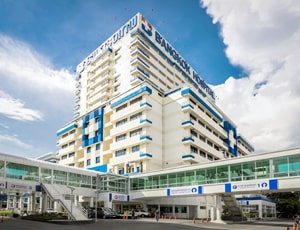
There are many hospitals across the country that offer Microwave Endometrial Ablation to international patients. The top hospitals for Microwave Endometrial Ablation in Thailand include the following:
While the speed of recovery may vary from patient to patient, they are still required to stay for about 10 days after discharge. This time frame is important to ensure that the surgery was successful and the patient is fit to fly back.
Apart from the Microwave Endometrial Ablation cost, there are a few other daily charges that the patient may have to pay. These are the charges for daily meals and accommodation outside the hospital. The extra charges may start from USD 50 per person.
Microwave Endometrial Ablation in Thailand is offered in almost all metropolitan cities, including the following:
It is possible for patients to opt for video telemedicine consultation before they come for Microwave Endometrial Ablation in Thailand. Some of the surgeons offering this service include the following
| Doctor | Cost | Schedule Your Appointment |
|---|---|---|
| Dr. Voratape Kijtavee | USD 81 | Schedule Now |
The patient is supposed to stay at the hospital for about 1 days after Microwave Endometrial Ablation for monitoring and care. During the recovery, the patient is carefully monitored and control tests are performed to see that everything is okay. If required, physiotherapy sessions are also planned during recovery in hospital.
There are more than 3 hospitals that offer Microwave Endometrial Ablation in Thailand. The above mentioned hospitals have the required infrastructure and a dedicated unit where patients can be treated. Apart from good services, the hospitals are known to follow all standard and legal guidelines as dictated by the local medical affairs body or organization.
Some of the best medical specialists for Microwave Endometrial Ablation in Thailand are:
Have your reports reviewed by independent oncology experts to help you make a confident treatment decision, all online within 48 hours.
Upload Your Reports