Your Notifications
All done, no notifications

Laparoscopic Colon Resection Cost in Trabzon

Costs starts from USD9500 to USD16000
Filters

Cost of Laparoscopic Colon Resection in Major cities of Turkey

CityMinimum Cost (USD)Minimum Cost (TRY)Maximum Cost (USD)Maximum Cost (TRY)
AnkaraUSD 9500422750USD 16000712000
AntalyaUSD 9500422750USD 16000712000
BursaUSD 9500422750USD 16000712000
CanakkaleUSD 8550380475USD 14400640800
ElazigUSD 8550380475USD 14400640800
FethiyeUSD 8550380475USD 14400640800
IstanbulUSD 9500422750USD 16000712000
KocaeliUSD 9500422750USD 16000712000
KonyaUSD 9500422750USD 16000712000
SamsunUSD 9500422750USD 16000712000
SivasUSD 8550380475USD 14400640800
TokatUSD 8550380475USD 14400640800
TrabzonUSD 8550380475USD 14400640800
ZonguldakUSD 8550380475USD 14400640800

Need Help Planning Your Treatment Abroad?

Your 24/7 AI Health Assistant

Laparoscopic colon resection is a minimally invasive surgery that removes a damaged segment of the colon in order to cure various colon disorders and avoid complications. Colon cancer, polyps that endoscopy is unable to remove, recurrent or complicated diverticulitis, certain cases of inflammatory bowel disease (such as Crohn's disease and ulcerative colitis), bowel obstruction, damaged or ischaemic colon segments, and benign tumours or strictures are among the conditions for which it is frequently performed.

Consult your doctor if you have prolonged abdominal pain and bloating, black or bloody stools, a rapid change in bowel habits (constipation or diarrhoea), unexplained weight loss and exhaustion, or recurring diverticulitis outbreaks. If you experience signs of bowel obstruction, such as severe abdominal distension, vomiting, difficulty passing gas or stools, or anemia from ongoing blood loss, you should also seek medical attention since prompt diagnosis and treatment can help prevent major complications.

A colorectal surgeon does a clinical evaluation, followed by diagnostic evaluations such as a colonoscopy with biopsy, a CT scan of the abdomen and pelvis, an MRI in certain patients, and tumour markers if cancer is suspected. Along with standard blood tests like CBC, electrolytes, and coagulation profile, patients also have their cardiovascular fitness evaluated using an ECG and a chest X-ray.

The surgeon performs laparoscopic colon excision under general anaesthesia, making small keyhole incisions in the belly and inserting a laparoscope (camera) for visualisation. After the diseased section of the colon is removed, the remaining bowel ends are sutured or stapled back together (anastomosis); in certain situations, a temporary stoma may be made. Following the procedure, the patient is moved to the recovery area for observation after the incisions are sealed.

Depending on the illness condition, the length of colon removal, the existence of adhesions or difficulties, and whether lymph node dissection is necessary in cancer cases, the treatment typically takes two to four hours.

Although laparoscopic surgery is safe, potential dangers include:
  • Bleeding
  • An infection
  • Anastomotic leak (uncommon but dangerous)
  • Bowel damage
  • Ileus, or a brief cessation of bowel movements
  • Clots of blood (DVT/PE)
  • Hernia at the location of the incision
  • In complicated circumstances, conversion to open surgery is necessary.

Smaller incisions with less scarring, less pain compared to open surgery, early mobilisation with a quicker recovery, a shorter hospital stay, a quicker return to regular daily activities, and a lower chance of wound-related complications are just a few advantages of laparoscopic colon resection.

During a laparoscopic colon resection, recovery typically involves a hospital stay of four to seven days (may vary), breathing exercises, early mobilisation, appropriate pain management, and a gradual diet progression from liquids to soft diet to the final normal meal.

Laparoscopic colon resection has a very high success rate, particularly in experienced centres, with great safety and outcomes in most instances, as well as strong cancer results when suitable oncologic principles are followed.

Would you like some help? We are available.

Get Help
Explore Hospitals ( 2 )
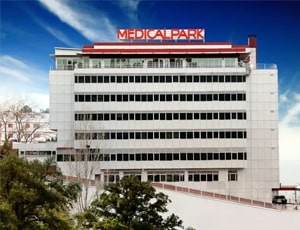
Laparoscopic Colon Resection in Medical Park Trabzon Star Hospital: Costs, Top Doctors, and Reviews

Trabzon, Turkey

  • Joint Commission International, or JCI

Apart from in-detail treatment procedures available, Medical Park Trabzon Star Hospital located in Trabzon, Turkey has a wide variety of facilities available for International Patients. Some of the facilities which are provided by them are Accommodation, Airport Transfer, Choice of Meals, Interpreter, TV inside room. Also listed below are some of the most prominent infrastructural details:

  • Covers a 12,000 sqm of indoor area
  • 107 beds
  • ICU (17 beds)
  • 12 beds in Neonatal ICU (NICU)
  • 6 Operating rooms
Laparoscopic Colon Resection in Medical Park Karadeniz Hospital: Costs, Top Doctors, and Reviews

Trabzon, Turkey

  • Joint Commission International, or JCI

Apart from in-detail treatment procedures available, Medical Park Karadeniz Hospital located in Trabzon, Turkey has a wide variety of facilities available for International Patients. Some of the facilities which are provided by them are Accommodation, Airport Transfer, Choice of Meals, Interpreter, TV inside room. Also listed below are some of the most prominent infrastructural details:

  • Situated in an area of 12.000 square meter
  • Capacity of 107 beds
  • Intensive Care Unit (17 beds)
  • Neonatal ICU (NICU- 12 beds)
  • 6 Operating Rooms
  • Cafeteria

Need Some Advice From Our Experts?

Request a Call Back Now!

Our team of healthcare experts would be happy to assist you

trusted Patientstrusted Patients+99
Trusted by 50000+ Patients
Required | alphabets and spaces
Required | A valid, working email address
Required | A valid contact

Process Involved for Laparoscopic Colon Resection in Trabzon

  • Diagnosis and assessment (imaging, colonoscopy)
  • Planning surgery and evaluating fitness
  • Preparing the bowel (if recommended)
  • Laparoscopic surgery for colon resection
  • Monitoring and recuperation following surgery
  • Review of pathology, particularly in relation to cancer
  • Monitoring and continuing care (referred to oncology if necessary)
  • Colon Cancer
  • Advanced polyps in the colon
  • Diverticulitis
  • Ulcerative colitis and Crohn's disease (selected)
  • Strictures in the colon
  • Blockage of the colon
  • Laparoscopic Right Hemicolectomy
  • Laparoscopic left hemicolectomy.
  • Laparoscopic Sigmoid Colectomy.
  • Laparoscopic Total Colectomy (in specified instances)
  • Laparoscopic low anterior excision for rectosigmoid disease.

Patients could be eligible if:

  • A partial or complete colectomy is necessary due to the condition.
  • The disease segment is appropriate for a laparoscopic procedure.
  • The patient is medically suitable for anaesthesia.
  • No serious, uncontrollable illness or instability

(Open surgery may still be necessary in certain emergency situations.)

  • Colonoscopy + biopsy
  • Dissection of lymph nodes (for cancer surgery)
  • Temporary stoma formation and closure (if necessary)
  • Adjuvant chemotherapy (based on staging in cancer instances)
  • Removal of the diseased colon section in an efficient manner
  • A less intrusive method that improves healing
  • Decreased pain and complications following surgery
  • Enhances the long-term results of diverticular disease and cancer

Patients who undergo laparoscopic colon resection frequently experience:

  • Bowel motions gradually returning
  • Decreased stomach discomfort over a period of one to two weeks
  • Reduced bleeding, blockage, and infection symptoms
  • Return to a regular job in a few weeks.
  • Fill out the inquiry form: Fill out the form to provide us with the relevant information about your condition.
  • Consult with Our Healthcare Expert:One of our qualified specialists will contact you for a consultation
  • Receive a Detailed Treatment Plan:After examining your situation, we will provide you with a detailed treatment plan that includes expert views and cost breakdowns for various choices.
  • Choose your preferred option: Choose the treatment option that suits you the best.

Instantly Connect with our Laparoscopic Colon Resection Specialists

Doctor 1
Doctor 2
Doctor 3
Doctor 4
Doctor 5
Doctor 6
Doctor 7
Doctor 8
Our Services to Better your Experience

Opinion & Option

We submit the most accurate opinion and options from one or more countries for your review

Consult Privately

Consult with a certified specialist privately on our telemedicine platform even before you decide to travel

Logistics

We handle flights, visas, transfers, and accommodation—so you can focus on your health.

Recovery

Our In-house rehabilitation service packages to better your recovery and treatment outcome

Other Popular Countries for Laparoscopic Colon Resection

Our network connects you with the leading medical tourism destinations globally, offering a wide range of cities, top doctors, and flexible pricing options.

Singapore
Malaysia
United Kingdom
Thailand

Frequently Asked Questions

The majority of patients recover in two to six weeks and are able to resume light activities in two to four weeks.

In addition to the procedure cost, patients may incur:
  • Pre-treatment tests
  • Medications during recovery
  • Follow-up consultations
  • Depending on difficulties and recuperation, hospital stays often last four to seven days.

    Long-term care involves:
  • Balanced, high-fiber diet (as recommended)
  • Drinking plenty of water and gradually increasing activity
  • Tracking changes in bowel movements
  • Colonoscopy follow-up (in situations of cancer or polyps)
  • Patients prefer Turkey for laparoscopic colon resection because it has highly qualified colorectal surgeons, state-of-the-art minimally invasive surgical facilities, reasonably priced surgery and oncology treatment packages, and first-rate follow-up care and post-operative recovery assistance.

    Pre-treatment testing includes a colonoscopy with biopsy, a CT/MRI of the abdomen and pelvis, routine blood tests such as CBC, electrolytes, LFT, and RFT, as well as an ECG and a chest X-ray, and tumour markers if cancer is detected.

    Yes. Laparoscopic colon resection is a common and safe procedure for patients from other countries in specialised hospitals with highly qualified surgical teams.

    There is a high success rate. Results in cancer cases vary depending on the stage and course of therapy, but when performed in specialised facilities, laparoscopic surgery yields great results.

    Author

    Tanya Bose

    MSc Biotechnology

    2.5 Years of Experience

    Tanya Bose is a medical content specialist with a strong medical background. She has completed her Bachelor's and Master’s in Biotechnology from Amity University. With a deep understanding of biomedical sciences and research, she develops authoritative and patient-focused medical content covering treatments, surgical procedures, and healthcare innovations. Her writing emphasizes accuracy, clarity, and evidence-based information to help readers better understand complex medical topics. She is dedicated to improving patient awareness and supporting informed healthcare decisions by delivering trustworthy medical insights in a clear and accessible format. . View More