Your Notifications
All done, no notifications

Laparoscopic Colon Resection Cost in Pune

Costs starts from USD3000 to USD6500
Filters

Cost of Laparoscopic Colon Resection in Major cities of India

CityMinimum Cost (USD)Minimum Cost (INR)Maximum Cost (USD)Maximum Cost (INR)
AhmedabadUSD 2700251694USD 5850545337
BangaloreUSD 3000279660USD 6500605930
ChennaiUSD 3000279660USD 6500605930
DelhiUSD 3000279660USD 6500605930
FaridabadUSD 3000279660USD 6500605930
GhaziabadUSD 3000279660USD 6500605930
GurgaonUSD 3000279660USD 6500605930
GurugramUSD 3000279660USD 6500605930
HyderabadUSD 3000279660USD 6500605930
KochiUSD 3000279660USD 6500605930
KolkataUSD 3000279660USD 6500605930
MohaliUSD 2700251694USD 5850545337
MumbaiUSD 3000279660USD 6500605930
NoidaUSD 3000279660USD 6500605930
PuneUSD 2700251694USD 5850545337
RajkotUSD 2700251694USD 5850545337

Need Help Planning Your Treatment Abroad?

Your 24/7 AI Health Assistant

Laparoscopic colon resection is a minimally invasive surgery that removes a damaged segment of the colon in order to cure various colon disorders and avoid complications. Colon cancer, polyps that endoscopy is unable to remove, recurrent or complicated diverticulitis, certain cases of inflammatory bowel disease (such as Crohn's disease and ulcerative colitis), bowel obstruction, damaged or ischaemic colon segments, and benign tumours or strictures are among the conditions for which it is frequently performed.

Consult your doctor if you have prolonged abdominal pain and bloating, black or bloody stools, a rapid change in bowel habits (constipation or diarrhoea), unexplained weight loss and exhaustion, or recurring diverticulitis outbreaks. If you experience signs of bowel obstruction, such as severe abdominal distension, vomiting, difficulty passing gas or stools, or anemia from ongoing blood loss, you should also seek medical attention since prompt diagnosis and treatment can help prevent major complications.

A colorectal surgeon does a clinical evaluation, followed by diagnostic evaluations such as a colonoscopy with biopsy, a CT scan of the abdomen and pelvis, an MRI in certain patients, and tumour markers if cancer is suspected. Along with standard blood tests like CBC, electrolytes, and coagulation profile, patients also have their cardiovascular fitness evaluated using an ECG and a chest X-ray.

The surgeon performs laparoscopic colon excision under general anaesthesia, making small keyhole incisions in the belly and inserting a laparoscope (camera) for visualisation. After the diseased section of the colon is removed, the remaining bowel ends are sutured or stapled back together (anastomosis); in certain situations, a temporary stoma may be made. Following the procedure, the patient is moved to the recovery area for observation after the incisions are sealed.

Depending on the illness condition, the length of colon removal, the existence of adhesions or difficulties, and whether lymph node dissection is necessary in cancer cases, the treatment typically takes two to four hours.

Although laparoscopic surgery is safe, potential dangers include:
  • Bleeding
  • An infection
  • Anastomotic leak (uncommon but dangerous)
  • Bowel damage
  • Ileus, or a brief cessation of bowel movements
  • Clots of blood (DVT/PE)
  • Hernia at the location of the incision
  • In complicated circumstances, conversion to open surgery is necessary.

Smaller incisions with less scarring, less pain compared to open surgery, early mobilisation with a quicker recovery, a shorter hospital stay, a quicker return to regular daily activities, and a lower chance of wound-related complications are just a few advantages of laparoscopic colon resection.

During a laparoscopic colon resection, recovery typically involves a hospital stay of four to seven days (may vary), breathing exercises, early mobilisation, appropriate pain management, and a gradual diet progression from liquids to soft diet to the final normal meal.

Laparoscopic colon resection has a very high success rate, particularly in experienced centres, with great safety and outcomes in most instances, as well as strong cancer results when suitable oncologic principles are followed.

Would you like some help? We are available.

Get Help
Explore Hospitals ( 2 )
Laparoscopic Colon Resection in Ruby Hall Clinic: Costs, Top Doctors, and Reviews

Pune, India

  • National Accreditation Board for Hospitals & Healthcare Providers (NABH)
  • National Accreditation Board for Testing and Calibration Laboratories (NABL)

Ruby Hall Clinic located in Pune, India is accredited by NABH. Also listed below are some of the most prominent infrastructural details:

  • Ruby Hall Clinic brought in Intensive Care and Coronary care units as early as in 1969.
  • It was the pioneer in terms of having achieved the first successful Kidney Transplant and test tube baby in Pune and being the initiator for Cobalt Therapy to ensure Cancer treatment.
  • Imaging advancement is being used in the hospital which is highly advanced known as Positron Emission Tomography.
  • Ruby Hall Clinic is in the possession of two cardiac cath labs and Linear Accelerators.
  • There are as many as 550 in-patient beds which is inclusive of 130 ICU beds.
  • Air Ambulance services are provided by the hospital.
  • There is a multi-organ transplant centre which began operations in the year 1997 and a Neuro Trauma stroke centre.
  • There is also the presence of an independent Stroke Trauma Unit which is fully equipped and enabled with the right units and healthcare personnel.
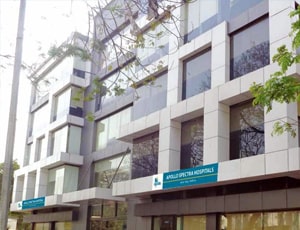
Laparoscopic Colon Resection in Apollo Spectra Hospital: Costs, Top Doctors, and Reviews

Pune, India

  • National Accreditation Board for Hospitals & Healthcare Providers (NABH)
  • National Accreditation Board for Testing and Calibration Laboratories (NABL)

Apollo Spectra Hospital located in Pune, India is accredited by JCI. Also listed below are some of the most prominent infrastructural details:

  • Present in a 30000 sq. ft. area
  • 5 beds are for critical care
  • 5 ultra-modern modular OTs
  • World class rehabilitation center
  • In-house pharmacy
  • Beautifully designed In-patients waiting area
  • 80 plus healthcare professionals which also includes 45 specialist consultants

Need Some Advice From Our Experts?

Request a Call Back Now!

Our team of healthcare experts would be happy to assist you

trusted Patientstrusted Patients+99
Trusted by 50000+ Patients
Required | alphabets and spaces
Required | A valid, working email address
Required | A valid contact

Process Involved for Laparoscopic Colon Resection in Pune

  • Diagnosis and assessment (imaging, colonoscopy)
  • Planning surgery and evaluating fitness
  • Preparing the bowel (if recommended)
  • Laparoscopic surgery for colon resection
  • Monitoring and recuperation following surgery
  • Review of pathology, particularly in relation to cancer
  • Monitoring and continuing care (referred to oncology if necessary)
  • Colon Cancer
  • Advanced polyps in the colon
  • Diverticulitis
  • Ulcerative colitis and Crohn's disease (selected)
  • Strictures in the colon
  • Blockage of the colon
  • Laparoscopic Right Hemicolectomy
  • Laparoscopic left hemicolectomy.
  • Laparoscopic Sigmoid Colectomy.
  • Laparoscopic Total Colectomy (in specified instances)
  • Laparoscopic low anterior excision for rectosigmoid disease.

Patients could be eligible if:

  • A partial or complete colectomy is necessary due to the condition.
  • The disease segment is appropriate for a laparoscopic procedure.
  • The patient is medically suitable for anaesthesia.
  • No serious, uncontrollable illness or instability

(Open surgery may still be necessary in certain emergency situations.)

  • Colonoscopy + biopsy
  • Dissection of lymph nodes (for cancer surgery)
  • Temporary stoma formation and closure (if necessary)
  • Adjuvant chemotherapy (based on staging in cancer instances)
  • Removal of the diseased colon section in an efficient manner
  • A less intrusive method that improves healing
  • Decreased pain and complications following surgery
  • Enhances the long-term results of diverticular disease and cancer

Patients who undergo laparoscopic colon resection frequently experience:

  • Bowel motions gradually returning
  • Decreased stomach discomfort over a period of one to two weeks
  • Reduced bleeding, blockage, and infection symptoms
  • Return to a regular job in a few weeks.
  • Fill out the inquiry form: Fill out the form to provide us with the relevant information about your condition.
  • Consult with Our Healthcare Expert:One of our qualified specialists will contact you for a consultation
  • Receive a Detailed Treatment Plan:After examining your situation, we will provide you with a detailed treatment plan that includes expert views and cost breakdowns for various choices.
  • Choose your preferred option: Choose the treatment option that suits you the best.

Instantly Connect with our Laparoscopic Colon Resection Specialists

Doctor 1
Doctor 2
Doctor 3
Doctor 4
Doctor 5
Doctor 6
Doctor 7
Doctor 8
Our Services to Better your Experience

Opinion & Option

We submit the most accurate opinion and options from one or more countries for your review

Consult Privately

Consult with a certified specialist privately on our telemedicine platform even before you decide to travel

Logistics

We handle flights, visas, transfers, and accommodation—so you can focus on your health.

Recovery

Our In-house rehabilitation service packages to better your recovery and treatment outcome

Other Popular Countries for Laparoscopic Colon Resection

Our network connects you with the leading medical tourism destinations globally, offering a wide range of cities, top doctors, and flexible pricing options.

United Kingdom
Spain
United Arab Emirates
Thailand

Frequently Asked Questions

The majority of patients recover in two to six weeks and are able to resume light activities in two to four weeks.

In addition to the procedure cost, patients may incur:
  • Pre-treatment tests
  • Medications during recovery
  • Follow-up consultations
  • Depending on difficulties and recuperation, hospital stays often last four to seven days.

    Long-term care involves:
  • Balanced, high-fiber diet (as recommended)
  • Drinking plenty of water and gradually increasing activity
  • Tracking changes in bowel movements
  • Colonoscopy follow-up (in situations of cancer or polyps)
  • Patients prefer India for laparoscopic colon resection because it has highly qualified colorectal surgeons, state-of-the-art minimally invasive surgical facilities, reasonably priced surgery and oncology treatment packages, and first-rate follow-up care and post-operative recovery assistance.

    Pre-treatment testing includes a colonoscopy with biopsy, a CT/MRI of the abdomen and pelvis, routine blood tests such as CBC, electrolytes, LFT, and RFT, as well as an ECG and a chest X-ray, and tumour markers if cancer is detected.

    Yes. Laparoscopic colon resection is a common and safe procedure for patients from other countries in specialised hospitals with highly qualified surgical teams.

    There is a high success rate. Results in cancer cases vary depending on the stage and course of therapy, but when performed in specialised facilities, laparoscopic surgery yields great results.

    Author

    Tanya Bose

    MSc Biotechnology

    2.5 Years of Experience

    Tanya Bose is a medical content specialist with a strong medical background. She has completed her Bachelor's and Master’s in Biotechnology from Amity University. With a deep understanding of biomedical sciences and research, she develops authoritative and patient-focused medical content covering treatments, surgical procedures, and healthcare innovations. Her writing emphasizes accuracy, clarity, and evidence-based information to help readers better understand complex medical topics. She is dedicated to improving patient awareness and supporting informed healthcare decisions by delivering trustworthy medical insights in a clear and accessible format. . View More