Your Notifications
All done, no notifications

Capsule Endoscopy Cost in South Africa

USD 500 - USD 1500

Affordable World-class Treatment - Accredited Hospitals - Free Treatment Plan in 24 Hrs

2
Post-Hospital
85 - 95%
Success Rate
Capsule Endoscopy
JCI/ISO 100,000+ Patients 24X7 Coordinator Visa & Travel handled
Your all-in-one medical travel platform for treatment, recovery & care.

Get Your Personalised Treatment Plan in Just 24 Hours.

Share your details to receive a personalised treatment plan, estimated costs, hospital recommendations, and expert guidance, “completely free.”

Required | alphabets and spaces
Required | A valid, working email address
Required | A valid contact
Connect with an Expert

Your information is protected with HIPAA-compliant security standards. We only share your details with hospitals after your consent.

Estimated Treatment Cost
USD 500 - USD 1500
All-inclusive • Hospital + Medications + Recovery Assistance + Dedicated Care Coordinator

International Quality. Affordable Care.

How Much Does Capsule Endoscopy Cost in South Africa?

The cost of Capsule Endoscopy in South Africa is USD 500 - USD 1500

Additionally, factors like the duration of treatment, the need for follow-up care, and the use of advanced technologies or specialized treatments can further influence the overall cost.

Factors Influencing the Cost of Capsule Endoscopy:

  • Type of Treatment: Capsule endoscopy is not a form of treatment, but a diagnostic examination. It is employed to visualize the mucosa of this part of the body, especially the small intestine.
  • Hospital and Location: This is equivocal because of the increased overhead cost that accompanies operations in large cities or urban areas compared to the countryside. It often costs more to stay in a private hospital or clinic.
  • Surgeon’s Expertise: Very experienced or specialized surgeons, particularly those acknowledged as regional or international experts, may well be more expensive than the average.
  • Pre-treatment tests: clinical investigations, mainly including imaging studies, blood tests, endoscopic examinations, and heart, lung, and kidney function tests. The performance of these tests enables the assessment of the general well-being of the patient and the possibility of surgery. These tests include X-ray, MRI, and CT.
  • Post-Surgical Care: In addition to the price, the costs of aftercare, such as hospitalization, physiotherapy, anesthesia and pain medication, follow-up visits, and possible complications, will also be included.
  • Length of Hospital Stay: Complex surgeries or complications may increase hospitalization costs.

It is a minimally invasive procedure of viewing the interior of the gastrointestinal tract and such areas of the human body as the small intestine that cannot be accessed by standard endoscopy. In this technique, a patient has to swallow a small, optically savvy pill (capsule) that takes images while in the digestive tract. The camera sends images to a recorder that the patient wears; the physician monitoring the images looks for signs that include ulcers, bleeding, tumors, or inflammation.

These include Crohn's disease, celiac disease, gastrointestinal bleeding, and abdominal pain from an unknown source. The procedure is less invasive than the traditional endoscopic methods and it is not is not done under anesthesia. However, due to the risk of bowel obstruction in some patients, MRI is not recommended for these patients and is generally not used for biopsy or tissue sampling.

What's included in your Capsule Endoscopy quote?

Capsule endoscopy
fee, capsule device, procedure charges
Gastroenterology consultations
Pre-procedure evaluation, test supervision, and report review
Visa & medical-visa invite letter
Airport pickup & transfers

Cost of Capsule Endoscopy in Major Cities of South Africa

City Cost (USD)
Cape Town $500 – $1,500 Explore More
Johannesburg $500 – $1,500 Explore More

Capsule Endoscopy - South Africa Vs the World

$0 - $0
$300 - $450
$400 - $800
$500 - $1k
$1k - $3k
$1k - $3k
$1k - $2k
$2k - $3k
$2k - $2k
$2k - $2k
$2k - $0
$2k - $6k
Fauzia Zeb Fatima
Author

M.Pharm

4 Years of Experience

Last Reviewed - June 2026

Fauzia Zeb is a distinguished medical and scientific content writer with a robust academic foundation in pharmaceutical sciences, holding a B.Pharm and M.Pharm degree from prestigious institutions, including MIT and Jamia Hamdard University. Her comprehensive expertise in pharmacology, clinical sciences, and biomedical research enables her to translate complex medical and scientific concepts into precise, evidence-based content tailored for diverse audiences. Specializing in peer-reviewed articles, clinical blog posts, and research-driven publications, she demonstrates a consistent ability to bridge the gap between advanced medical science and accessible, audience-specific communication.
View More
Dr. Ashish George
Reviewer

Gastroenterologist

18 Years of Experience

Last Reviewed - June 2026

Dr. Ashish George is one of the leading names in HPB surgery & liver transplantation and has about 18+ years of experience.He is a principal consultant & unit head of liver transplant at Fortis Shalimar Bagh.
View More

Need Help Choosing the Right Treatment? Talk to a Medical Advisor

Our dedicated Medical Patient Advisors are here to answer your questions, help you compare treatment options, estimate costs, and guide you through every step of your healthcare journey.

15 min
Average response time

Serving Patients Worldwide in Multiple Languages.

Capsule endoscopy is a minimally invasive procedure that uses a small, wireless camera to capture images of the organs within the digestive tract. The camera is encased within a capsule, similar in size to a vitamin pill. Once ingested, the capsule traverses the digestive tract, capturing thousands of images along the way. These images are transmitted to a recording device worn on a belt around the waist.

This innovative technique provides visualization of the small intestine, a region that is challenging to access using traditional endoscopic procedures. Unlike conventional endoscopy, which entails the insertion of a lengthy, flexible tube with a camera through the throat or rectum, capsule endoscopy offers a less invasive and more comfortable alternative for examining the small intestine.

Classification

Capsule endoscopy can be classified based on several factors, including the technology used, the targeted area of the digestive tract, and the specific features of the capsule itself. Here's a breakdown:

Technology-based classification: It includes the following;

  • Wireless Capsule Endoscopy (WCE)
  • Tethered Capsule Endoscopy

Anatomical classification: It includes the following

  • Small Bowel Capsule Endoscopy
  • Esophageal Capsule Endoscopy
  • Colon Capsule Endoscopy

Capsule features-based classification:

  • Standard Capsule Endoscopy
  • Multifunctional Capsule Endoscopy
  • Diagnostic or Therapeutic classification

The main purposes of capsule endoscopy are to detect diseases such as Crohn's disease, celiac disease, and cancer, as well as to determine the reason of minor intestinal bleeding. It also helps in evaluating esophageal varices and screening for polyps. In cases where the results of other imaging tests are not clear, it can also be employed for follow-up testing.

If you suffer from signs of an obstruction, such as chest pain, bloating, or abdominal pain, get in touch with your doctor immediately. Fever, dehydration, nausea, vomiting, and constipation are further warning indicators. These can be signs of a serious problem that needs immediate medical care.

You may need to fast for around 12 hours or even have bowel prep to clear your system before a capsule endoscopy. Report any digestive problems, surgeries, or implanted devices, such as pacemakers, to your physician. Also, disclose all medications, supplements, and allergies to ensure safe and adequate preparation.

During capsule endoscopy, you swallow a vitamin-sized capsule containing a camera that takes thousands of images as it travels through your digestive tract. A recording device worn on your body collects these images for your doctor to review. The capsule is naturally passed in your stool, usually within 24 to 48 hours.

Usually, a capsule endoscopy takes 8-12 hours to finish.

  • The capsule can get stuck in a constricted area of the intestine
  • It can cause inflammation in people with prior bowel surgery
  • If the capsule does not pass normally, an X-ray or CT scan may be required
  • A stuck capsule may result in a blockage

A minimally invasive procedure called capsule endoscopy helps in the detection of bleeding and other digestive system problems. The capsule passes through the whole digestive system, in contrast to conventional probes that only reach a portion of the small intestine. It takes precise pictures of difficult-to-reach places, including the entire length of the small intestine.

Capsule endoscopy is a non-surgical treatment, and it does not require the usual post-operative recovery.

About 85% to 95% of people with hip resurfacing surgery report significant pain reduction and increased mobility, making it a highly successful procedure, particularly for younger, active patients.

Explore Hospitals ( 2 )

Johannesburg, South Africa

COHSASA ISQua
Starting
USD 700

Cape Town, South Africa

Starting
USD 700

Get Your Capsule Endoscopy
Plan in 24 hrs.

Our experienced Medical Patient Advisors have supported 100,000+ patients across 120+ countries with personalised treatment plans, hospital recommendations, cost estimates, and travel assistance, all free.

HIPAA-Compliant Data SecurityShared Only with Your Consent

Free Consultation No Obligation Personalized Treatment Plan Response Within 24 Hours

Required | alphabets and spaces
Required | A valid, working email address
Required | A valid contact

Your medical info has is HIPAA-style confidential. We never share with hospitals without your consent.

Process Involved for Capsule Endoscopy in South Africa

  • Pre-Procedure: Fasting 8-12 hours and possible bowel preparation with a laxative.
  • Procedure: Swallowing a small, wireless capsule with a camera that captures images as it travels through the digestive tract.
  • Post-Procedure: The capsule is naturally excreted within 24-48 hours; a specialist for diagnosis analyses images.
  • Small Bowel Capsule Endoscopy
  • Esophageal Capsule Endoscopy
  • Colon Capsule Endoscopy
  • Motility Capsule (SmartPill Test)
  • Should have unexplained gastrointestinal bleeding.
  • The individual has chronic anemia (iron deficiency) from suspected intestinal bleeding.
  • May be appraised for Crohn's disease or minor intestine inflammation.
  • Screening for small intestine tumors, polyps, or celiac disease may also be required. Uncharacteristic abdominal pain or chronic diarrhea might occur.
  • Could not withstand routine endoscopy or colonoscopy due to medical contraindications
  • Traditional Endoscopy (EGD)
  • Colonoscopy.
  • CT or MRI Enterography
  • Biopsy or Surgery
  • Non-invasive
  • Painless and comfortable
  • High-quality, detailed images of the small intestine
  • Assists with diagnosing obscure gastrointestinal bleeding, Crohn's disease, and tumors.
  • Minimal recovery time
  • Gastroenterologist
  • General Surgeon
  • Nutritionist
  • Fill out the inquiry form: Fill out the form to provide us with the relevant information about your condition.
  • Consult with Our Healthcare Expert: One of our qualified specialists will contact you for a consultation.
  • Receive a Detailed Treatment Plan: After examining your situation, we will provide you with a detailed treatment plan that includes expert views and cost breakdowns for various choices.
  • Choose your preferred option: Choose the treatment option that suits you the best.
Jenny Wilson
Your Dedicated Medical Patient Advisor
Treatment planning • Hospital coordination • Multilingual support • Response within 15 minutes.
Our Services to Better your Experience

Opinion & Option

We submit the most accurate opinion and options from one or more countries for your review

Consult Privately

Consult with a certified specialist privately on our telemedicine platform even before you decide to travel

Logistics

We handle flights, visas, transfers, and accommodation—so you can focus on your health.

Recovery

Our In-house rehabilitation service packages to better your recovery and treatment outcome

Frequently Asked Questions

USD 700 is the starting cost of Capsule Endoscopy Surgery in South Africa. Capsule Endoscopy in South Africa is available across many hospitals in different states.

The Capsule Endoscopy package cost in South Africa varies from one hospital to another and may offer different benefits. The cost quoted by some of the best hospitals for Capsule Endoscopy in South Africa generally covers the pre-surgery investigations of the patient. The treatment cost usually includes the expenses related to hospitalization, surgery, nursing, medicines, and anesthesia. There are many things that may increase the cost of Capsule Endoscopy in South Africa, including prolonged hospital stay and complications after the procedure.

Capsule Endoscopy in South Africa is offered by multiple hospitals across the country. The top hospitals for Capsule Endoscopy in South Africa include the following:

  1. Life Kingsbury Hospital
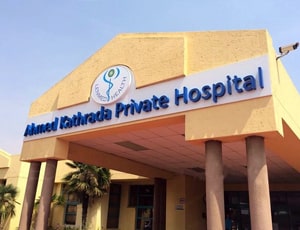
  2. Ahmed Kathrada Private Hospital

While the speed of recovery may vary from patient to patient, they are still required to stay for about 2 days after discharge. This duration of stay is recommended to complete all the necessary follow-ups and control tests to ensure that the surgery was successful.

Apart from the Capsule Endoscopy cost, the patient may have to pay for additional daily expenses such as for guest house after discharge and meals. The per day extra expenses in South Africa per person are about USD 50 per person.

The following are some of the best cities for Capsule Endoscopy in South Africa:

  • Johannesburg
  • Lenasia
  • Durban
  • Cape Town

The patient is supposed to stay at the hospital for about 1 day after Capsule Endoscopy for monitoring and care. This phase is important to ensure that the patient is recovering well and is clinically stable. During this time, several tests are performed before the patient is deemed suitable for discharge.

The average rating for Capsule Endoscopy hospitals in South Africa is 2.9. Several parameters such as hospital infrastructure, pricing policy, quality of services, politeness of staff etc. contribute to the rating.

There are more than 2 hospitals that offer Capsule Endoscopy in South Africa. These hospitals have propoer infrastructure as well as offer good quality of services when it comes to Capsule Endoscopy Additionally, these hospitals are known to comply with the international standards as well as local legal requirements for the treatment of patients.

Not Sure About Your Treatment Plan? Get a Free Second Opinion

Have your reports reviewed by independent oncology experts to help you make a confident treatment decision, all online within 48 hours.

Upload Your Reports
Free second opinion on your CAR-T plan