Your Notifications
All done, no notifications

Device Closure of ASD (Amplatzer Septal Occluder) Cost in Ghaziabad

Starts from USD 7500

Disclaimer: Cost range is subject to change based on clinical evaluation.

Affordable World-class Treatment - Accredited Hospitals - Free Treatment Plan in 24 Hrs

2
Days in Hospital
1-2 hrs
Procedure Time
95 - 99%
Success Rate
Device Closure of ASD
JCI/ISO 100,000+ Patients 24X7 Coordinator Visa & Travel handled
Your all-in-one medical travel platform for treatment, recovery & care.

Get Your Personalised Treatment Plan in Just 24 Hours.

Share your details to receive a personalised treatment plan, estimated costs, hospital recommendations, and expert guidance, “completely free.”

Required | alphabets and spaces
Required | A valid, working email address
Required | A valid contact

Your information is protected with HIPAA-compliant security standards. We only share your details with hospitals after your consent.

Estimated Treatment Cost
Starts from USD 7500
All-inclusive • Hospital + Medications + Recovery Assistance + Dedicated Care Coordinator

International Quality. Affordable Care.
The average cost of Device Closure of ASD (Amplatzer Septal Occluder) in Ghaziabad starts from USD 7500.

Cost of Device Closure of ASD (Amplatzer Septal Occluder) in Major Cities of India

CityCost (USD)
Bangalore Starting $7.5k Explore More
Chennai Starting $7k Explore More
Delhi Starting $5.5k Explore More
Faridabad Starting $7k Explore More
Ghaziabad Starting $7.5k Explore More
Gurgaon Starting $7k Explore More
Kochi Starting $6.5k Explore More
Mohali Starting $7.5k Explore More
Mumbai Starting $8k Explore More
Dr. Vishwas Kaushik
Author

MBBS, MD

7 Years of Experience

Dr. Vishwas Kaushik is a qualified medical professional holding an MBBS from the prestigious Belgorod State University, Russia, with a strong foundation in clinical medicine and healthcare practice. His comprehensive medical training has equipped him with a profound understanding of evidence-based clinical practices, patient-centered care, and the evolving landscape of modern medicine. With a keen interest in medical research and scientific communication, he consistently translates complex clinical concepts into clear, accurate, and accessible content for diverse audiences. His work reflects a deep commitment to advancing medical knowledge, delivering impactful healthcare insights, and bridging the gap between clinical expertise and accessible medical communication.
View More
Dr. Naresh Kumar Goyal
Reviewer

Cardiologist

21 Years of Experience

Last Reviewed - June 2026

Dr. Naresh Kumar Goyal is highly trained as a cardiologist with exposure in virtually all aspects of cardiology. He qualified with an MD in internal medicine in 1999 from SMS Medical College, Jaipur, and served in the Cardiology Department as an honorary resident. From this stage, he also started with training in the temporary pacing of the pacemaker as well as interventional services.
View More

Need Help Choosing the Right Treatment? Talk to a Medical Advisor

Our dedicated Medical Patient Advisors are here to answer your questions, help you compare treatment options, estimate costs, and guide you through every step of your healthcare journey.

15 min
Average response time

Serving Patients Worldwide in Multiple Languages.

The procedure closes the atrial septal defect (a hole in the wall between the upper heart chambers). Closing the defect averts potential problems such as right heart enlargement, arrhythmias, stroke, or pulmonary hypertension, especially in moderate to large ASDs.

A visit to the cardiologist is recommended if you experience fatigue, breathlessness, heart palpitations, or recurrent respiratory tract infections. Most ASDs are diagnosed by echocardiography, either in childhood or in adulthood, during one of the evaluations for a murmur or a few symptoms.

The patient may have an echocardiogram (commonly TEE) and chest X-ray; an ECG and blood work are recorded. You will be requested to stop certain medications (if applicable) and fast for about 6 to 8 hours before the procedure. Of course, informed consent is obtained, and the method and its risks will be discussed beforehand.

With sedation or general anesthesia, a catheter is introduced into the groin vein and advanced into the heart. The device is then passed through the ASD and opened to cover the hole. Over time, it becomes incorporated into the septum.

The procedure generally lasts between 1 and 2 hours, and patients undergo monitoring for several hours in recovery. Most patients go home the day after.

  • Device migration
  • Blood clots
  • Arrhythmias
  • Bleeding at the insertion site
  • Rare heart wall erosion

This procedure avoids open-heart surgery, permanently closes the defect, relieves symptoms, averts long-term complications, and thus allows faster rehabilitation into everyday life.

Recovery is fast, and most patients return to normal activities within a week. Blood-thinning agents such as aspirin could be prescribed for several months. Follow-up echocardiography is essential to ensure the device functions properly.

When used for appropriate ASDS, success rates are more than 95%. They provide long-term results as good as surgical closure but with less risk, faster recovery, and fewer complications.

95–99%

Successful defect closure

2–3 days

Typical hospital stay

2–4 weeks

Typical return to daily activities
Explore Hospitals ( 2 )

Ghaziabad, India

4.6 - 15984 reviews · 370+ Beds · 273+ Procedures
NABL NABH
Starting
USD 7500
Chat with a Medical Advisor

Ghaziabad, India

4.7 - 12547 reviews · 9500+ Beds · 199+ Procedures
NABH NABL
Starting
USD 7500
Chat with a Medical Advisor

Get Your Device Closure of ASD (Amplatzer Septal Occluder)
Plan in 24 hrs.

Our experienced Medical Patient Advisors have supported 100,000+ patients across 120+ countries with personalised treatment plans, hospital recommendations, cost estimates, and travel assistance, all free.

HIPAA-Compliant Data SecurityShared Only with Your Consent

✓ Free Consultation ✓ No Obligation ✓ Personalized Treatment Plan ✓ Response Within 24 Hours

Required | alphabets and spaces
Required | A valid, working email address
Required | A valid contact

Your medical info is kept HIPAA-style confidential. We never share with hospitals without your consent.

Process Involved for Device Closure of ASD (Amplatzer Septal Occluder) in Ghaziabad

  • Preoperative Evaluation Stage: Imaging tests are used to detect ASD, its severity is evaluated, and medication may be administered before the surgery.
  • Surgical Planning: Learn about the process, possible risks, and recovery after surgery.
  • Procedure Selection: Anesthesia is given to place the catheter.
  • Device Placement
  • Post-Procedure Monitoring: The patient has a brief hospital stay for observation, during which their vital signs and problems are tracked.
  • Recovery & Follow-Up
  • Atrial Septal Defect (ASD
  • Left-to-Right Shunting
  • Stroke caused by blood clots
  • Right Heart Enlargement
  • Pulmonary Hypertension (Early Stages)
  • Moderate to Large ASD
  • Significant Left-to-Right Shunt
  • shortness of breath, fatigue, irregular heartbeats, or stroke
  • Patients with No Other Major Heart Defects
  • Echocardiography
  • Cardiac Catheterization
  • X-ray Imaging
  • Contrast Echocardiography
  • Electrocardiogram (ECG) Monitoring
  • Minimally Invasive Procedure
  • Prevents Heart Enlargement
  • Lowers Stroke Risk
  • Improves Symptoms & Quality of Life
  • Shorter Hospital Stay & Quick Recovery
  • Interventional Cardiologist
  • Pediatric Cardiologist
  • Radiologist
  • Fill out the inquiry form: Fill out the form to provide us with the relevant information about your condition.
  • Consult with Our Healthcare Expert: One of our qualified specialists will contact you for a consultation.
  • Receive a Detailed Treatment Plan: After examining your situation, we will provide you with a detailed treatment plan that includes expert views and cost breakdowns for various choices.
  • Choose your preferred option: Choose the treatment option that suits you the best.
Jenny Wilson
Your Dedicated Medical Patient Advisor
Treatment planning • Hospital coordination • Multilingual support • Response within 15 minutes.
Our Services to Better your Experience

Opinion & Option

We submit the most accurate opinion and options from one or more countries for your review

Consult Privately

Consult with a certified specialist privately on our telemedicine platform even before you decide to travel

Logistics

We handle flights, visas, transfers, and accommodation—so you can focus on your health.

Recovery

Our In-house rehabilitation service packages to better your recovery and treatment outcome

Patient Stories

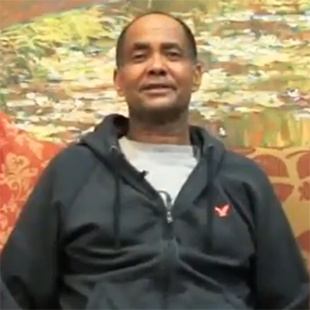
Mr Hailu Kassa : CABG Surgery
Mr Hailu Kassa
Mr Hailu Kassa : CABG Surgery

Mr. Hailu Kassa underwent Coronary Artery Bypass Surgery in Vejthani Hospital, Thailand under the supervision of Dr. Piya, Cardio-Thoracic Surgeon

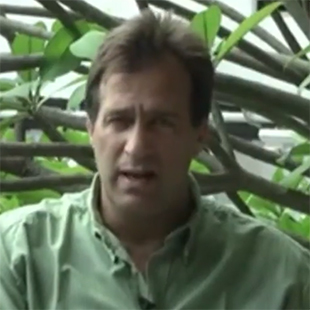
Rod Schaubroeck
Rod Schaubroeck
Rod Schaubroeck : Double Valve Replacement

Patient Testimonial: Rod Schaubroeck from United States (U.S.A) underwent heart valve replacement at Fortis Hospital, India

Frequently Asked Questions

The cost of Device Closure of ASD (Amplatzer Septal Occluder) in Ghaziabad typically ranges between USD starts from USD 7500. The final cost depends on the size and type of the atrial septal defect, the occluder device used, the hospital, and the cardiologist's experience.

Some of the best hospitals in Ghaziabad for Device Closure of ASD (Amplatzer Septal Occluder) include:
  • Manipal Hospital, Ghaziabad
  • Max Super Specialty Hospital, Vaishali
  • Choose an experienced interventional cardiologist or pediatric cardiologist who specializes in structural heart interventions and transcatheter ASD closure. Reviewing the doctor's qualifications, experience, patient outcomes, and success rates can help you make an informed decision. Seeking a second opinion is also recommended.

    Device Closure of ASD (Amplatzer Septal Occluder) has an overall success rate of approximately 95 - 99%, with excellent long-term outcomes when performed by experienced interventional cardiologists.

    The procedure is generally very safe, but potential risks include bleeding, infection, allergic reactions, device displacement, blood clots, irregular heart rhythm, vascular complications, and, rarely, cardiac perforation or residual shunting.

    Before travelling, gather your medical records, echocardiography reports, ECG, cardiac imaging studies, laboratory reports, and passport. Complete an online consultation if available and confirm your treatment schedule, accommodation, and visa requirements.

    Yes, MediGence provides online consultations for international patients before travel. Cardiology specialists review your medical records and imaging studies to determine your suitability for device closure. This also helps you receive an estimated cost and travel guidance.

    Patients should bring:
  • A valid passport and visa
  • Echocardiography (2D Echo/TEE) reports
  • ECG and cardiac imaging reports
  • Laboratory reports
  • A list of current medications
  • Previous cardiac treatment records and discharge summaries
  • Most international patients stay in Ghaziabad for about 7 to 10 days, depending on the pre-procedure evaluation, hospital stay, and follow-up examination before returning home.

    Recovery is usually quick, and most patients resume normal daily activities within a few days to one week. Follow-up visits and echocardiograms are recommended to monitor device positioning and heart function.

  • Submit your medical records through the MediGence platform.
  • Receive a treatment plan and estimated cost from specialists.
  • Compare hospitals and treatment options.
  • Schedule your procedure and consultations.
  • Get assistance with medical visas, travel, accommodation, and airport transfers.
  • Receive support for follow-up care after treatment.
  • Ghaziabad offers advanced cardiac care, experienced interventional cardiologists, internationally accredited hospitals, and state-of-the-art catheterization laboratories. Patients also benefit from excellent clinical outcomes and competitive treatment costs.

    FAQ's Related to India

    Ghaziabad is one of the most developed cities in the state of Uttar Pradesh in India. The city is fast developing and over the years, many hospitals and clinics have emerged in different parts of Ghaziabad. The city has both public and private hospitals that are well-furnished. These provide quality healthcare to patients at nominal costs. For the high-quality patient care delivered, many hospitals in the city have also been accredited by bodies such as NABH and NABL. The hospitals in the city also have well-trained and skilled medical staff who are fluent in languages like English to enable proper communication with international patients. The hospitals provide treatments for various illnesses including cancer, cardiac issues, and neurological diseases.

    The hospitals in Ghaziabad are well-recognized for their excellence in providing high-quality and holistic care to patients. Some of the top hospitals in Ghaziabad are

    • Max SuperSpecialty Hospital: The hospital is a NABH and NABL-accredited facility that has more than 370 beds and is equipped with the most modern technology such as PFT, BMD, and digital mammography. The medical staff consists of over 259 doctors and 610 nurses who are highly experienced and trained. The hospital has high-quality infrastructure including 14 sophisticated operation theatres, 16 HDU beds, and 128 critical care beds. It offers a wide variety of treatments across different specialties such as cardiac sciences, orthopedics, endocrinology, gastroenterology, and urology. Some of the common procedures performed at the hospital are kidney transplants, liver transplants, and knee replacement surgery.
    • Nova Fertility Center: This facility is dedicated to providing highly successful treatments for infertility such as IUI, IVF, and other andrology services. The center has a team of competent infertility specialists with years of experience.
    • Yashoda SuperSpecialty Hospital: The hospital has NABH and NABL accreditations to its credit. The hospital has ultra-modern infrastructure and has more than 100 doctors on board.

    Ghaziabad has a pool of qualified, board-certified, and distinguished doctors with extensive experience in their field of expertise. Some of the top doctors in Ghaziabad are:

    • Dr. Haritha Mannem: She is an exceptional infertility specialist with around 8 years of experience in her field of expertise. She is fluent in English and is adept at performing procedures such as IVF, IUI, ICSI, egg retrieval, and artificial insemination.
    • Dr. Sitla Prasad Pathak: He is a well-known neurologist with more than 16 years of experience in treating various neurological illnesses. His areas of interest include movement disorders, epilepsy, and neuro electrophysiology. Dr. Sitla is fluent in English and can perform procedures like carotid endarterectomy, cerebral angioplasty, and endovascular coiling.
    • Dr. Rinky Anand Gupta: She is an acclaimed ophthalmologist with 14 years of experience. Some of the conditions treated by her include keratoconus, hyperopia, astigmatism, and age-related macular degeneration.

    You can reach Ghaziabad by air, road or rail. The nearest airport to Ghaziabad is the Indira Gandhi International Aiport, New Delhi. If you are planning to avail your treatment here then we can assist you with your medical travel.

    Not Sure About Your Treatment Plan? Get a Second Opinion

    Get your medical reports reviewed by experienced doctors to help you make a confident treatment decision, all online within 48 hours.

    Upload Your Reports
    Free second opinion on your CAR-T plan