Your Notifications
All done, no notifications

Blalock–Thomas–Taussig shunt (BT Shunt) Cost in Thailand

Costs starts from USD12000 to USD25000
Filters

How Much Does a BT Shunt Cost in Thailand?

The cost of a Blalock–Taussig (BT) shunt surgery in India generally ranges from USD 12000 - USD 25000, depending on the hospital, city, and the clinical complexity of the child’s condition. This cost typically includes the surgical procedure, surgeon’s fee, anaesthesia, and basic hospital stay. However, additional expenses, such as extended ICU care, medications, and follow-up evaluations, can further increase the overall cost.

Factors Affecting the Cost of BT Shunt in Thailand

Cost of Blalock–Thomas–Taussig shunt (BT Shunt) in Major cities of Thailand

CityMinimum Cost (USD)Minimum Cost (THB)Maximum Cost (USD)Maximum Cost (THB)
BangkokUSD 12000392520USD 39252012839329

Blalock–Thomas–Taussig shunt (BT Shunt) Cost : A Global Comparison

CountryMinimum CostMinimum Local CurrencyMaximum CostMaximum Local Currency
IndiaUSD 3000INR 279660USD 6500INR 605930
IsraelUSD 18000ILS 56700USD 30000ILS 94500
LithuaniaUSD 15000LTL 44850USD 28000LTL 83720
MalaysiaUSD 12000MYR 48480USD 25000MYR 101000
PolandUSD 14000PLN 52080USD 26000PLN 96720
Saudi ArabiaUSD 18000SAR 67500USD 35000SAR 131250
South AfricaUSD 14000ZAR 238000USD 26000ZAR 442000
South KoreaUSD 18000KRW 27325800USD 32000KRW 48579200
SwitzerlandUSD 35000CHF 28000USD 65000CHF 52000
ThailandUSD 12000THB 393120USD 25000THB 819000
TurkeyUSD 14000TRY 623000USD 26000TRY 1157000
United Arab EmiratesUSD 18000AED 66060USD 35000AED 128450
United KingdomUSD 20000GBP 17400USD 38000GBP 33060

Need Help Planning Your Treatment Abroad?

Your 24/7 AI Health Assistant

The Blalock–Thomas–Taussig (BT) shunt is performed to improve blood flow to the lungs in babies and children with cyanotic congenital heart defects. It increases blood oxygen levels and serves as a temporary, life-saving measure until definitive corrective heart surgery can be performed.

Medical evaluation is required if a child shows signs of bluish skin or lips (cyanosis), breathing difficulty, poor feeding, delayed growth, or has a diagnosed congenital heart defect requiring palliative surgery.

Preparation includes echocardiography, blood tests, imaging studies, and stabilisation of oxygen levels. Parents are counselled, and the child is admitted to a specialised pediatric cardiac unit before surgery.

Under general anaesthesia, a small synthetic graft is placed between a systemic artery and the pulmonary artery to create an alternate pathway for blood to reach the lungs, improving oxygenation.

BT shunt surgery typically takes 2 to 4 hours, depending on the child’s condition and the complexity of the heart defect.

  • Shunt blockage
  • Bleeding
  • Infection
  • Abnormal blood flow to the lungs
  • Heart rhythm issues

The BT shunt improves oxygenation, reduces cyanosis, supports growth and development, and stabilises the child until definitive cardiac surgery is feasible.

Most children spend a few days in the ICU, followed by ward care. Recovery involves oxygen support, medications, and regular follow-up to monitor shunt function.

BT shunt surgery has shown high short-term success in improving oxygenation and survival in children with complex congenital heart disease. It serves as a bridge to definitive treatment, with outcomes influenced by timing, underlying condition, and overall health.

Would you like some help? We are available.

Get Help
Explore Hospitals ( 2 )
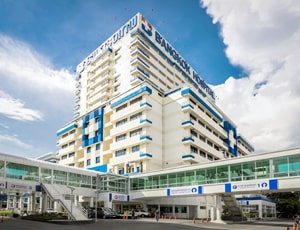
Blalock–Thomas–Taussig shunt (BT Shunt) in Bangkok Hospital: Costs, Top Doctors, and Reviews

Bangkok, Thailand

  • Joint Commission International, or JCI

Bangkok Hospital located in Bangkok, Thailand is accredited by JCI. Also listed below are some of the most prominent infrastructural details:

  • It is recognised for the application of the newest healthcare technology.
  • Blood analysis center that is not just the best in Thailand but in Asia Pacific as well.
  • Biomolecule center that is the seed of healthcare equipment for Thailand and overseas.
  • International affiliations and collaborations with universities and hospitals in Japan and the United States of America.
  • 11 hospitals are recognised as Centers of Excellence.
  • Known excellence in Trauma, Orthopedics, Cardiovascular, Neurology as well as Cancer Care.
  • There is a proper streamlined patient services process followed in Bangkok Dusit Medical Services, Bangkok, Thailand.
  • A well developed research center showcases the intent of the organisation to provide research based treatment opportunities to the patients.
  • The group has several Medical industry partnerships as well to ensure healthcare solutions.
Blalock–Thomas–Taussig shunt (BT Shunt) in Bangpakok 9 International Hospital: Costs, Top Doctors, and Reviews

Bangkok, Thailand

  • Joint Commission International, or JCI

Bangpakok 9 International Hospital located in Bangkok, Thailand is accredited by JCI. Also listed below are some of the most prominent infrastructural details:

  • It would be prudent to summarise the Medical Services provided at the Bangpakok 9 International Hospital (BPK 9), Bangkok, Thailand:
  • Cosmetic Dentistry
  • Dental Implants
  • Electrocardiogram (EKG or ECG)
  • Exercise Stress Test
  • Health Screening
  • Laser Vagina Firming
  • Pediatric Physical Therapy
  • Perfect Slim by Vela II
  • Physical Therapy for Musculoskeletal
  • Prosthodontics
  • The Medical Services are also inclusive of the International Patient Services such as the ones listed here:
  • Thai, English, French, Arabic, Chinese, Myanmar, Cambodia, Bangladeshi, Bahasa and Tagalog are the languages in which there are Translation services available for International Patients.
  • Visa extension related assistance
  • International health insurance related assistance
  • Embassy and international organizations related assistance
  • A variety of meals of choice for International Patients
  • Email consultation services
  • Transfer to either airport and/or hotels
  • Prayer room
  • Four different types of rooms are available such as Deluxe room, two kinds of suites, and a VIP suite.
  • Hospital facilities like The Coffee shop, Food Hall, Cafe and Medical Spa.
  • Complete health and safety protocols are maintained in the various Medical Centers some of whom are as follows:
  • Aesthetic Center
  • 24 Hour Emergency Center
  • Allergy Center
  • Breast Center
  • bSmart Center
  • Checkup Center
  • Dental Center,
  • Happy Long Life Center
  • Medical Fitness Center
  • Psychiatric Center
  • Rehabilitation Center
  • Sleep Disorders Center

Need Some Advice From Our Experts?

Request a Call Back Now!

Our team of healthcare experts would be happy to assist you

trusted Patientstrusted Patients+99
Trusted by 50000+ Patients
Required | alphabets and spaces
Required | A valid, working email address
Required | A valid contact

Process Involved for Blalock–Thomas–Taussig shunt (BT Shunt) in Thailand

  • Diagnosis and stabilisation
  • Pre-operative assessment
  • BT shunt implantation
  • Post-operative ICU care
  • Follow-up and planning of definitive surgery
  • Tetralogy of Fallot
  • Pulmonary atresia
  • Tricuspid atresia
  • Single ventricle defects
  • Classical BT Shunt
  • Modified BT Shunt (most commonly performed)
  • Infants and children with cyanotic congenital heart defects and reduced pulmonary blood flow, especially those not immediately suitable for corrective surgery, are eligible for BT shunt surgery.
  • Synthetic vascular grafts
  • Cardiac catheterization
  • Echocardiography
  • Oxygen therapy and medication management
  • Improves oxygen levels
  • Reduces cyanosis
  • Enhances growth and development
  • Stabilises the child until definitive repair
  • Improved blood oxygenation, better feeding and activity levels, and overall clinical stabilisation in preparation for future corrective heart surgery.
  • Fill out the inquiry form: Fill out the form to provide us with the relevant information about your condition.
  • Consult with Our Healthcare Expert: One of our qualified specialists will contact you for a consultation
  • Receive a Detailed Treatment Plan: After examining your situation, we will provide you with a detailed treatment plan that includes expert views and cost breakdowns for various choices.
  • Choose your preferred option: Choose the treatment option that suits you the best.

Instantly Connect with our Blalock–Thomas–Taussig shunt (BT Shunt) Specialists

Doctor 1
Doctor 2
Doctor 3
Doctor 4
Doctor 5
Doctor 6
Doctor 7
Doctor 8
Our Services to Better your Experience

Opinion & Option

We submit the most accurate opinion and options from one or more countries for your review

Consult Privately

Consult with a certified specialist privately on our telemedicine platform even before you decide to travel

Logistics

We handle flights, visas, transfers, and accommodation—so you can focus on your health.

Recovery

Our In-house rehabilitation service packages to better your recovery and treatment outcome

Other Popular Countries for Blalock–Thomas–Taussig shunt (BT Shunt)

Our network connects you with the leading medical tourism destinations globally, offering a wide range of cities, top doctors, and flexible pricing options.

Malaysia
India
United Kingdom
United Arab Emirates

Frequently Asked Questions

Most children require approximately 4–6 weeks to fully recover after BT shunt surgery. During this time, activity is gradually increased as the heart adapts and healing progresses.

In addition to the procedure cost, patients may incur:
  • Pre-treatment tests
  • Medications during recovery
  • Follow-up consultations
  • Hospital stay typically ranges from 5 to 10 days, including ICU monitoring and post-operative care. Longer stays occur if complications arise. Total stay in the country (for international patients) may be 2-4 weeks, including follow-up checks.

    Long-term care includes:
  • Regular cardiology follow-ups
  • Monitoring shunt function via echocardiography
  • Medication management as advised
  • Planning for definitive corrective heart surgery later in childhood
  • Countries like India are often chosen because of:
  • Globally competitive costs compared to Western countries
  • Expert pediatric cardiac surgeons and advanced heart centres
  • Comprehensive ICU and post-operative care
  • Shorter waiting times and efficient medical tourism support services
  • Common pre-surgical assessments include:
  • Echocardiogram (heart ultrasound)
  • Chest X-ray
  • Electrocardiogram (ECG)
  • Blood and biochemistry tests
  • Yes. When performed at experienced pediatric cardiac centres, BT shunt surgery is considered safe. Hospitals routinely care for international patients with dedicated care teams, ICU support, and structured follow-up, thereby reducing risk and improving outcomes.

    Success rates for BT shunt surgeries at leading centres are high (often 85–90%), with excellent short-term outcomes and improved oxygenation. Actual rates depend on the child’s condition, age, and overall health.

    Author

    Tanya Bose

    MSc Biotechnology

    2.5 Years of Experience

    Tanya Bose is a medical content specialist with a strong medical background. She has completed her Bachelor's and Master’s in Biotechnology from Amity University. With a deep understanding of biomedical sciences and research, she develops authoritative and patient-focused medical content covering treatments, surgical procedures, and healthcare innovations. Her writing emphasizes accuracy, clarity, and evidence-based information to help readers better understand complex medical topics. She is dedicated to improving patient awareness and supporting informed healthcare decisions by delivering trustworthy medical insights in a clear and accessible format. . View More

    Reviewer

    Dr. Naresh Kumar Goyal

    Cardiologist

    21 Years of Experience

    Dr. Naresh Kumar Goyal is highly trained as a cardiologist with exposure in virtually all aspects of cardiology. He qualified with an MD in internal medicine in 1999 from SMS Medical College, Jaipur, and served in the Cardiology Department as an honorary resident. From this stage, he also started with training in the temporary pacing of the pacemaker as well as interventional services. View More