Your Notifications
All done, no notifications

Bentall Procedure Cost in Johannesburg

Get a Quote

Affordable World-class Treatment - Accredited Hospitals - Free Treatment Plan in 24 Hrs

7
Days in Hospital
4-6 hrs
Procedure Time
80 - 90%
Success Rate
Bentall Procedure | MediGence
JCI/ISO 100,000+ Patients 24X7 Coordinator Visa & Travel handled
Your all-in-one medical travel platform for treatment, recovery & care.

Get Your Personalised Treatment Plan in Just 24 Hours.

Share your details to receive a personalised treatment plan, estimated costs, hospital recommendations, and expert guidance, “completely free.”

Required | alphabets and spaces
Required | A valid, working email address
Required | A valid contact

Your information is protected with HIPAA-compliant security standards. We only share your details with hospitals after your consent.

Estimated Treatment Cost
All-inclusive • Hospital + Medications + Recovery Assistance + Dedicated Care Coordinator

International Quality. Affordable Care.
The average cost of Bentall Procedure in Johannesburg ranges between available on request.

Cost of Bentall Procedure in Major Cities of South Africa

CityCost (USD)
Cape Town $15,000 – $30,000 Explore More
Durban $15,000 – $30,000 Explore More
Johannesburg $15,000 – $30,000 Explore More
Dr. Abdullah Rahil
Author

MPT (Neuro)

7 Years of Experience

Dr. Abdullah Rahil, M.P.T. (Neurology), is a dedicated physiotherapy professional specializing in orthopedic, neurological, and musculoskeletal rehabilitation. With strong clinical expertise, he focuses on improving patient mobility, reducing pain, and restoring functional independence through evidence-based rehabilitation techniques. He is skilled in advanced therapeutic approaches that support effective rehabilitation and recovery for a wide range of musculoskeletal and neurological conditions, focusing on improving mobility, reducing pain, and restoring functional independence. Dr. Rahil has extensive experience managing diverse rehabilitation cases. His patient-centered approach emphasizes personalized treatment plans, continuous assessment, and comprehensive rehabilitation to achieve optimal recovery outcomes.
View More
Dr. Naresh Kumar Goyal
Reviewer

Cardiologist

21 Years of Experience

Last Reviewed - June 2026

Dr. Naresh Kumar Goyal is highly trained as a cardiologist with exposure in virtually all aspects of cardiology. He qualified with an MD in internal medicine in 1999 from SMS Medical College, Jaipur, and served in the Cardiology Department as an honorary resident. From this stage, he also started with training in the temporary pacing of the pacemaker as well as interventional services.
View More

Need Help Choosing the Right Treatment? Talk to a Medical Advisor

Our dedicated Medical Patient Advisors are here to answer your questions, help you compare treatment options, estimate costs, and guide you through every step of your healthcare journey.

15 min
Average response time

Serving Patients Worldwide in Multiple Languages.

A Bentall procedure is a surgery conducted to correct problems associated with the largest artery in the body, the aorta. The aorta carries oxygenated blood from the heart to the rest of the body. Thus, any problem with this important artery may affect the rest of the body and cause serious complications.

A Bentall operation is conducted to correct problems associated with the aorta. Some of the problems that are resolved with the help of a Bentall surgery include the following:

  • Marfan’s syndrome: It is a congenital disorder characterized by weakening of the aortic wall
  • Aortic aneurysm: It is characterized by the widening of the aortic valve
  • Aortic dissection: It refers to the tearing of the inner layer of the aorta
  • Aortic regurgitation: It is a condition in which the aortic valve is not able to close properly

The Bentall procedure treats disorders affecting the aortic root and ascending aorta, usually the aortic valve. These various methods are used in patients with an aortic aneurysm, aortic dissection, Marfan syndrome, bicuspid aortic valve disease, or aortic regurgitation. It replaces the aortic valve, aortic root, and ascending aorta using a composite graft and reimplants the coronary arteries.

You should consult a cardiologist if you feel chest pain, consciousness loss, shortness of breath, palpitations, or if you have a genetic predisposition for such pathologies (such as Marfan syndrome). If you already know that you have an aortic aneurysm or significant aortic valve disease, evaluation for possible surgical procedures is warranted, too.

Before the procedure, patients undergo a whole set of pre-operative investigations, including ECG, echocardiogram, CT angiography, and blood testing to check on the function of the heart and aorta. Current medications need to be checked because some, like blood thinners, may require stopping before surgery. Most patients fast from midnight before the operating theatre and will be admitted at least one day before the surgery for a final round of investigations and reviews by the surgical and anaesthesia teams.

The Bentall procedure is usually done under general anaesthesia, meaning the patient is entirely unconscious. First, the incision is made through a sternotomy, and the patient is then connected to a heart-lung machine. The procedure involves excising the diseased aortic valve, aortic root, and part of the ascending aorta and substituting it with a composite graft comprising either a mechanical or biological valve. Next, the coronary arteries are reimplanted back into the graft, after which the heart-lung machine is discontinued and the chest is closed.

A Bentall procedure usually lasts between 4 and 6 hours, depending on the procedure's complexity and the patient's overall condition.

  • Bleeding or infection
  • Stroke
  • Myocardial infarction (heart attack)
  • Arrhythmias
  • Kidney dysfunction
  • Blood clots
  • Valve-related complications

  • Long-term life-threatening aortic conditions remain resolved.
  • Normal functioning of the heart and circulation is restored.
  • Prevents rupture or dissection of the aorta.
  • Better quality of life and life expectancy in appropriate candidates.

A typical hospital stay following a Bentall procedure would be around 7-10 days, including 1-2 days in the Intensive Care Unit (ICU). Recovery includes cardiac rehabilitation and a slow return to regular activities within 6-8 weeks. Beyond the surgical procedure, post-operative care includes medications like anticoagulants (mainly if a mechanical valve was used), painkillers, and others that promote heart function.

The Bentall procedure ranks among the most successful operations, with death rates at experienced centres at less than 10 to 20%, depending on the age of patients and co-morbid cardiac conditions, and 80-90% long-term survival rates.

90–95%

Success rate in suitable patients undergoing elective surgery

7–10 days

Typical hospital stay

6–12 weeks

Return to normal daily activities depending on recovery and cardiac rehabilitation
Explore Hospitals ( 1 )

Johannesburg, South Africa

2.7 - 390 reviews · 254+ Beds · 191+ Procedures
COHSASA ISQua
Chat with a Medical Advisor

Get Your Bentall Procedure
Plan in 24 hrs.

Our experienced Medical Patient Advisors have supported 100,000+ patients across 120+ countries with personalised treatment plans, hospital recommendations, cost estimates, and travel assistance, all free.

HIPAA-Compliant Data SecurityShared Only with Your Consent

✓ Free Consultation ✓ No Obligation ✓ Personalized Treatment Plan ✓ Response Within 24 Hours

Required | alphabets and spaces
Required | A valid, working email address
Required | A valid contact

Your medical info is kept HIPAA-style confidential. We never share with hospitals without your consent.

Process Involved for Bentall Procedure in Johannesburg

  • Evaluation & Preparatory Stage
    • Detailed medical assessment
    • Diagnostic tests are performed for a better understanding
    • Medical optimisation
    • Surgical planning
  • Procedure Stage
    • General anesthesia & heart-lung bypass
    • Aortic Valve & Root Replacement
    • Coronary Artery Reimplantation
    • Surgical closure
  • Postoperative Stage
    • Intensive Monitoring
    • Pain & Infection Management
  • Rehabilitation & Follow-Up Care
  • Abnormal Enlargment of Aorta
  • Aortic Dissection
  • Severe Aortic Valve Disease
  • Connective Tissue Disorders
  • Bicuspid Aortic Valve with Aortic Root Disease
  • Enlarged Aortic Dialation
  • Aortic Valve Disease: Aortic leakage or narrowing
  • Connective Tissue Disorder
  • Bicuspid Aortic Valve with Aortic Root Enlargement
  • Previous Aortic Surgery Complications
  • Coronary Artery Bypass Grafting (CABG)
  • Mitral or Tricuspid Valve Repair/Replacement
  • Aortic Arch Replacement
  • Hybrid Aortic Repair (TEVAR)
  • Maze Procedure for Atrial Fibrillation
  • Prevents Aortic Rupture & Dissection
  • Restores Normal Blood Flow
  • Improves Heart Efficiency
  • Long-Term Durability
  • Enhances Quality of Life & Longevity
  • Cardiac Surgeon
  • Interventional Cardiologist
  • Perfusionist
  • Cardiologist
  • Physiotherapist
  • Rehabilitation Specialists
  • Fill out the inquiry form: Fill out the form to provide us with the relevant information about your condition.
  • Consult with Our Healthcare Expert:One of our qualified specialists will contact you for a consultation
  • Receive a Detailed Treatment Plan:After examining your situation, we will provide you with a detailed treatment plan that includes expert views and cost breakdowns for various choices.
  • Choose your preferred option: Choose the treatment option that suits you the best.
Jenny Wilson
Your Dedicated Medical Patient Advisor
Treatment planning • Hospital coordination • Multilingual support • Response within 15 minutes.
Our Services to Better your Experience

Opinion & Option

We submit the most accurate opinion and options from one or more countries for your review

Consult Privately

Consult with a certified specialist privately on our telemedicine platform even before you decide to travel

Logistics

We handle flights, visas, transfers, and accommodation—so you can focus on your health.

Recovery

Our In-house rehabilitation service packages to better your recovery and treatment outcome

Patient Stories

Chikezie Umeh
Chikezie Umeh
Chikezie Umeh Underwent Bentall Surgery in Medanta Hospital, Gurgaon, India

My wife and I are utterly grateful to Dr. Aditya Pradhan and the medical staff for their excellent care and…

Frequently Asked Questions

The cost of a Bentall Procedure in Johannesburg is approximately available on request. The final cost depends on the patient's condition, type of valve used, hospital, and surgeon's expertise. It may include consultations, diagnostic tests, surgery, hospitalization, medications, and follow-up care.

Some of the best hospitals in Johannesburg for the Bentall Procedure include:
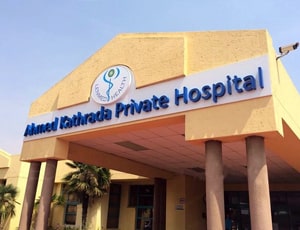
  • Lenmed Ahmed Kathrada Private Hospital
  • Look for a board-certified cardiothoracic surgeon with extensive experience in aortic root and heart valve surgeries. Reviewing the surgeon's expertise, patient outcomes, and hospital facilities can help you make an informed choice.

    The Bentall Procedure is a complex open-heart surgery performed to replace the aortic valve, aortic root, and ascending aorta with a composite graft. It is commonly used to treat conditions such as aortic aneurysms, aortic root disease, and severe aortic valve disorders while restoring normal blood flow and reducing the risk of life-threatening complications.

    During the Bentall Procedure, the diseased section of the ascending aorta and aortic valve is removed and replaced with a synthetic graft containing a mechanical or biological valve. The coronary arteries are then reattached to the graft to restore normal blood circulation.

    The Bentall Procedure is used to treat ascending aortic aneurysms, aortic root aneurysms, severe aortic valve disease, aortic dissection involving the aortic root, connective tissue disorders such as Marfan syndrome, bicuspid aortic valve with aortic dilation, and other complex aortic root conditions.

    The Bentall Procedure is suitable for patients with severe disease affecting both the aortic valve and the ascending aorta or aortic root. It is often recommended for patients at risk of aortic rupture, dissection, or progressive heart dysfunction due to complex aortic disease.

    The Bentall Procedure has an overall success rate of approximately 80 - 90%, depending on the patient's overall health, the severity of the condition, and the experience of the surgical team. Outcomes are generally better when the procedure is performed at experienced cardiac centers.

    Hospitals in Johannesburg use advanced cardiac imaging, 3D CT angiography, transesophageal echocardiography (TEE), heart-lung bypass systems, and modern composite grafts for the Bentall Procedure. These technologies support precise surgical planning, improve safety, and enhance long-term outcomes.

    As with any major heart surgery, the Bentall Procedure carries risks such as bleeding, infection, stroke, blood clots, irregular heart rhythm, kidney complications, or valve-related issues. However, with experienced surgical teams and appropriate postoperative care, most complications can be effectively managed.

    Before travelling, gather your medical records, echocardiogram and CT scan reports, laboratory results, and passport, and complete an online consultation if available. Confirm your surgery schedule, accommodation, and visa requirements in advance. Following your doctor's instructions helps ensure a smooth treatment journey.

    Yes, MediGence provides online consultations for international patients before travel. Cardiac specialists review your medical records and imaging studies to evaluate your condition and recommend the most appropriate treatment plan. This also helps you receive an estimated cost and travel guidance.

    Patients should bring a valid passport, visa, medical records, echocardiogram reports, CT or MRI scans, angiography reports (if available), recent laboratory results, and a list of current medications. These documents help doctors plan the surgery efficiently.

    Most international patients stay in Johannesburg for about 3 to 4 weeks, depending on their recovery, hospital stay, and follow-up evaluations. Since the Bentall Procedure is a major cardiac surgery, patients typically require several days of hospitalization followed by recovery before travelling home.

    Recovery after the Bentall Procedure usually takes 6 to 12 weeks, although most patients begin light daily activities within a few weeks. Regular follow-up appointments, medications, and cardiac rehabilitation help support a smooth recovery.

    If complications develop, your healthcare team will assess your condition and provide appropriate treatment, medications, or additional interventions if necessary. Most hospitals also offer follow-up support through teleconsultations for international patients after they return home.

    You can book your Bentall Procedure by submitting your medical records through the MediGence site. Our Care Team will connect you with leading cardiac surgeons and hospitals in Johannesburg, help you compare treatment options and costs, and coordinate your appointments. From medical visa assistance to travel, accommodation, and post-treatment follow-up, MediGence provides complete support throughout your medical journey.

    Johannesburg offers advanced cardiac surgery programs, experienced cardiovascular surgeons, and internationally accredited hospitals for the Bentall Procedure. Patients also benefit from comprehensive cardiac care, modern intensive care units, and dedicated international patient support services. Many countries provide high-quality treatment at competitive costs.

    Depending on your condition, doctors may recommend the Bentall Procedure with either a mechanical or biological valve, along with medications, cardiac rehabilitation, or additional cardiovascular procedures if required. The treatment plan is personalized according to your diagnosis, age, and overall health. Your cardiac surgeon will recommend the most suitable approach.

    FAQ's Related to South Africa

    Johannesburg, also known as the “The city of Gold” is located in South Africa and is also fast emerging as a healthcare hub. The Department of Health is in charge of healthcare in Johannesburg. The city lacks a comprehensive healthcare system. Instead, it employs two interconnected systems, a public, and a private healthcare system. The majority of people's care—up to 80% of the population—is under the control of the government. The public healthcare system is underfunded which makes the public prefer the private sector. The private hospitals in Johannesburg have state-of-the-art infrastructure and deliver healthcare as per international standards. Private healthcare is available to everyone in Johannesburg, regardless of nationality. Every year, patients from all over the world especially, the US, the UK, and Europe travel to Johannesburg to receive treatments like heart surgery, hip replacement, and In-vitro fertilization. This could be atttributed to the availability of good quality healthcare at affordable costs in Johannesburg.

    The hospitals in Johannesburg have state-of-the-art infrastructure and deliver services as per international standards. Some of the top hospitals in Johannesburg are:

    • Lenmed Ahmed Kathrada Private Hospital: This is a prominent hospital in South Africa and has a reputation for providing excellent healthcare to both national and international patients. With more than 25 beds, the hospital is equipped with modern facilities and has special trauma and renal care units. It offers advanced treatments like minimally invasive laparoscopic surgery. The hospital is widely known for providing personalized patient care with a multidisciplinary approach.
    • Netcare Linksfield Hospital: The hospital offers high-quality surgical and medical services to patients. It has cutting-edge medical technology and has performed over 500 robotically assisted orthopedic surgeries. Netcare Hospital has the distinction of executing the first Mako robotic-assisted total knee replacement surgery in South Africa.
    • Nelson Mandela Children’s Hospital: This hospital is dedicated to “pediatrics” and is designed to provide a safe and comfortable environment to children. It provides services in various specialties including nephrology, neurosurgery, and cardiology. The hospital has around 200 beds along with modern NICUs and PICUs.

    The doctors in Johannesburg are well-trained, competent, and qualified professionals who have completed their education at some of the best universities. Some of the top doctors in Johannesburg are:

    • Dr. Nirasha Chiranjan: She is an acclaimed radiation oncologist with over 15 years of experience in her field. Dr. Chiranjan can provide treatments for conditions such as lung cancer, prostate cancer, cervical cancer, and uterine cancer.
    • Dr. Chris McCready: He is a renowned orthopedic surgeon with more than 20 years of experience. Some of the procedures he is competent at include knee replacement, hip replacement, knee arthroscopy, and ACL reconstruction. Dr. Chris is fluent in English and is associated with the American Academy of Orthopedic Surgeons.
    • Dr. Labuschange: With more than 10 years of experience, he is a skilled neurosurgeon. His areas of expertise include vagus nerve stimulation therapy, hydrocephalus, neuro-ocology, and craniofacial surgery.

    You can reach Johannesburg by air, road, or rail. The nearest airport to Johannesburg is the OR Tambo International Airport. If you wish to avail treatment in Johannesburg, then we can help in planning your medical travel.

    Not Sure About Your Treatment Plan? Get a Second Opinion

    Get your medical reports reviewed by experienced doctors to help you make a confident treatment decision, all online within 48 hours.

    Upload Your Reports
    Free second opinion on your CAR-T plan