Browse verified doctors or let our care team help you find the doctor best suited to your condition, treatment goals, and budget.

Chennai, India
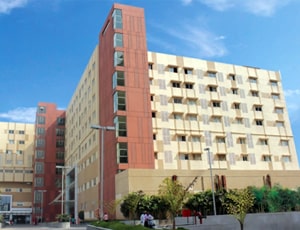
Apollo Hospitals, Greams Road in Chennai is one of the trusted names in Bone Marrow Transplantation among international patients. The hospital has a long history of serving as a BMT center for various blood disorders and malignancies. It does not only provide procedure from the highly qualified BMT team of specialists but also follow very stringent infection control norms, which are extremely critical for BMT patients.
The hospital has one of the precise and high-tech Radiology & Imaging facilities (diagnostics) available on the campus such as chest X-rays, blood tests, integrated pathology, cardiac scan, PET scan, and bone marrow biopsy. The center is also highly recognized for Autologous & Pediatric Bone Marrow Transplants. The success rate of BMT at Apollo ranges from 20% in severe cases to 80% in cases of non-malignant malignancies. The likelihood of infection or any other side effects after Apollo's bone marrow transplant is quite minimal. Some renowned BMT specialists at Apollo Hospital, Chennai are Dr. Srikanth M and Dr. Pabhu P.
BGS Gleneagles Global Hospital is one of the best hospitals for bone marrow transplants in Bangalore, and it has completed a groundbreaking record of 1000 life-saving transplants, to date. International patients commonly consider the facility in Bangalore as having the most effective Autologous Bone Marrow Transplantation. At BGS, doctors often use the term ‘Rescue’ instead of ‘Transplant’ for it.
The facility is committed to the earlier detection, diagnosis, and treatment of bone marrow-related health issues and seeks to be a center of utmost excellence, offering comprehensive and cutting-edge services related to the different stages of a bone marrow transplant. It is fully equipped with all the requisite facilities for BMT procedures like highly advanced radiology & imaging facilities, laboratory, transfusion equipment & facilities, fledged Blood Bank, Bone Marrow Biopsy facility, etc. The panel of BMT involves some of the internationally-trained & renowned specialists such as Dr. Rajeev Vijayakumar.
Best doctors for Bone Marrow Transplant at BGS Gleneagles Global Hospitals:
At the Medicana International Istanbul, there is a dedicated Bone marrow transplantation center offering treatment for blood cancer (leukemia) and lymph cancer (lymphoma) that are unresponsive to other treatments or develop after the treatment. The procedure is preferred in patients who are under 45 years of age and have no response to other treatment methods.
During the procedure, stem cells in the bone marrow are collected by a device and then stored in the apheresis unit until the day the stem cell transplant is done. These cells are then transferred to the patient on the day of the transplant. The stem cells that are collected from the patient or any other donor are prepared properly in a laboratory environment and are infused through the central venous catheter. The infused stem cells distribute and eventually reach the bone marrow. The patient is kept under observation for a few days in a safe and sterile environment before being discharged. Prof. Yener Koç is a bone marrow transplant specialist at Medicana International Istanbul.
Best doctors for Bone Marrow Transplant at Medicana Bahcelievler Hospital:
| Speciality | Transplants |
| Procedure | Bone Marrow Transplant |
| Success Rate | Varies by condition |
| Recovery Time | 6-12 months |
| Treatment Time | Several hours to days |
| Chances of Recurrence | Varies by condition |
A bone marrow transplant is a medical procedure that involves replacing damaged or diseased bone marrow with healthy stem cells. The process typically begins with conditioning therapy, which involves high-dose chemotherapy or radiation to destroy the unhealthy bone marrow. Then, healthy stem cells are infused into the patient's bloodstream, where they travel to the bone marrow and start producing new, healthy blood cells. The transplant aims to restore the patient's ability to produce normal blood cells and improve their overall health.
A bone marrow transplant is primarily used to treat hematological conditions, including leukemia, lymphoma, myelodysplastic syndromes, aplastic anemia, and certain genetic disorders like sickle cell disease and thalassemia. These conditions involve abnormalities in the bone marrow's ability to produce healthy blood cells.
The recovery process following a bone marrow transplant is complicated and unique to each patient. Initially, the patient may experience nausea, fatigue, and an increased risk of infection as a result of the conditioning therapy. Following the transplant, the recovery period entails close monitoring and supportive care. The patient will be given medications to suppress the immune system and prevent graft-versus-host disease. The transplanted stem cells will engraft and begin producing new blood cells over time. Typically, the recovery period lasts several months, during which the patient receives regular follow-up visits, blood tests, and supportive care to manage any potential complications and ensure the transplant's success.

Bone marrow transplants (BMT), also known as hematopoietic stem cell transplants (HSCT), can be life-saving for patients whose bone marrow is not functioning to produce healthy blood cells.