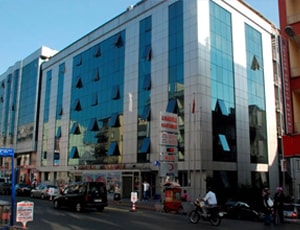
Acibadem Altunizade Hospital has many fully functional units, as well as technical infrastructure, medical technology, professional healthcare personnel in all branches, and a multidisciplinary approach. Acbadem Healthcare Group's Cardiovascular Surgery Departments serve children and adults in the field of cardiovascular surgery.
Electrocardiogram, Telecardiogram, Echocardiography, Holter monitoring, Cardiac stress (treadmill) test, Cardiac MRI, Cardiac CT, Conventional cardiac catheterization, and angiography are among the diagnostic techniques available at the hospital. Procedures such as coronary bypass surgery and minimally invasive heart surgery are used to treat septal defects, heart rhythm problems, congenital heart anomalies, heart valve diseases, and other conditions. Catheter Ablation, Coronary Angiography, Cardiac Catheterization, and other procedures are performed at the hospital. Prof. Ahmet Tulga Ulus, Prof. Ahmet ?mi̇t Güllü, and Prof. Bülent Kisacikoğlu are the cardiac specialists at the hospital.


With its modern infrastructure and superior medical technology, Memorial Ataşehir Hospital provides medical care that meets international health standards. The hospital has 144 beds available. Memorial Ataşehir Hospital takes a unique approach to health care, with MR and IT rooms outfitted with ambient technology to make patients feel at ease during radiological examinations. The hospital offers services in all fields, particularly Cardiovascular Surgery.
Memorial Healthcare Group's technological infrastructure consists of systems outfitted with high-tech devices that meet international standards and are specifically designed for patient comfort. Many of the hospital's technologies are being used for the first time in Turkey. The hospital is equipped to treat Septal defects, heart rhythm problems, congenital heart anomalies, heart valve diseases, and other conditions using procedures such as coronary bypass surgery, minimally invasive heart surgery (small incision method), and robotic heart surgery. Dr. Hakan Gerçekoglu, Dr. Altug SAGIR, and Dr. Mehmet Fikri YAPICI are the authors of this paper.

The Department of Cardiovascular Surgery at Medicana Bahcelievler Hospital carries out the treatment of diseases (congenital or acquired). The hospital has state-of-the-art technologies and modern equipment to deal with cardiac situations like septal defects of the atria and ventricles. Cardiovascular Surgeries are carried out at the hospital with utmost perfection and yield a high success rate.
The hospital has fully monitored procedure rooms. The hospital's cardiology department offers ECG, Exercise-ECG (Treadmill Test), 24-hour Holter Monitoring, 24-hour BP Monitoring, Transthoracic Echocardiography and Color Doppler, Echocardiography, Dobutamine Stress Echocardiography, Multislice Cardiac CT, and CT Coronary Angiography. Septal defects, heart rhythm problems, congenital heart anomalies, heart valve diseases, and other conditions are treated at the hospital using procedures such as coronary bypass surgery and minimally invasive heart surgery (small incision method). Prof. Murat Başaran is a cardiovascular surgeon at the hospital.

Medicana Konya Hospital is the region's largest and most comprehensive hospital, distinguished by modern technology and technical features. The hospital has a total capacity of 223 beds, including 49 beds in the general intensive care unit, 7 beds in the cardiovascular surgery intensive care unit, 9 beds in the coronary intensive care unit, 41 beds in the neonatal intensive care unit, and 117 inpatient beds. It is a private hospital that provides 24-hour emergency services and distinguishes itself through advanced medical practices and a strong medical staff.
To provide excellent cardiac care, the hospital provides International patient care standards, cutting-edge technology, and a diverse academic staff. It has both indoor and outdoor parking. Among the diagnostic techniques available at the hospital are electrocardiograms, telecardiograms, echocardiography, Holter monitoring, cardiac stress (treadmill) tests, cardiac MRIs, cardiac CTs, conventional cardiac catheterization, and angiography. Procedures like coronary bypass surgery and minimally invasive heart surgery are used in hospital to treat septal defects, heart rhythm problems, congenital heart anomalies, heart valve diseases, and other conditions.

Medicana Bursa Hospital has been providing world-class health services under one roof to both local and international patients. It offers modern diagnostic and treatment units equipped with cutting-edge medical technology. It is a private hospital that offers 24-hour emergency services and distinguishes itself through advanced medical practices and a strong physician staff. In a 40 thousand square meter closed area, Medicana Bursa Hospital has a capacity of 300 beds, 235 active beds, 10 operating rooms, 2 delivery rooms, and 75 intensive care beds.
The hospital offers International patient care standards, state-of-the-art devices, and a wide academic staff to deliver excellent cardiac care. It has an indoor and outdoor parking area. Electrocardiogram, Telecardiogram, Echocardiography, Holter monitoring, Cardiac stress (treadmill) test, Cardiac MRI, Cardiac CT, Conventional cardiac catheterization, and angiography are among the diagnostic techniques available at the hospital. At the hospital, procedures such as coronary bypass surgery and minimally invasive heart surgery are used to treat septal defects, heart rhythm problems, congenital heart anomalies, heart valve diseases, and other conditions. Prof. Dr. Serdar Ener, Dr. Elif Ceylan, and Dr. Ulku Yildiz are cardiac specialists at the hospital.
Ask your healthcare adviser for the best multiple options and choose the one that meets your expectations

| Speciality | Cardiac Sciences |
| Procedure | Atrial Septal Defect (ASD) Repair |
| Success Rate | 90-95% |
| Recovery Time | 2 to 4 weeks |
| Treatment Time | 2 - 2.5 hours |
| Chances of Recurrence | 4 - 6% |
ASD Repair is a surgical procedure used to repair a hole in the atrial septum, the wall that separates the upper chambers of the heart. The defect is closed with sutures or a patch during the procedure. It can be done with open-heart surgery or with minimally invasive techniques like cardiac catheterization.
Atrial Septal Defect (ASD) Repair is primarily used to treat atrial septal defects, which are congenital heart conditions characterized by abnormal openings between the atria. These defects can lead to the mixing of oxygenated and deoxygenated blood, potentially causing strain on the heart and lungs. The procedure helps restore proper blood flow and relieves related symptoms by fixing the defect.
After Atrial Septal Defect (ASD) Repair, the recovery period varies based on the surgical technique used and the patient in question. Patients should typically anticipate spending a few days in the hospital following the procedure. Medication may be prescribed to manage pain and prevent infection. Physical activity and strenuous exercise should be limited for several weeks, and follow-up appointments will be scheduled to monitor healing and overall cardiac health. With proper care and adherence to the recommended recovery guidelines, most patients can resume normal activities within a few months.
A number of determining factors can be used to rank hospitals for your suitable procedure. When it comes to Turkey, the following measures can be used to rank hospitals for Atrial Septal Defect (ASD) Repair- Popularity for the procedure, Infrastructure, Availability of the Procedure, Experienced doctors, Technology used, Cost, Facilities provided, Success Rate
MediGence offers you a blend of convenience, quality healthcare, and cost-savings. We keep your health a priority and make sure you receive a hassle-free medical journey with some unmatched benefits & services. Some of the top caregiving services available include Hotel stays, Dedicated Case Coordinator, Recovery packages, Online Consultation, round-the-clock assistance, and customized packages with discounts of up to a 30%. There are many more advantages for you besides the aforementioned services.
That's Correct. Before you decide on to travel for a medical purpose, you can avail a video consultation with the specialist. To schedule the consultation, please get in touch with our patient advisory team. They will check the doctor's availability for the consultation. Once confirmed, you will be sent a payment link to book your online consultation.
Turkey is becoming a prime destination for many people across the world for Atrial Septal Defect (ASD) Repair because of high success rates and modern infrastructure. Many other factors make Turkey the preferred choice for Atrial Septal Defect (ASD) Repair. These include:
The recovery time of the patients can be determined based on the patient’s overall health and the criticality of the procedure undergone. The patient should make sure to take all rehabilitation sessions and follow postoperative care protocols, among other things, to reduce their recovery time. Following surgery, patients must return for follow-up appointments to ensure proper healing and hasten the healing process.