Your Notifications
All done, no notifications

Pediatric Liver Transplant Cost in Gurgaon

Costs starts from USD35000 to USD50000
Filters

Cost of Pediatric Liver Transplant in Major cities of India

CityMinimum Cost (USD)Minimum Cost (INR)Maximum Cost (USD)Maximum Cost (INR)
AhmedabadUSD 315002697660USD 450003853800
BangaloreUSD 350002997400USD 500004282000
ChennaiUSD 350002997400USD 500004282000
DelhiUSD 350002997400USD 500004282000
FaridabadUSD 350002997400USD 500004282000
GhaziabadUSD 350002997400USD 500004282000
GurgaonUSD 350002997400USD 500004282000
GurugramUSD 350002997400USD 500004282000
HyderabadUSD 350002997400USD 500004282000
KochiUSD 350002997400USD 500004282000
KolkataUSD 350002997400USD 500004282000
MumbaiUSD 350002997400USD 500004282000
NoidaUSD 350002997400USD 500004282000

Need Help Planning Your Treatment Abroad?

Your 24/7 AI Health Assistant

A pediatric liver transplant is a surgical procedure in which a healthy liver or part of a healthy liver from a donor is transferred into a child with severe liver disease. This is generally done when a child's liver is degenerating and no longer performs as it should, often due to acute liver failure, metabolic defects, or biliary atresia.

When acute or chronic liver illness causes a child's liver to stop functioning normally, a pediatric liver transplant is done. Biliary atresia, acute liver failure, metabolic liver illnesses, and genetic disorders are among the common situations that result in transplantation. In order to encourage growth and development, restore normal liver function, and avoid potentially fatal consequences like liver failure, severe jaundice, internal bleeding, and infections, the damaged liver will be replaced with a healthy donor liver.

Parents should seek medical attention if a child shows signs of liver dysfunction, including jaundice (yellowing of the eyes and skin), swollen abdomen, chronic vomiting, poor appetite, dark urine, pale stools, frequent bruising, or poor weight gain. If liver disease is diagnosed, ongoing evaluation by a pediatric hepatologist or liver transplant team is essential. Early referral improves the success and outcomes of transplant planning.

Preparation includes a comprehensive medical evaluation, lab tests, imaging (ultrasound, CT, MRI), liver biopsy (if required), and psychological assessment of the child and family. The transplant team evaluates nutritional status, organ function, and suitability for surgery. Once listed for transplant, the child waits for a compatible deceased donor or living donor liver. Preoperative care also involves infection screening, vaccination updates, and counselling about the procedure, recovery, and lifelong care needs.

The surgery is performed under general anaesthesia and may last 6 to 12 hours, depending on the child’s condition and the complexity of the transplant.
  • Donor Types:
    • Living donor: A portion of liver from a healthy adult, often a parent or relative. The liver regenerates in both donor and recipient.
    • Deceased donor: A whole or partial liver from a brain-dead donor.
  • Procedure:
    The diseased liver is surgically removed and replaced with the healthy donor liver. Blood vessels and bile ducts are carefully connected to ensure normal circulation and bile drainage.

The transplant surgery itself takes 6–12 hours. Postoperative intensive care is usually required for 2–5 days, followed by a hospital stay of 2–4 weeks, depending on the child’s recovery, complications (if any), and nutritional status.

  • Organ rejection
    Bleeding
  • Infection
  • Bile duct complications (leaks or narrowing)
  • Blood clots
  • Side effects of immunosuppressants
  • Delayed graft function or graft failure

  • Reversal of end-stage liver disease
  • Improved growth, energy, and appetite
  • Normalisation of metabolic and liver functions
  • Drastic reduction in disease-related hospitalisations
  • Restoration of a normal or near-normal quality of life

Recovery includes close monitoring in ICU, infection prevention, and initiation of immunosuppressive therapy to prevent organ rejection. The child will gradually resume feeding and physical activity. Long-term follow-up includes regular lab tests, imaging, and medication management. Schooling and routine life often resume in a few months, with ongoing care from a transplant team.

Pediatric liver transplant has an excellent success rate, with 1-year survival rates over 90% and 5-year survival around 85–90% at experienced centres. With timely surgery, proper medication, and consistent follow-up, most children go on to live healthy and active lives.

Top Selling Packages for Pediatric Liver Transplant

Liver Transplant (Paediatric)

Amrita Hospital, Faridabad, India

USD 21000 USD 22000

Would you like some help? We are available.

Get Help
Explore Hospitals ( 4 )
Pediatric Liver Transplant in Artemis Health Institute: Costs, Top Doctors, and Reviews

Gurgaon, India

3.3 ( 4 Reviews )
  • Joint Commission International, or JCI
  • National Accreditation Board for Hospitals & Healthcare Providers (NABH)

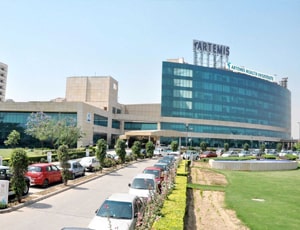
Artemis Hospital, established in 2007 in Gurgaon, India, is a 750+ bed, state-of-the-art multi-speciality hospital and the first in Gurgaon accredited by JCI and NABH. A flagship of the Apollo Tyres Group, it offers advanced care across cardiology, oncology, orthopaedics, neurology, and transplant medicine, supported by modern infrastructure and 60+ world-class operating theatres. Its Centres of Excellence span critical areas like heart, cancer, neurosciences, orthopaedics, and women & child care. Guided by values of Service, Compassion, and Integrity, Artemis combines innovation, technology, and affordability, making it a trusted international healthcare destination for comprehensive and compassionate patient care.

Pediatric Liver Transplant in Medanta - The Medicity: Costs, Top Doctors, and Reviews

Gurgaon, India

3.4 ( 1 Reviews )
  • Joint Commission International, or JCI
  • National Accreditation Board for Hospitals & Healthcare Providers (NABH)

Medanta – The Medicity, Gurugram, founded by renowned cardiac surgeon Dr. Naresh Trehan, is a leading multi-super speciality hospital offering advanced yet affordable healthcare. Spread across a 43-acre campus, it houses 1,391 beds, 270 ICU beds, 40 operation theatres, and 900+ doctors across 30+ specialities. Accredited by JCI, NABH, and NABL, Medanta is designed per American Institute of Architects’ healthcare guidelines. Recognised as the Best Private Hospital in India (2020–2025) and among the World’s Top 250 Hospitals (Newsweek 2024), it excels in Cardiac Care, Cancer, Neurosciences, Gastro, Orthopaedics, and Renal Care, ensuring world-class, collaborative, and compassionate treatment.

Pediatric Liver Transplant in Max Hospital, Gurgaon: Costs, Top Doctors, and Reviews

Gurgaon, India

  • ISO 9001
  • National Accreditation Board for Hospitals & Healthcare Providers (NABH)
  • Max Hospital Gurugram is a leading multi-speciality healthcare centre in Haryana, renowned for its advanced clinical expertise and patient-focused care.
  • Established in 2007, it is part of the trusted Max Healthcare network and has treated over 500,000 patients across 35+ specialities.
  • The hospital is equipped with modern medical technology, internationally trained doctors, and superior clinical infrastructure.
  • Known for its excellence in Cardiology, Oncology, Neurosciences, Orthopaedics, Gastroenterology, and Women & Child Care, Max Hospital is a preferred choice for both domestic and international patients seeking high-quality treatment with compassionate care.
Pediatric Liver Transplant in Manipal Hospital, Gurugram: Costs, Top Doctors, and Reviews

Gurgaon, India

  • National Accreditation Board for Testing and Calibration Laboratories (NABL)
  • National Accreditation Board for Hospitals & Healthcare Providers (NABH)

Manipal Hospital, Gurgaon, which used to be Columbia Asia Hospital, is a 100-bed, multispecialty facility that was established in 2008. It is recognized by NABH, and offers complete care in six specialties: neurology, cardiology, oncology, gynecology, orthopedics, and psychiatry. By bringing together modern infrastructure, sophisticated technology, and a team of qualified medical and nursing staff as a part of its value system, the hospital emphasizes ethics and high-quality, affordable healthcare. The hospital maintains an integrated and collaborative framework, and is able to provide 24/7 emergency services and critical care, to achieve the best possible outcomes, with patient satisfaction and treatment as a whole being a fundamental feature of the service.

Need Some Advice From Our Experts?

Request a Call Back Now!

Our team of healthcare experts would be happy to assist you

trusted Patientstrusted Patients+99
Trusted by 50000+ Patients
Required | alphabets and spaces
Required | A valid, working email address
Required | A valid contact

Process Involved for Pediatric Liver Transplant in Gurgaon

  • Consultation with a Pediatric Hepatologist: Initial evaluation and diagnosis of liver condition.
  • Hepatologist & Psychological Assessments: Detailed Liver function examination.
  • Liver Imaging (MRI/CT Scans): This procedure assesses the liver's health and vascular and biliary anatomy and rules out any other issues, ensuring a safe and successful transplant.
  • Informed Consent: Detailed explanation of transplant and associated risks.
  • Biliary Atresia
  • Sudden liver failure caused by infections or toxins.
  • Cirrhosis
  • Nonalcoholic Fatty Liver Disease
  • Metabolic or Genetic Disorders
  • Urea Cycle Disorders
  • Liver Tumors
  • Severe Viral Hepatitis
  • Children with End-Stage Liver Disease
  • Children with chronic liver failure.
  • Individuals who have intractable symptoms such as severe jaundice, ascites, or bleeding that cannot be controlled with medical intervention.
  • Children without any other serious organ problem.
  • Portal Vein or Hepatic Artery Reconstruction
  • Biliary Reconstruction
  • Splenectomy (Removal of the Spleen)
  • Correction of Pre-existing Abdominal Issues
  • Correction of Congenital Anomalies
  • Life-saving Solution for Children with Severe Liver Diseases
  • Improves quality of life and promotes growth and development.
  • The symptoms of jaundice, persistent itching, edema, and abdominal pain are significantly alleviated.
  • Reduced risk of health complications.
  • Return to Daily Activities
  • Extended and Healthier Lifespan
  • Liver Transplant Surgeon
  • Nutritionist
  • Fill out the inquiry form: Fill out the form to provide us with the relevant information about your condition.
  • Consult with Our Healthcare Expert: One of our qualified specialists will contact you for a consultation.
  • Receive a Detailed Treatment Plan: After examining your situation, we will provide you with a detailed treatment plan that includes expert views and cost breakdowns for various choices.
  • Choose your preferred option: Choose the therapy option that best suits you.
  • Seamless Organization: We will manage all the details, including visas, flights, accommodations, and transfers, for a stress-free journey.

Instantly Connect with our Pediatric Liver Transplant Specialists

Doctor 1
Doctor 2
Doctor 3
Doctor 4
Doctor 5
Doctor 6
Doctor 7
Doctor 8
Our Services to Better your Experience

Opinion & Option

We submit the most accurate opinion and options from one or more countries for your review

Consult Privately

Consult with a certified specialist privately on our telemedicine platform even before you decide to travel

Logistics

We handle flights, visas, transfers, and accommodation—so you can focus on your health.

Recovery

Our In-house rehabilitation service packages to better your recovery and treatment outcome

Other Popular Countries for Pediatric Liver Transplant

Our network connects you with the leading medical tourism destinations globally, offering a wide range of cities, top doctors, and flexible pricing options.

Singapore
Turkey
Malaysia
Thailand

Frequently Asked Questions

  • Infection
  • Infection at the surgical site
  • Bleeding
  • Organ rejection
  • Leakage or blockage of the bile duct.
  • Immune-related side effects
  • Surgical Complications
  • Recurrence of liver disease
  • Poor functioning of the transplanted liver

Yes, liver transplant surgery in India is generally safe for children, as many hospitals have dedicated pediatric transplant teams and modern technology. The success rate is high, especially with developments in medical technology and immunosuppressive medicines.

  • Immediate Post-Surgery Recovery: Pain management ensures the child's comfort. The medical team monitors the functioning of the transplanted liver, and close monitoring is done to address any complications, such as bleeding, infections, or signs of organ rejection. The child usually stays in the hospital for two to three weeks, receiving initial care in the Intensive Care Unit (ICU)
  • Recovery at Home: Following discharge, recuperation lasts for roughly six to twelve weeks. To evaluate liver function, the child makes routine follow-up appointments for imaging and blood testing during this time. Immunosuppressive drugs are started. Parents are instructed to look out for warning indicators such as fever, jaundice, or exhaustion and are counseled to get medical help right once if necessary
  • Regular Monitoring: Routine medical examinations are essential to identify complications like infections, bile duct problems, or indications of organ rejection early.

Yes, India has specialist hospitals for pediatric liver transplants in large cities such as

  • Gurgaon.
  • Chennai
  • Mumbai
  • Bangalore
  • Hyderabad

These cities have excellent facilities with advanced technology, experienced transplant teams, and comprehensive care for pediatric liver transplant patients.

Long-term care requires regular check-ups to evaluate liver function, alter immunosuppressive medications, and detect potential problems such as organ rejection or infections.

  • Access to Expertise and Advanced Technology: Top hospitals in India provide the latest technology and specialist transplant teams, assuring world-class care with an emphasis on pediatric liver transplants.
  • Cost-effective Treatment: Pediatric liver transplants in India are much less expensive than in many Western nations, including preoperative tests, surgery, and post-operative care.
  • Donor Availability: India benefits from greater awareness and organ donation initiatives, making finding donors simpler.
  • Medical tourism friendly: Indian healthcare staff are known for their patient-centered approach, compassionate care, and personalised therapy, which helps to reduce the emotional stress associated with major surgery.

Author

Dr. Vishwas Kaushik

MBBS, MD

5 Years of Experience

Dr. Vishwas Kaushik is a qualified medical professional holding an MBBS from the prestigious Belgorod State University, Russia, with a strong foundation in clinical medicine and healthcare practice. His comprehensive medical training has equipped him with a profound understanding of evidence-based clinical practices, patient-centered care, and the evolving landscape of modern medicine. With a keen interest in medical research and scientific communication, he consistently translates complex clinical concepts into clear, accurate, and accessible content for diverse audiences. His work reflects a deep commitment to advancing medical knowledge, delivering impactful healthcare insights, and bridging the gap between clinical expertise and accessible medical communication.. View More

Reviewer

Dr. Akash Khandelwal

Hematologist

9 Years of Experience

Dr. Akash Khandelwal is a distinguished Hematologist, Hemato-oncologist, and Bone Marrow Transplant (BMT) Physician with extensive training from the prestigious AIIMS New Delhi. His expertise encompasses a wide range of specialized techniques in bone marrow transplantation, including autologous and allogeneic transplants such as matched sibling donors, matched unrelated donors (MUD), and haploidentical donor transplants. Dr. Khandelwal has personally supervised and conducted over 100 bone marrow transplants. View More