Your Notifications
All done, no notifications

Endovascular Embolization of AVM Cost in Egypt

USD 8000 - USD 14000

Affordable World-class Treatment - Accredited Hospitals - Free Treatment Plan in 24 Hrs

2
Days in Hospital
2-4 hrs
Procedure Time
85 - 95%
Success Rate
Endovascular Embolization of AVM
JCI/ISO 100,000+ Patients 24X7 Coordinator Visa & Travel handled
Your all-in-one medical travel platform for treatment, recovery & care.

Get Your Personalised Treatment Plan in Just 24 Hours.

Share your details to receive a personalised treatment plan, estimated costs, hospital recommendations, and expert guidance, “completely free.”

Required | alphabets and spaces
Required | A valid, working email address
Required | A valid contact
Connect with an Expert

Your information is protected with HIPAA-compliant security standards. We only share your details with hospitals after your consent.

Estimated Treatment Cost
USD 8000 - USD 14000
All-inclusive • Hospital + Medications + Recovery Assistance + Dedicated Care Coordinator

International Quality. Affordable Care.

What's included in your Endovascular Embolization of AVM quote?

Comprehensive tests and imaging
Digital Subtraction Angiography (DSA), MRI Brain, CT Scan, CT/MR Angiography
Neurointerventional specialist team
Pre-procedure evaluation, embolisation, post-procedure care
Hospital stay + ICU as needed
ICU monitoring (if required), neurological observation, pain management
Country stay monitoring
Follow-up angiography/MRI, neurological assessment, medication review
Visa & medical-visa invite letter
Airport pickup & transfers

Cost of Endovascular Embolization of AVM in Major Cities of Egypt

CityCost (USD)
Alexandria Get Quote Explore More
Cairo Get Quote Explore More

Endovascular Embolization Of Avm - Egypt Vs the World

$0 - $0
$11k - $19k
$14k - $25k
$15k - $28k
$20k - $38k
$20k - $38k
$25k - $45k
$28k - $50k
$30k - $55k
$32k - $52k
$35k - $65k
$35k - $60k
Dr. Shagufta Parveen
Author

Doctor of Pharmacy

3 Years of Experience

Dr. Shagufta Parveen is a Clinical researcher and medical writer with expertise in clinical pharmacology and pharmacotherapeutics. She holds a B.Pharm and Doctor of Pharmacy (Post-Baccalaureate) degree from Teerthanker Mahaveer University, Moradabad.

During her clinical stint at BLK-Max Super Speciality Hospital and Indraprastha Apollo Hospital, she gained hands-on experience in the Clinical Pharmacology Department. Combining scientific knowledge with strong medical writing skills, Dr. Shagufta develops evidence-based healthcare content, treatment guides, and patient education resources.

Her work focuses on simplifying complex medical concepts while maintaining scientific accuracy, helping readers better understand healthcare advancements and treatment options.

In addition to her writing expertise, she is actively involved in scientific research and has contributed to peer-reviewed publications.

Her research work is accessible through the following links:

https://scholar.google.com/citations?user=lMVK1eIAAAAJ&hl=en

https://carcinogenesis.com/index.php/JOC/article/view/870

https://carcinogenesis.com/index.php/JOC/article/view/868

https://wjpsronline.com/abstract/0000000760

View More
⁠Dr Rakesh Kumar Dua
Reviewer

Spine & Neurosurgeon

25 Years of Experience

Last Reviewed - June 2026

Dr. Rakesh Dua has more than 25+ years of clinical experience in spine surgeries. He is currently providing his services as Director, Neuro & Spine Surgery at Fortis Hospital, Shalimar Bagh. Before joining Fortis Hospital, he was associated with Max super-specialist Hospital, Shalimar Bagh as Director Neurosurgery & Head Neuro Spine, and with UCMS & GTB hospital as head of the neurosurgery department.
View More

Need Help Choosing the Right Treatment? Talk to a Medical Advisor

Our dedicated Medical Patient Advisors are here to answer your questions, help you compare treatment options, estimate costs, and guide you through every step of your healthcare journey.

15 min
Average response time

Serving Patients Worldwide in Multiple Languages.

Inside your body, blood flows through tiny tubes called blood vessels. Sometimes, these tubes get all twisted and messy in one spot — that’s called an AVM, or Arteriovenous Malformation. It can cause problems, such as headaches or even bleeding, if not treated.

To fix it, doctors use a special method called Endovascular Embolisation. This method repairs the AVM from within the body, eliminating the need for large incisions.

First, the doctor helps you fall asleep so you won’t feel anything. Then, they gently slide a soft, thin tube into a blood vessel, usually in your leg. Using pictures on a screen, they guide the tube to the location of the AVM.

When the tube is in the correct position, the doctor inserts a small amount of special material, such as glue or soft plugs, to block the twisted vessels. This prevents blood from flowing in the wrong direction and helps prevent further complications. Once the AVM is blocked off, the doctor slowly removes the tube, and you rest in the hospital to recover.

This way, your blood flows more efficiently, and the risk of serious issues, such as bleeding, decreases.

Explore Hospitals ( 2 )

Cairo, Egypt

3000+ Beds · 185+ Procedures
JCI
Starting
USD 8000

Alexandria, Egypt

3000+ Beds · 185+ Procedures
JCI
Starting
USD 8000

Get Your Endovascular Embolization of AVM
Plan in 24 hrs.

Our experienced Medical Patient Advisors have supported 100,000+ patients across 120+ countries with personalised treatment plans, hospital recommendations, cost estimates, and travel assistance, all free.

HIPAA-Compliant Data SecurityShared Only with Your Consent

Free Consultation No Obligation Personalized Treatment Plan Response Within 24 Hours

Required | alphabets and spaces
Required | A valid, working email address
Required | A valid contact

Your medical info is kept HIPAA-style confidential. We never share with hospitals without your consent.

Jenny Wilson
Your Dedicated Medical Patient Advisor
Treatment planning • Hospital coordination • Multilingual support • Response within 15 minutes.
Our Services to Better your Experience

Opinion & Option

We submit the most accurate opinion and options from one or more countries for your review

Consult Privately

Consult with a certified specialist privately on our telemedicine platform even before you decide to travel

Logistics

We handle flights, visas, transfers, and accommodation—so you can focus on your health.

Recovery

Our In-house rehabilitation service packages to better your recovery and treatment outcome

Patient Stories

Ms Patience: Cosmetic Surgery
Ms Patience
Ms Patience: Cosmetic Surgery

Ms Patience from Uganda travelled to India for cosmetic surgery in May 2017. She got her treatment done in Asian…

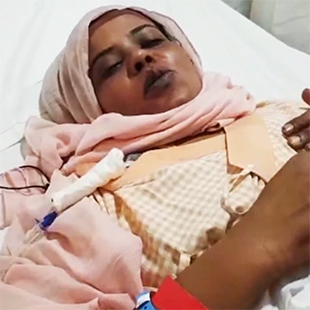
Patient Testimonial: Lobna from Sudan for Successful Open Craniotomy Surgery in India
Mrs. Lobna Salah Hassan
Mrs. Lobna Hasan from Sudan for Open Craniotomy Surgery in India

Lobna (from Sudan) was diagnosed with meningioma, a form of non-cancerous brain tumor. Her family members decided to take her…

Frequently Asked Questions

The cost of endovascular embolization of arteriovenous malformation (AVM) in Egypt may vary depending on the location, size, and complexity of the AVM, number of embolization sessions required, type and quantity of embolic materials used, angiographic imaging, surgeon and hospital fees, anaesthesia, intensive care requirements, and duration of hospitalisation. The total cost may include pre-procedure consultations, MRI/MRA or CT/CTA, diagnostic cerebral angiography, embolization, embolic agents and catheters, anaesthesia, hospitalisation, medications, post-procedure monitoring, and follow-up imaging.MediGence can help international patients compare suitable hospitals and obtain an estimated treatment plan based on their medical condition.

The best hospitals for endovascular embolization of AVM in Egypt are those with specialised neurointerventional and neurosurgery departments, experienced interventional neuroradiologists, advanced angiography facilities, neurocritical care units, and access to multidisciplinary AVM treatment programmes.International patients should consider hospitals with experience in treating complex cerebral and spinal AVMs and access to neurosurgery, stereotactic radiosurgery, and other complementary treatment options when required.

Patients should choose an experienced interventional neuroradiologist or neurointerventional specialist who routinely performs endovascular treatment of cerebral or spinal AVMs. Important factors include professional qualifications, experience with AVM embolization, expertise in cerebral angiography and endovascular techniques, experience managing complex vascular malformations, hospital affiliation, and access to multidisciplinary neurovascular care.The specialist should evaluate the AVM's size, location, feeding arteries, draining veins, rupture status, associated aneurysms, and relationship with surrounding neurological structures before determining whether embolization is appropriate.

The outcomes of AVM embolization depend on the size, location, vascular anatomy, rupture status, number of feeding arteries, presence of associated aneurysms, and whether embolization is being used as a definitive treatment or as part of a combined treatment strategy.Embolization may reduce blood flow through the AVM and, in selected cases, completely eliminate the vascular malformation. However, complete obliteration is not always the primary objective. Embolization may also be performed before microsurgical resection or stereotactic radiosurgery to make subsequent treatment safer or more effective.Patients should ask the treating centre for procedure-specific outcomes based on AVM characteristics rather than relying on a single overall success rate.

Hospitals in Egypt may use advanced digital subtraction angiography (DSA), three-dimensional angiography, high-resolution vascular imaging, and specialised microcatheters to map the AVM and plan treatment.During embolisation, a microcatheter is navigated through the blood vessels toward the arteries supplying the AVM. The specialist may use embolic materials such as liquid embolic agents or other specialised devices to reduce or block blood flow through selected abnormal vessels.Treatment planning may incorporate detailed MRI, MRA, CT, CTA, and cerebral angiography. In complex cases, embolisation may be combined with microsurgical resection or stereotactic radiosurgery.The choice of technique depends on the AVM's location, size, vascular architecture, feeding arteries, draining veins, rupture status, and overall neurological risk.

Although AVM embolisation is performed using minimally invasive endovascular techniques, it carries important neurological and vascular risks. Possible complications may include:
  • Bleeding or intracranial haemorrhage
  • Stroke or transient neurological deficits
  • Vessel perforation or dissection
  • Unintended blockage of normal blood vessels
  • Ischaemia or infarction
  • AVM rupture during or after treatment
  • Seizures
  • Headache or neurological symptoms
  • Infection
  • Blood-vessel complications at the catheter insertion site
  • Allergic or kidney-related complications associated with contrast agents
  • Incomplete AVM closure or recurrence
  • Need for additional embolisation or other treatment
  • The individual risk depends on the AVM anatomy, treatment strategy, embolic material, number of vessels treated, and the patient's overall condition.

    Before travelling, patients should undergo a detailed evaluation by a neurointerventional specialist and provide relevant brain or spinal imaging and medical records. These may include MRI/MRA, CT/CTA, previous angiography, neurological consultation reports, and records of any previous AVM treatment.Patients should provide information about previous bleeding or neurological symptoms, seizures, headaches, medications, allergies, previous procedures, and existing medical conditions. The treating team may recommend additional angiographic or laboratory investigations before confirming the treatment plan.Patients should also discuss whether one or multiple embolization sessions may be required, the expected hospital stay, intensive care monitoring, possible additional treatment, and post-procedure follow-up before travelling.

    Yes. International patients can seek an online consultation with a neurointerventional specialist before travelling to Egypt. The specialist can review available imaging, angiography, medical history, neurological symptoms, previous treatment, and other clinical information to determine whether further evaluation or embolization may be appropriate.The consultation can also help patients understand the proposed embolization strategy, potential need for staged treatment, possible combination with surgery or radiosurgery, expected hospitalisation, risks, and recovery.MediGence can help patients coordinate online consultations and share relevant medical records and imaging with suitable neurovascular specialists.

    International patients should carry a valid passport and all relevant medical documents, including:
  • MRI/MRA scans and reports
  • CT/CTA scans and reports
  • Cerebral or spinal angiography images and reports, if performed
  • Neurology or neurosurgery consultation records
  • Previous AVM treatment and procedure reports
  • Discharge summaries from previous hospitalisations
  • Blood test and pre-procedure investigation reports
  • Current prescriptions and medication details
  • Allergy and medical history records
  • Records of seizures, haemorrhage, headaches, or other neurological symptoms
  • Patients should carry digital and physical copies of important reports and imaging whenever possible.

    The required stay in Egypt depends on the complexity and location of the AVM, treatment strategy, number of embolization sessions, and recovery after the procedure. Some patients may require short-term hospitalisation, while complex cases may require several days of monitoring, including neurocritical care when clinically necessary.If staged embolisation or additional surgery or radiosurgery is planned, the overall treatment journey may require a longer stay or subsequent visits. International patients should obtain an individualised timeline from the treating neurointerventional team before travelling.

    Recovery after AVM embolisation varies depending on the extent of treatment, AVM location, whether the AVM has ruptured, neurological status, and whether other procedures are performed.Patients are generally monitored after the procedure for neurological changes, bleeding, blood pressure abnormalities, and other potential complications. Some patients may experience temporary headache, fatigue, or discomfort at the catheter insertion site.The treating specialist will determine when normal activities can be resumed and whether additional imaging, angiography, embolisation, surgery, or radiosurgery is required. Patients should follow all medication, activity, and follow-up instructions provided by the treating team.

    If complications occur after AVM embolisation, the patient should immediately contact the treating hospital or seek emergency medical evaluation. Management depends on the complication and may involve medication, additional imaging, angiography, endovascular treatment, surgery, or intensive neurological monitoring.Patients should seek urgent medical attention for sudden severe headache, loss of consciousness, seizures, new weakness or numbness, difficulty speaking, vision changes, confusion, severe dizziness, or other sudden neurological symptoms.International patients should maintain communication with their treating neurointerventional centre after returning home and arrange follow-up with a local neurologist or neurosurgeon when recommended.

    International patients can begin by submitting their medical history, neurological records, and available brain or spinal imaging for review. MediGence can help identify suitable hospitals and neurointerventional specialists, arrange online consultations, coordinate medical record sharing, assist with treatment planning, and support the medical travel process.The final decision regarding embolisation is made by the treating neurovascular team after reviewing the AVM's anatomy, neurological status, previous treatment, and overall health.

    International patients may consider Egypt for AVM embolisation if it offers specialised neurovascular centres with experienced interventional neuroradiologists, advanced digital subtraction angiography, modern endovascular equipment, neurocritical care, and multidisciplinary access to neurosurgery and stereotactic radiosurgery.Patients should evaluate the destination based on the hospital's experience with complex AVMs, availability of advanced angiographic technology, specialist expertise, multidisciplinary treatment options, emergency neurological care, and long-term follow-up facilities.

    Treatment options for AVM depend on its size, location, vascular anatomy, rupture status, neurological symptoms, and overall treatment risk.Endovascular embolization may be used to reduce blood flow through an AVM, treat selected high-risk vascular features, or prepare the AVM for another definitive treatment. Depending on the individual case, embolization may be performed as a standalone treatment or combined with microsurgical resection or stereotactic radiosurgery.Other management approaches may include observation with regular imaging for selected unruptured AVMs when intervention carries substantial risk. Microsurgical removal or stereotactic radiosurgery may be considered when the AVM's characteristics make these approaches appropriate.The neurovascular team will determine the most appropriate strategy based on the AVM's anatomy, neurological condition, treatment risks, and expected benefits.

    International patients may choose Egypt for access to experienced neurointerventional specialists, advanced cerebral and spinal angiography, modern embolization technologies, specialised neurocritical care, and multidisciplinary treatment involving interventional neuroradiology, neurosurgery, neurology, and radiation oncology when required.MediGence can assist international patients with hospital and specialist selection, medical report and imaging review, online consultation scheduling, treatment coordination, and travel-related support. The final choice should be based on the patient's individual AVM characteristics, the centre's experience with complex vascular malformations, available treatment technologies, multidisciplinary expertise, and the quality of post-procedure monitoring and long-term neurological follow-up.

    Not Sure About Your Treatment Plan? Get a Free Second Opinion

    Have your reports reviewed by independent oncology experts to help you make a confident treatment decision, all online within 48 hours.

    Upload Your Reports
    Free second opinion on your CAR-T plan