Your Notifications
All done, no notifications

Kasai Procedure Cost in Malaysia

USD 1000 - USD 25000

Affordable World-class Treatment - Accredited Hospitals - Free Treatment Plan in 24 Hrs

7
Days in Hospital
3-5 hrs
Procedure Time
50 - 80%
Success Rate
JCI/ISO 100,000+ Patients 24X7 Coordinator Visa & Travel handled
Your all-in-one medical travel platform for treatment, recovery & care.


Get Your Personalised Treatment Plan in Just 24 Hours.

Share your details to receive a personalised treatment plan, estimated costs, hospital recommendations, and expert guidance, “completely free.”

Required | alphabets and spaces
Required | A valid, working email address
Required | A valid contact
Connect with an Expert

Your information is protected with HIPAA-compliant security standards. We only share your details with hospitals after your consent.

Estimated Treatment Cost
USD 1000 - USD 25000
All-inclusive • Hospital + Medications + Recovery Assistance + Dedicated Care Coordinator

International Quality. Affordable Care.

What's included in your Kasai Procedure quote?

Key: Kasai procedure
Fee, anaesthesia, operating room charges
Pediatric surgery consultations
Value: Evaluation, surgery, and follow-ups
7–10-day hospital stay
Inpatient care and recovery support
10–14-day in-country follow-up
Wound check and recovery review
Visa & medical-visa invite letter
Airport pickup & transfers

Cost of Kasai Procedure in Major Cities of Malaysia

CityCost (USD)
Kuala Lumpur $15,000 – $25,000 Explore More

Kasai Procedure - Malaysia Vs the World

$4k - $8k
$15k - $25k
$15k - $30k
$15k - $25k
$20k - $35k
$25k - $35k
$25k - $35k
$35k - $45k
Dr. Vishwas Kaushik
Author

MBBS, MD

7 Years of Experience

Dr. Vishwas Kaushik is a qualified medical professional holding an MBBS from the prestigious Belgorod State University, Russia, with a strong foundation in clinical medicine and healthcare practice. His comprehensive medical training has equipped him with a profound understanding of evidence-based clinical practices, patient-centered care, and the evolving landscape of modern medicine. With a keen interest in medical research and scientific communication, he consistently translates complex clinical concepts into clear, accurate, and accessible content for diverse audiences. His work reflects a deep commitment to advancing medical knowledge, delivering impactful healthcare insights, and bridging the gap between clinical expertise and accessible medical communication.
View More
Dr. Pradeep Jain
Reviewer

General & Laparoscopic Surgeon

33 Years of Experience

Last Reviewed - June 2026

Dr. Pradeep Jain has completed his MBBS, MS - General Surgery, MCh - Surgical Gastroenterology/G.I. Surgery, and MCh - Surgical Oncology. He is a GastroIntestinal Surgeon, General Surgeon, Surgical Oncologist, Bariatric Surgeon par excellence with total experience of 36 years of which about 33+ years have been as a specialist
View More

Need Help Choosing the Right Treatment? Talk to a Medical Advisor

Our dedicated Medical Patient Advisors are here to answer your questions, help you compare treatment options, estimate costs, and guide you through every step of your healthcare journey.

15 min
Average response time

Serving Patients Worldwide in Multiple Languages.

A medical disease that affects infants' bile ducts is called biliary atresia. These ducts, which transport digestive secretions from the liver to the intestines, may be excessively small, obstructed, or undetectable. As a result, the liver endures significant damage from bile accumulation.

"A Kasai operation, also known as a "Hepatoportoenterostomy," is a surgical procedure in which the child's intestine is used to replace the damaged bile ducts at the base of the liver to restore bile flow from the liver."

The Kasai procedure (hepatoportoenterostomy) is performed to treat biliary atresia, a rare liver condition in infants where bile ducts are blocked or absent. The surgery helps restore bile flow from the liver to the intestine, preventing liver damage, jaundice, and eventual liver failure.

Parents should seek medical attention if their newborn has persistent jaundice beyond 2 weeks, pale or clay-colored stools, dark urine, enlarged liver, or poor weight gain. Early detection is critical, as the procedure is most effective when performed before 8 weeks of age.

Preparation includes blood tests, liver function tests, abdominal ultrasound, liver biopsy, and sometimes cholangiography (imaging of bile ducts). Parents are advised on the procedure, risks, and potential need for future liver transplant. The infant may need to fast before surgery.

The Kasai procedure involves:

  • Removing the damaged or missing bile ducts outside the liver.
  • Attaching a loop of the small intestine directly to the liver at the porta hepatis (the area where bile normally drains).
  • This allows bile to drain directly from the liver into the intestine.

The surgery typically takes 4\u20136 hours. Depending on recovery and complications, the hospital stay is usually 1\u20132 weeks.

  • Cholangitis (bile duct infection)
  • Liver scarring (cirrhosis)
  • Bleeding
  • Portal hypertension
  • Malnutrition

  • Can restore bile flow and relieve jaundice
  • May delay or avoid the need for liver transplantation
  • Improves growth and nutrition in affected infants

Recovery involves antibiotics to prevent infection, nutritional support, and regular follow-ups to monitor liver function. Some children may need fat-soluble vitamin supplements. Long-term monitoring is necessary for signs of liver damage.

Success depends on the age at surgery and the degree of liver damage. If performed early (ideally before 8 weeks), bile flow is restored in about 30\u201360% of cases. However, over 50% of patients eventually require liver transplantation, usually by early childhood.

60–80%

Improved bile flow and liver function

7–10 days

Typical hospital stay

6–8 weeks

Initial recovery period
Explore Hospitals ( 5 )

Kuala Lumpur, Malaysia

277+ Beds · 284+ Procedures
MSQH
Starting
USD 2500

Kuala Lumpur, Malaysia

300+ Beds · 270+ Procedures
JCI
Starting
USD 3000

Kuala Lumpur, Malaysia

442+ Beds · 274+ Procedures
JCI
Starting
USD 5000

Kuala Lumpur, Malaysia

220+ Beds · 253+ Procedures
JCI MSQH
Starting
USD 12000

Kuala Lumpur, Malaysia

171+ Beds · 264+ Procedures
MSQH
Starting
USD 1000

Get Your Kasai Procedure
Plan in 24 hrs.

Our experienced Medical Patient Advisors have supported 100,000+ patients across 120+ countries with personalised treatment plans, hospital recommendations, cost estimates, and travel assistance, all free.

HIPAA-Compliant Data SecurityShared Only with Your Consent

Free Consultation No Obligation Personalized Treatment Plan Response Within 24 Hours

Required | alphabets and spaces
Required | A valid, working email address
Required | A valid contact

Your medical info is kept HIPAA-style confidential. We never share with hospitals without your consent.

Jenny Wilson
Your Dedicated Medical Patient Advisor
Treatment planning • Hospital coordination • Multilingual support • Response within 15 minutes.
Our Services to Better your Experience

Opinion & Option

We submit the most accurate opinion and options from one or more countries for your review

Consult Privately

Consult with a certified specialist privately on our telemedicine platform even before you decide to travel

Logistics

We handle flights, visas, transfers, and accommodation—so you can focus on your health.

Recovery

Our In-house rehabilitation service packages to better your recovery and treatment outcome

Patient Stories

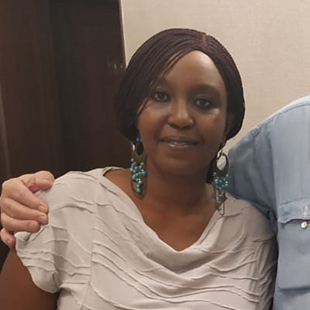
Claudia Boke Chacha Underwent Myomectomy in India
Claudia Boke Chacha
Patient from Kenya underwent Myomectomy Procedure in India

A 41 years old patient from Kenya underwent successful myomectomy procedure in India's leading Jaypee Hospital.

Ms. Fiona Whitecross
Patient From Australia underwent Varicose Veins Treatment in India

Ms. Fiona Whitecross decided to treat herself at Sri Ram Chandra Medical Center, Chennai. Dr. Radhakrishnan, one of the finest…

Frequently Asked Questions

The cost of Kasai Procedure in Malaysia typically ranges between USD 15000 - 25000, depending on the baby's condition, severity of biliary atresia, hospital, pediatric surgeon's experience, and postoperative care required. The cost may include consultations, diagnostic tests, surgery, anesthesia, hospitalization, medications, and follow-up care.

Choose an experienced pediatric surgeon or pediatric hepatobiliary surgeon who specializes in treating biliary atresia and performing the Kasai Procedure. Reviewing the surgeon's qualifications, experience, treatment outcomes, hospital facilities, and patient feedback can help you make an informed decision. Seeking a second opinion is also recommended.

The Kasai Procedure has an overall success rate of approximately 30–60%, depending on the age at surgery, extent of liver damage, anatomy of the bile ducts, and postoperative care. Earlier surgery is generally associated with better chances of establishing effective bile drainage.

Hospitals in Malaysia use advanced liver function testing, ultrasound, cholangiography, liver biopsy when required, and specialized pediatric surgical techniques to diagnose and treat biliary atresia. Experienced centers may also provide intensive neonatal care, pediatric hepatology, nutritional support, and liver transplantation services when needed.

The Kasai Procedure is a specialized surgery and may involve risks such as bleeding, infection, bile leakage, cholangitis, intestinal complications, and continued liver damage. Some children may eventually develop progressive liver disease and require liver transplantation despite successful initial surgery.

Before travelling, gather the baby's medical records, liver function test results, ultrasound or imaging reports, biopsy reports if available, vaccination records, and passport or travel documents. Complete an online consultation if available and follow the pediatric surgeon's instructions regarding feeding, medications, and preoperative tests.

Yes, MediGence provides online consultations for international patients before travel. Pediatric surgeons and hepatology specialists can review the baby's medical history, laboratory reports, and imaging studies to assess whether the Kasai Procedure is appropriate. This also helps with treatment planning, estimated costs, and travel guidance.

Parents or guardians should bring the baby's passport, visa, medical records, liver function reports, ultrasound or imaging scans, biopsy reports if available, vaccination records, previous treatment records, and a list of current medications. These documents help the pediatric surgical team plan treatment efficiently.

Most international patients may need to stay in Malaysia for approximately 2 to 4 weeks, depending on the baby's condition, hospital stay, postoperative recovery, and follow-up requirements. The treating team will recommend the appropriate duration based on the baby's recovery.

Recovery after the Kasai Procedure usually requires several weeks of close medical monitoring. The baby may need nutritional support, medications, and monitoring for bile drainage and liver function. Long-term follow-up is important even after successful surgery.

  • Submit the baby's medical records through the MediGence platform.
  • Get connected with experienced pediatric surgeons and leading hospitals.
  • Compare treatment options and estimated costs.
  • Coordinate consultations, diagnostic tests, and surgery.
  • Receive assistance with medical visas, travel, accommodation, and postoperative follow-up care.
  • Malaysia offers experienced pediatric surgeons, specialized hepatobiliary care, advanced diagnostic facilities, and multidisciplinary pediatric treatment. Patients can benefit from specialized surgical and postoperative care, including access to pediatric hepatology and liver transplantation services when required.

    Not Sure About Your Treatment Plan? Get a Free Second Opinion

    Have your reports reviewed by independent oncology experts to help you make a confident treatment decision, all online within 48 hours.

    Upload Your Reports
    Free second opinion on your CAR-T plan