General surgery is a surgical specialty that focuses on the surgical treatment of the disease and disorders of abdominal contents including esophagus, stomach, small intestine, large intestine, liver, pancreas, thyroid gland, gallbladder, appendix and bile ducts.
Below are some of the medical conditions/ situations for which you might consider visiting a general surgeon:
Below is the list of some of the most common surgeries undergone by people and their cost comparison in different countries:
| Country of Treatment | Appendectomy (Cost in USD) | Microdiscectomy (Cost in USD) | Hearing Implant (Cost in USD) |
| India | 1150 | 3200 | 14000 |
| Turkey | 4000 | 8100 | 18500 |
| United Arab Emirates | 6806 | 11000 | 40838 |
| US | 13200 | 20000 | 111000 |
Would you like some help? We are available.
Get Help
Johannesburg, South Africa


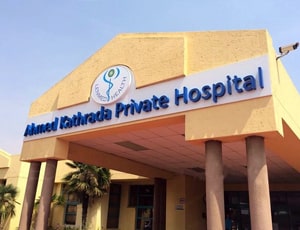
Apart from in-detail treatment procedures available, Lenmed Ahmed Kathrada Private Hospital located in Johannesburg, South Africa has a wide variety of facilities available for International Patients. Some of the facilities which are provided by them are Accommodation, Airport Transfer, Choice of Meals, Interpreter, SIM, TV inside room. Also listed below are some of the most prominent infrastructural details:

Cape Town, South Africa
Apart from in-detail treatment procedures available, Life Kingsbury Hospital located in Cape Town, South Africa has a wide variety of facilities available for International Patients. Some of the facilities which are provided by them are Accommodation, Airport Transfer, Choice of Meals, Interpreter, SIM, TV inside room. Also listed below are some of the most prominent infrastructural details:

Durban, South Africa
Apart from in-detail treatment procedures available, Lenmed Ethekwini Hospital and Heart Centre located in Durban, South Africa has a wide variety of facilities available for International Patients. Some of the facilities which are provided by them are Accommodation, Airport Transfer, Choice of Meals, Interpreter, SIM, TV inside room. Also listed below are some of the most prominent infrastructural details:
Need Some Advice From Our Experts?
Our team of healthcare experts would be happy to assist you

+99


Opinion & Option
We submit the most accurate opinion and options from one or more countries for your review
Consult Privately
Consult with a certified specialist privately on our telemedicine platform even before you decide to travel
Logistics
We handle flights, visas, transfers, and accommodation—so you can focus on your health.
Recovery
Our In-house rehabilitation service packages to better your recovery and treatment outcome
Our network connects you with the leading medical tourism destinations globally, offering a wide range of cities, top doctors, and flexible pricing options.


Some of the world-class multispecialty hospitals in South Africa are:
The healthcare system in South Africa is accredited by Joint Commission International (JCI) and Council for Health Service Accreditation of Southern Africa (COHSASA). COHSASA develops and evaluates standards in all areas and departments of a healthcare facility in order to make sure that integrated and coordinated care is provided. The SafeCare program introduced by JCI, COHSASA, and SafeCare Foundation aims at using internationally recognized standards to provide health care delivery. The accreditation bodies ensure that the hospitals are consistent in delivering quality care, so, initially, they grant accreditation to hospitals and clinics only for 2 years which gets extended if the quality is maintained.
A large number of medical tourists visit South Africa every year due to low-cost treatment and modern infrastructure. Some other factors which contribute to the growth of medical tourism in South Africa are use of cutting-edge technology, new facilities provided by hospitals, doctors trained overseas, and a large number of accredited hospitals. South Africa has also liberal laws for the application of stem cells in medical practice, making the country a leading destination for patients who need advanced medical treatment. You get comprehensive treatment at world-class hospitals which assist you with all organization and administrative tasks and also provide you all-inclusive care and assistance on a 24/7 basis.
South Africa produces some of the finest doctors in the world who are well-trained and highly qualified to serve patients with quality care. Majority of doctors in South Africa have received rigorous training in countries like Cuba and Australia which makes them competent in dealing with even the most complicated cases with great ease. The doctors deliver great results in dental procedures and fertility treatments and provide complete patient satisfaction through a holistic approach. South Africa has world-class doctors due to several reasons like their education at reputed colleges, adherence to global standards, patient-centric approach, and incorporation of the human touch in treatment.
You can avail a medical visa to South Africa and stay in the country for 90 days to seek treatment. Further extension of the duration of the stay is decided by the High Commission of the country where the patient belongs from. People need to apply for a temporary residency permit in case they have to stay in the country for more than three months. A visa becomes valid the day it is issued by the High Commission and not on the date of departure. Also, an application for a visa is not be accepted more than 30 days before departure. Make sure you have the below-listed documents while applying for a medical visa:
Some popular procedures available in South Africa are hip replacement, anterior cruciate ligament (ACL) reconstruction, total knee replacement, meniscus repairs. Some other procedures which have gained popularity in South Africa are cosmetic surgery and infertility treatment. Fertility treatment through egg donation has seen a high success rate in South Africa wherein a person can opt for a surgical or non-surgical procedure, with quite low waiting times. People select South Africa to avail these procedures due to several reasons, such as world-class hospitals with superior infrastructure and highly-skilled doctors, fast recovery, and use of cutting-edge medical technology.
Some popular cities of South Africa that attract a huge number of medical tourists every year are Cape Town, Johannesburg, Pretoria, and Durban. Cape Town a major tourist attraction that has a rich culture, world-class doctors, and modern health facilities. Most of these cities have an efficient public transportation system, cheap accommodation options, and connectivity through airlines. Johannesburg’s public and private healthcare industry coordinates with South Africa's medical schools to create internationally recognized medical specialists and the quality of medical care is on par with Great Britain.
Yes, vaccination is compulsory before visiting South Africa. The vaccines recommended by WHO and the National Travel Health Network and Centre are Rabies and tetanus, hepatitis B, typhoid, cholera, Yellow fever, hepatitis A. Infants of 6 to 11 months old are at greater risk of contracting measles, so they must get MMR vaccine before travelling to South Africa. Typhoid vaccine is recommended for most travellers, especially those staying with friends or relatives or visiting smaller cities or rural areas. You can connect with your doctor or the hospital in South Africa for the required vaccines. Also, refer to the travel advisory issued by the government.
The healthcare system in South Africa is accredited by Joint Commission International (JCI) and Council for Health Service Accreditation of Southern Africa (COHSASA). COHSASA develops and evaluates standards in all areas and departments of a healthcare facility in order to make sure that integrated and coordinated care is provided. The SafeCare program introduced by JCI, COHSASA, and SafeCare Foundation aims at using internationally recognized standards to provide health care delivery. The accreditation bodies ensure that the hospitals are consistent in delivering quality care, so, initially, they grant accreditation to hospitals and clinics only for 2 years which gets extended if the quality is maintained.
South Africa produces some of the finest doctors in the world who are well-trained and highly qualified to serve patients with quality care. Majority of doctors in South Africa have received rigorous training in countries like Cuba and Australia which makes them competent in dealing with even the most complicated cases with great ease. The doctors deliver great results in dental procedures and fertility treatments and provide complete patient satisfaction through a holistic approach. South Africa has world-class doctors due to several reasons like their education at reputed colleges, adherence to global standards, patient-centric approach, and incorporation of the human touch in treatment.
Some popular procedures available in South Africa are hip replacement, anterior cruciate ligament (ACL) reconstruction, total knee replacement, meniscus repairs. Some other procedures which have gained popularity in South Africa are cosmetic surgery and infertility treatment. Fertility treatment through egg donation has seen a high success rate in South Africa wherein a person can opt for a surgical or non-surgical procedure, with quite low waiting times. People select South Africa to avail these procedures due to several reasons, such as world-class hospitals with superior infrastructure and highly-skilled doctors, fast recovery, and use of cutting-edge medical technology.
Yes, vaccination is compulsory before visiting South Africa. The vaccines recommended by WHO and the National Travel Health Network and Centre are Rabies and tetanus, hepatitis B, typhoid, cholera, Yellow fever, hepatitis A. Infants of 6 to 11 months old are at greater risk of contracting measles, so they must get MMR vaccine before travelling to South Africa. Typhoid vaccine is recommended for most travellers, especially those staying with friends or relatives or visiting smaller cities or rural areas. You can connect with your doctor or the hospital in South Africa for the required vaccines. Also, refer to the travel advisory issued by the government.
The healthcare system in South Africa is accredited by Joint Commission International (JCI) and Council for Health Service Accreditation of Southern Africa (COHSASA). COHSASA develops and evaluates standards in all areas and departments of a healthcare facility in order to make sure that integrated and coordinated care is provided. The SafeCare program introduced by JCI, COHSASA, and SafeCare Foundation aims at using internationally recognized standards to provide health care delivery. The accreditation bodies ensure that the hospitals are consistent in delivering quality care, so, initially, they grant accreditation to hospitals and clinics only for 2 years which gets extended if the quality is maintained.
South Africa produces some of the finest doctors in the world who are well-trained and highly qualified to serve patients with quality care. Majority of doctors in South Africa have received rigorous training in countries like Cuba and Australia which makes them competent in dealing with even the most complicated cases with great ease. The doctors deliver great results in dental procedures and fertility treatments and provide complete patient satisfaction through a holistic approach. South Africa has world-class doctors due to several reasons like their education at reputed colleges, adherence to global standards, patient-centric approach, and incorporation of the human touch in treatment.
Some popular procedures available in South Africa are hip replacement, anterior cruciate ligament (ACL) reconstruction, total knee replacement, meniscus repairs. Some other procedures which have gained popularity in South Africa are cosmetic surgery and infertility treatment. Fertility treatment through egg donation has seen a high success rate in South Africa wherein a person can opt for a surgical or non-surgical procedure, with quite low waiting times. People select South Africa to avail these procedures due to several reasons, such as world-class hospitals with superior infrastructure and highly-skilled doctors, fast recovery, and use of cutting-edge medical technology.
Yes, vaccination is compulsory before visiting South Africa. The vaccines recommended by WHO and the National Travel Health Network and Centre are Rabies and tetanus, hepatitis B, typhoid, cholera, Yellow fever, hepatitis A. Infants of 6 to 11 months old are at greater risk of contracting measles, so they must get MMR vaccine before travelling to South Africa. Typhoid vaccine is recommended for most travellers, especially those staying with friends or relatives or visiting smaller cities or rural areas. You can connect with your doctor or the hospital in South Africa for the required vaccines. Also, refer to the travel advisory issued by the government.