Your Notifications
All done, no notifications

Pancreatectomy Cost in Gurgaon

Costs starts from USD5000 to USD12000
Filters

Cost of Pancreatectomy in Major cities of India

CityMinimum Cost (USD)Minimum Cost (INR)Maximum Cost (USD)Maximum Cost (INR)
BangaloreUSD 5000466100USD 120001118640
ChennaiUSD 5000466100USD 120001118640
DelhiUSD 5000466100USD 120001118640
FaridabadUSD 5000466100USD 120001118640
GhaziabadUSD 5000466100USD 120001118640
GurgaonUSD 5000466100USD 120001118640
HyderabadUSD 5000466100USD 120001118640
KochiUSD 5000466100USD 120001118640
KolkataUSD 5000466100USD 120001118640
MohaliUSD 4500419490USD 108001006776
MumbaiUSD 5000466100USD 120001118640
NoidaUSD 5000466100USD 120001118640
PanjimUSD 4500419490USD 108001006776
PuneUSD 4500419490USD 108001006776

Need Help Planning Your Treatment Abroad?

Your 24/7 AI Health Assistant

The pancreatic cancer is found to be one of the fatal forms of gastrointestinal malignancy. But then fortunately selective group of patients do experience the benefits of a pancreatectomy surgical procedure when performed by skilled and experienced surgeons. In the recent years 5-10% decrease has been observed in the rate of mortality depending on how extensive the surgery was and the experience of the surgeon. At John Hopkins Medical Institution Baltimore a study revealed the death of 1.4% patient due to total pancreatectomy complications.

About the ailment

The total pancreatectomy procedure is very effective as pancreatic cancer treatment. Pancreas is an organ located close to stomach and almost about the size of the hand which is responsible for secreting insulin, enzymes and other hormones. The part closest to the small intestine (duodenum) is the thickest part of the pancreas called the head, while thinnest tapering part very close to the spleen is called the tail and the middle part is named the body.

Patients who need the surgery will have small tumors in the head of the pancreas and will suffer from jaundice. People undergoing a surgical removal of the tumor must be diagnosed with the problem early enough. They will show no evidence of the metastatic nature of cancer i.e. the spreading of the cancer. Depending upon the stage of the disease it shall be determined whether the pancreatectomy performed shall be total or distal.

In case of patients whose pancreas has undergone severe injury or trauma a partial pancreatectomy can be the solution. In this case the injury is suffered by the body and tail of the pancreas. Normal pancreatic tissue is also removed in such surgeries but there are hardly any side effects or minimal effect in the function of the pancreas like production of hormones, digestive enzymes and insulin.

In case of chronic pancreatitis the pancreatectomy is seldom performed. In this case the pancreas keeps getting inflamed which results in the damage of the organ. If left untreated it can lead to acute pancreatitis.

Pancreatic cancer prognosis reveals that larger the tumor, worse gets the chances of cure. But in rare cases it has been observed that even a tumor as large as 4-5 cm has been effectively removed. Technology and options of treatments have improved but still the pancreatic cancer is considered a very lethal ailment.

Causes of Pancreatic Cancer

The reasons behind the chronic pancreatitis are mainly because of alcohol abuse or presence of gall stones. Other causes include

  • Genetic mutations
  • Age
  • Food habits and drug abuse
  • Chronic Pancreatitis
  • Long standing Diabetes mellitus problem
  • Obesity

What are pancreatic cancer symptoms?

In case of cancerous tissues, they grow very rapidly in the organ without showing any symptoms till a condition is reached when the patient has actually reached a critical stage. After reaching the critical stage the patient can start showing various symptoms like

  • Pain experienced in the upper abdomen
  • Jaundice where skin and eyes start yellowing
  • Appetite loss
  • Dark Urine formation
  • Nauseating feeling and vomiting
  • Back pain experienced
  • Enlarged lymph nodes
  • Stools turning paled colored
  • Diarrhea
  • Irritation felt in skin like itching
  • Depression
  • Back pain
  • Weight loss experienced suddenly
  • Symptoms of the digestive system very often dominate the pancreatic cancer symptoms since the organ is very close to the stomach.

What are my alternatives for total pancreatectomy?

Total pancreatectomy procedure as such ideally speaking has no such alternative except for the fact that the kind of pancreatectomy can be varied in terms of the extent to which the pancreas has suffered damage. A pancreas transplant can also be considered in rare cases.

Pancreatic cancer treatment options

For the treatment of pancreatic cancer or chronic pancreatitis, there are quite a few treatment options:

What is the Whipple procedure?

It is a very demanding procedure and also known as pancreatoduodenectomy where a part of the pancreas, along with duodenum of the small intestine and the gallbladder is removed. Pancreas surgery usually aims at treating pancreatic cancer which is usually confined till the head of the pancreas. But in many cases it also aims at treating some of the tumors and abnormalities of the bile duct and small intestine. After the procedure the surgeon works to re attach the remaining portions of the digestive system to enable the patient to digest food normally and remove waste in a natural way from body.

What is a total pancreatectomy?

In a total pancreatectomy the total pancreas gets removed along with gall bladder, spleen, common bile duct and some portions of the stomach and small intestine.

What is distal pancreatectomy?

When there is a tumor in the bottom half of the pancreas like in the body or the tail, it must be removed with a distal pancreatectomy where this bottom half is removed surgically.

Pancreatectomy is performed to remove tumours (cancer, cysts, chronic infections) and/or sections of the pancreas that are damaged. Pancreatectomy is usually indicated in cases of pancreatic cancer, neuroendocrine carcinoid tumours, chronic pancreatitis, and precancerous conditions of the pancreas.

If you experience persistent abdominal pain, unintentional weight loss, yellowing of the skin and eyes (jaundice), difficulty eating (digestive issues), or a decrease in food intake and your doctor diagnoses a cancerous or non-cancerous pancreatic tumour or chronic pancreatitis, see a physician as soon as possible.

To prepare for a pancreatectomy, you will likely have tests done (blood work, CT scan/MRI), an endoscopic evaluation (to look at your digestive tract), an assessment of your nutritional state, fasting before the procedure, and an evaluation for anaesthesia. Depending on the situation, your doctor may advise adjusting your medications and performing bowel preparation prior to surgery.

In the operating room, a surgeon will remove either the entire pancreas or a portion of the pancreas using an open, laparoscopic, or robotic method while under general anaesthesia. The surgeon may also remove nearby organs and/or lymph nodes, depending on how extensive the disease is.

The pancreatectomy procedure will generally take between four and eight hours, depending on the complexity of your case and which surgical method will be utilised. Your average length of hospital stay following a pancreatectomy will be between seven and 14 days, and your recovery will continue for several weeks thereafter.

  • Infection and bleeding
  • Delayed gastric emptying
  • Pancreatic fistula
  • Diabetes due to reduced insulin production
  • Digestive enzyme deficiency
  • Blood clots and anesthesia-related risks

It includes removal of cancerous or diseased pancreatic tissue, improved survival in pancreatic cancer, relief from chronic pain in pancreatitis, prevention of disease progression, and improved quality of life

Restoration of Diet, Management of Pain, Supplementation of Enzymes and Monitoring of Blood Sugar during the Recovery Process. Most patients regain their strength within 6-8 weeks, and complete recovery may take many months with proper follow-up care.

While the likelihood of success for pancreatectomies differs greatly depending on etiology (cancer vs chronic pancreatitis), surgical type, and individual patient attributes, overall pancreatectomy outcomes tend to be favorable when performed on patients without cancers (with increasing levels of pain control) and improved survival rates in patients suffering from advanced forms of pancreatic cancer (60-80%) 1 year survival rate in early stage cancers).

Would you like some help? We are available.

Get Help
Explore Hospitals ( 6 )
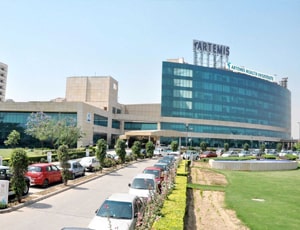
Pancreatectomy in Artemis Health Institute: Costs, Top Doctors, and Reviews

Gurgaon, India

3.3 ( 4 Reviews )
  • Joint Commission International, or JCI
  • National Accreditation Board for Hospitals & Healthcare Providers (NABH)

Artemis Hospital, established in 2007 in Gurgaon, India, is a 750+ bed, state-of-the-art multi-speciality hospital and the first in Gurgaon accredited by JCI and NABH. A flagship of the Apollo Tyres Group, it offers advanced care across cardiology, oncology, orthopaedics, neurology, and transplant medicine, supported by modern infrastructure and 60+ world-class operating theatres. Its Centres of Excellence span critical areas like heart, cancer, neurosciences, orthopaedics, and women & child care. Guided by values of Service, Compassion, and Integrity, Artemis combines innovation, technology, and affordability, making it a trusted international healthcare destination for comprehensive and compassionate patient care.

Pancreatectomy in Medanta - The Medicity: Costs, Top Doctors, and Reviews

Gurgaon, India

3.4 ( 1 Reviews )
  • Joint Commission International, or JCI
  • National Accreditation Board for Hospitals & Healthcare Providers (NABH)

Medanta – The Medicity, Gurugram, founded by renowned cardiac surgeon Dr. Naresh Trehan, is a leading multi-super speciality hospital offering advanced yet affordable healthcare. Spread across a 43-acre campus, it houses 1,391 beds, 270 ICU beds, 40 operation theatres, and 900+ doctors across 30+ specialities. Accredited by JCI, NABH, and NABL, Medanta is designed per American Institute of Architects’ healthcare guidelines. Recognised as the Best Private Hospital in India (2020–2025) and among the World’s Top 250 Hospitals (Newsweek 2024), it excels in Cardiac Care, Cancer, Neurosciences, Gastro, Orthopaedics, and Renal Care, ensuring world-class, collaborative, and compassionate treatment.

Pancreatectomy in Max Hospital, Gurgaon: Costs, Top Doctors, and Reviews

Gurgaon, India

  • ISO 9001
  • National Accreditation Board for Hospitals & Healthcare Providers (NABH)
  • Max Hospital Gurugram is a leading multi-speciality healthcare centre in Haryana, renowned for its advanced clinical expertise and patient-focused care.
  • Established in 2007, it is part of the trusted Max Healthcare network and has treated over 500,000 patients across 35+ specialities.
  • The hospital is equipped with modern medical technology, internationally trained doctors, and superior clinical infrastructure.
  • Known for its excellence in Cardiology, Oncology, Neurosciences, Orthopaedics, Gastroenterology, and Women & Child Care, Max Hospital is a preferred choice for both domestic and international patients seeking high-quality treatment with compassionate care.
Pancreatectomy in VPS Rockland Hospital: Costs, Top Doctors, and Reviews

Gurgaon, India

  • National Accreditation Board for Hospitals & Healthcare Providers (NABH)
  • National Accreditation Board for Testing and Calibration Laboratories (NABL)

VPS Rockland Hospital located in Gurugram, India is accredited by NABH, NABL. Also listed below are some of the most prominent infrastructural details:

  • Well-designed compact 103-bed hospital expanding over120,000 square feet
  • Well equipped modular operation theatres, intensive care unit, interventional Cath lab, and in-patient rooms ranging from economy to luxury
  • Offers a bouquet of services like Internal Medicine, Obstetrics & Gynaecology, Surgery, Pediatrics
  • High-end diagnostic services like 1.5 T MRI and 128 slice CT Scan
  • Advanced non-invasive assessment with echo & TMT machines
  • State of the art cardiac Cath-Lab
  • Appointment Scheduling
  • Treatment packages
  • Accommodation arrangement for the accompanying attendant
  • Customized diet for patient and attendant
  • Laundry services
  • Prayer room
  • Visa assistance
  • Pick and drop facility from/to the Airport
  • Foreign exchange facility
  • Registration with the Foreigners Regional Registration Office
  • Dedicated Neuro-Intensive care unit managed by expert intensivists
  • Accommodation arrangements post discharge
  • Highly advanced instruments for deep brain stimulation, stereotaxy, micro-neurosurgery, pediatric neurosurgery & neurophysiology
  • Most advanced dialysis machines and advanced diagnostic and therapeutic facilities
  • Renal replacement therapy for hemo-dynamically unstable patient
  • Technologically advanced endoscopy suite
  • Wi-Fi/internet service in the room
  • Travel arrangement for patient & attendant post discharge
  • Tele-consults post discharge
  • Dialysis beds
  • 24x7 ‘Trauma & Emergency Center
  • Dedicated blood bank
  • 24x7 comprehensive patient care.
  • Deployed high-end technologies & smart digital system
  • Robust Hospital Information Systems to meet complex medical needs of patients
  • Robotic-assisted surgeries
  • International Patients Lounge
Pancreatectomy in Manipal Hospital, Gurugram: Costs, Top Doctors, and Reviews

Gurgaon, India

  • National Accreditation Board for Testing and Calibration Laboratories (NABL)
  • National Accreditation Board for Hospitals & Healthcare Providers (NABH)

Manipal Hospital, Gurgaon, which used to be Columbia Asia Hospital, is a 100-bed, multispecialty facility that was established in 2008. It is recognized by NABH, and offers complete care in six specialties: neurology, cardiology, oncology, gynecology, orthopedics, and psychiatry. By bringing together modern infrastructure, sophisticated technology, and a team of qualified medical and nursing staff as a part of its value system, the hospital emphasizes ethics and high-quality, affordable healthcare. The hospital maintains an integrated and collaborative framework, and is able to provide 24/7 emergency services and critical care, to achieve the best possible outcomes, with patient satisfaction and treatment as a whole being a fundamental feature of the service.

Pancreatectomy in Marengo Asia Hospitals, Gurugram: Costs, Top Doctors, and Reviews

Gurgaon, India

  • National Accreditation Board for Hospitals & Healthcare Providers (NABH)
  • National Accreditation Board for Testing and Calibration Laboratories (NABL)
  • Marengo Asia Hospitals, Gurugram, is a 250-bed multi-speciality tertiary care hospital, formerly known as W Pratiksha Hospital.
  • A major medical centre for Delhi NCR and North India, it is situated on Golf Course Extension Road, Sector 56, Gurugram.
  • The hospital's NABH and NABL accreditation ensures compliance with international standards for patient care, safety, and quality.
  • Provides extensive medical care in more than 21 specialities, including as women's health, neurology, orthopaedics, cardiology, and cancer.
  • Advanced robotic-assisted spine surgery tools and neuro-monitoring technology are available at the Marengo Asia International Institute of Neuro & Spine (MAIINS), a Centre of Excellence in Neurosciences.
  • Equipped with cutting-edge equipment, such as automated labs, sophisticated imaging, and contemporary operating rooms.
  • Features specialised ICUs, NICUs, and modular OTs built for complex and minimally invasive procedures.

Need Some Advice From Our Experts?

Request a Call Back Now!

Our team of healthcare experts would be happy to assist you

trusted Patientstrusted Patients+99
Trusted by 50000+ Patients
Required | alphabets and spaces
Required | A valid, working email address
Required | A valid contact

Process Involved for Pancreatectomy in Gurgaon

  • Before surgery, the patient undergoes blood tests and imaging studies (e.g., CT scans, MRIs, or PET scans) to determine the size, location, and extent of pancreatic disease and to inform the surgical approach.
  • The nutritionist assesses the patient’s nutrition, weight, and digestive function to optimise strength prior to surgery and minimise post-surgical complications.
  • The anesthesiologist assesses whether the patient is fit for general anesthesia, and reviews their medical history, medications, and heart and lung function to ensure safety during surgery.
  • The surgical approach to removing the pancreas will depend on the extent of the disease and will involve either an open, laparoscopic, or robotic approach.
  • After surgery, patients will be monitored closely in the ICU for vital signs, pain levels, blood glucose levels, and gastrointestinal function to detect complications early.
  • Rehabilitation after pancreatotomy includes returning to eating gradually, managing enzymes and insulin if necessary, receiving physical rehabilitation, and attending regular follow-up appointments to monitor healing and disease control.
  • Pancreatic cancer
  • Neuroendocrine tumors
  • Pancreatic cysts and precancerous lesions
  • Chronic pancreatitis
  • Pancreatic trauma
  • Whipple procedure (Pancreaticoduodenectomy)
  • Distal pancreatectomy
  • Total pancreatectomy
  • Laparoscopic pancreatectomy
  • Robotic-assisted pancreatectomy
  • Patients diagnosed with pancreatic cancer, tumors, or cysts
  • Individuals with chronic pancreatitis unresponsive to medical treatment
  • Patients with precancerous pancreatic lesions
  • Patients medically fit for major abdominal surgery
  • No extensive cancer spread to distant organs
  • Surgical staples
  • Absorbable sutures
  • Temporary drainage tubes
  • Pancreatic stents (if required)
  • Bile duct reconstruction
  • Gastric or intestinal reconstruction
  • Lymph node dissection
  • Feeding tube placement
  • Gallbladder removal
  • Removal of cancerous or diseased pancreatic tissue
  • Improved survival in pancreatic cancer
  • Relief from chronic pain in pancreatitis
  • Prevention of disease progression
  • Improved quality of life
  • Complete or partial removal of diseased pancreas
  • Improved digestion with enzyme supplementation
  • Better blood sugar control with proper management
  • Reduced cancer recurrence risk
  • Long-term disease control
  • Fill out the inquiry form: Fill out the form to provide us with the relevant information about your condition.
  • Consult with Our Healthcare Expert:One of our qualified specialists will contact you for a consultation
  • Receive a Detailed Treatment Plan:After examining your situation, we will provide you with a detailed treatment plan that includes expert views and cost breakdowns for various choices.
  • Choose your preferred option: Choose the treatment option that suits you the best.

Instantly Connect with our Pancreatectomy Specialists

Doctor 1
Doctor 2
Doctor 3
Doctor 4
Doctor 5
Doctor 6
Doctor 7
Doctor 8
Our Services to Better your Experience

Opinion & Option

We submit the most accurate opinion and options from one or more countries for your review

Consult Privately

Consult with a certified specialist privately on our telemedicine platform even before you decide to travel

Logistics

We handle flights, visas, transfers, and accommodation—so you can focus on your health.

Recovery

Our In-house rehabilitation service packages to better your recovery and treatment outcome

Other Popular Countries for Pancreatectomy

Our network connects you with the leading medical tourism destinations globally, offering a wide range of cities, top doctors, and flexible pricing options.

Thailand
Malaysia
United Kingdom
United Arab Emirates

Frequently Asked Questions

You can expect an initial recovery period of approximately six to eight weeks; complete healing may take several more months. How long it takes you to recover will depend on your type of pancreatectomy, your general health, and any post-operative complications.

In addition to the procedure cost, patients may incur:
  • Pre-treatment tests
  • Medications during recovery
  • Follow-up consultations
  • If a close family member accompanies you during your hospitalisation, your hospital stay will range from seven to fourteen days, depending on your recovery and whether you require ICU monitoring after surgery.

    Long-term care after a pancreatectomy includes enzyme supplementation for digestion support, blood sugar monitoring, dietary changes, regular follow-up visits, and cancer follow-up visits if your surgery was performed due to malignancy.

    The reason you should undergo a pancreatectomy in India is that it has some of the most skilled and experienced pancreatic surgeons, state-of-the-art surgical facilities, and modern ICUs, and that it offers international patient care comparable to that provided by other countries worldwide.

    Before the treatment, patients require the following evaluations: blood tests, CT or MRI scans, a PET scan if necessary, endoscopic ultrasound, ECG, chest X-ray and an assessment of their ability to undergo anesthesia.

    Yes, when a pancreatectomy is performed at accredited hospitals by experienced surgeons, with the support of international patient services staff, the procedure is considered safe for patients travelling from other countries.

    Improved survival rates in patients suffering from advanced forms of pancreatic cancer (60-80%), 1 year survival rate in early-stage cancers.

    Author

    Alvina Hasan

    M.Pharm

    1 Year of Experience

    Alvina Hasan is a dedicated medical researcher and scientific writer with a strong foundation in the pharmaceutical sciences. She holds a B.Pharm from Jamia Hamdard University and an M.Pharm in Quality Assurance from DIPSAR University. With deep medical expertise and a strong interest in healthcare communication, she focuses on transforming complex clinical and scientific information into clear, engaging, and easy-to-understand narratives. She develops insightful healthcare articles and research-driven pieces designed to support both medical professionals and patients, helping bridge the gap between advanced medical knowledge and practical understanding. . View More