4 Hospitals
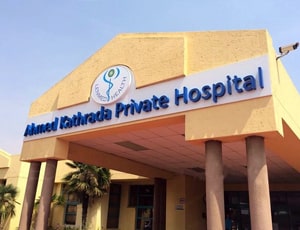
- Best Private Hospital in South Africa, 2020 - Ahmed Kathrada Private Hospital in Johannesburg was named the Best Private Hospital in South Africa in 2020 by the International Healthcare Commission.
- Best Hospital for Cardiology, 2019 - Ahmed Kathrada Private Hospital in Johannesburg was named the Best Hospital for Cardiology in 2019 by the South African Medical Association.
- Best Hospital for Orthopedics, 2019 - Ahmed Kathrada Private Hospital in Johannesburg was named the Best Hospital for Orthopedics in 2019 by the South African Medical Association.
- Best Hospital for Neurology, 2019 - Ahmed Kathrada Private Hospital in Johannesburg was named the Best Hospital for Neurology in 2019 by the South African Medical Association.
- Best Hospital for Pulmonology, 2019 - Ahmed Kathrada Private Hospital in Johannesburg was named the Best Hospital for Pulmonology in 2019 by the South African Medical Association.
- Accreditation


Please Enquire

Life Kingsbury Hospital, located in Cape Town, South Africa, provides a full range of gastroenterology services, strongly emphasising diagnosing and treating various gastrointestinal disorders. The hospital is equipped with cutting-edge diagnostic tools, such as endoscopy and colonoscopy, to evaluate issues like acid reflux, inflammatory bowel disease, and colorectal cancer. Moreover, they offer targeted treatments for liver diseases, gallbladder problems, and other digestive health concerns. With a team of specialists and top-notch facilities, Life Kingsbury Hospital is dedicated to offering exceptional gastroenterological care to patients throughout South Africa.

- Best Private Hospital in South Africa 2021 - Netcare Linksfield Hospital was named the best private hospital in South Africa by the International Medical Travel Journal.
- Best Hospital for Patient Experience 2020 - The hospital received this award from the South African Patient Experience Society for its commitment to improving patient experience.
- Best Hospital for Gastroenterology 2019 - Netcare Linksfield Hospital was recognized for its exceptional gastroenterology services by the Global Health & Pharma Awards.
- Best Hospital for Cardiology 2018 - The hospital received this award from the South African Society of Cardiovascular Intervention for its outstanding cardiology services.
- Best Hospital for Emergency Care 2017 - Netcare Linksfield Hospital was named the best hospital for emergency care by the Discovery Health Quality Awards.
- Accreditation

- Best Hospital in KwaZulu-Natal, 2018, Standard Bank KZN Top Business Awards: eThekwini Hospital and Heart Centre received this award for its outstanding healthcare services in KwaZulu-Natal.
- Best Hospital in Durban, 2019, KZN Health Excellence Awards: This award recognized eThekwini Hospital and Heart Centre for its exceptional healthcare services in Durban.
- Best Private Hospital in South Africa, 2019, KZN Health Excellence Awards: This award recognized eThekwini Hospital and Heart Centre for its outstanding private healthcare services in South Africa.
- Best Hospital in Durban, 2020, KZN Health Excellence Awards: This award recognized eThekwini Hospital and Heart Centre for its exceptional healthcare services in Durban.
- Best Private Hospital in KwaZulu-Natal, 2020, Standard Bank KZN Top Business Awards: This award recognized eThekwini Hospital and Heart Centre for its outstanding private healthcare services in KwaZulu-Natal.
Ask your healthcare adviser for the best multiple options and choose the one that meets your expectations
Request for an Expert Opinion

Patient Stories
More Related Information
Some of the top rated docotrs are:
Top rated hospitals in other destinations are:
- Israel
- Herzliya Medical Center, herzliya
- Tel Aviv Sourasky Medical Center (Ichilov Medical Center), Tel-Aviv
- Sheba Medical Center, Tel Hashomer
- Assuta Hospital, Tel-Aviv
- Lis Maternity Hospital, Tel-Aviv
- Singapore
- Thomson Medical Center, Thomson Road
- Farrer Park Hospital, Connexion
- Gleneagles Hospital, Napier Road
- Mount Elizabeth Novena Hospital, Novena
- Mount Elizabeth Hospital, Mount Elizabeth
- Morocco
- Malaysia
- Tunisia
FAQ's Related to South Africa
Below are some of the parameters which reflect the quality of these hospitals:The way nursing staff and doctors engage and communicate with patients;How well suited the hospital environment is to the needs of patientsHow clearly the information about medication is being shared with patientsHow well pain is managed Supported by state-of-art infrastructure, advanced medical equipment, and highly qualified doctors, the hospitals offer various facilities to improve the patient experience. South Africa is known to have strict government regulations for controlling the quality of care provided by the government and private hospitals. South Africa is one of the leading medical tourism destinations with top hospitals, such as:
- Lenmed Shifa Hospital
- Busamed Modderfontein Private Hospital
- Busamed Lowveld Hospital
- Busamed Paardevlei Private Hospital
- Life Bay View Private Hospital
- Lenmed Ethekwini Hospital and Heart Centre
- Ahmed Al-Kadi Private Hospital
- Busamed Hillcrest Private Hospital
- Busamed Gateway Private Hospital
SafeCare program has been introduced by COHSASA, JCI, and SafeCare Foundation to use internationally recognized standards to improve health care delivery. Clinics and Hospitals that comply with standards are initially given two-year accreditations and this period is extended if they are consistent in providing quality care. COHSASA is responsible for developing and evaluating standards in all sectors and departments of a healthcare facility to ensure hospitals provide integrated and coordinated care. In South Africa, the healthcare system is bound to follow standards set by the Joint Commission International (JCI) and Council for Health Service Accreditation of Southern Africa (COHSASA).
South Africa is gaining global attention for medical tourism due to affordable treatment costs and world-class infrastructure. The patient-centric hospitals in South Africa help you with all kinds of organization and administrative tasks and provide a world-class patient experience through all-inclusive care and assistance on a 24/7 basis. South Africa’s growing popularity in medical tourism is also attributed to factors like a large pool of accredited hospitals, advanced technology, world-class facilities provided by hospitals, global exposure of doctors. Liberal laws for the use of stem cells in South Africa have helped it attract a large number of medical tourists for advanced medical treatment.
Most of the doctors in South Africa are trained in foreign countries like Cuba and Australia which orientate them towards quality health care. South Africa has world-class doctors due to several reasons like their education at reputed colleges, adherence to global standards, patient-centric approach, and incorporation of the human touch in treatment. The highly skilled and well-qualified doctors in South Africa ensure world-class treatment through their deep expertise and subject knowledge. Doctors in South Africa are known for their deep expertise in dental procedures and fertility treatments.
People who require medical treatment for longer than three months must apply for a temporary residency permit. You need to produce the below documents to apply for a medical visa:
- Passport
- Proof of stay in South Africa
- Signed official medical letter from medical institution
- Signed medical letter from a recognized local practitioner
- Passport-sized photographs
- Online Application form
- Full return flight reservation
The reasons for the popularity of these procedures are affordable treatment cost, speedy recovery, use of advanced technology, and highly trained doctors. Egg donation program is very popular in the country and you have an option of having either a surgical or non-surgical procedure, with very low waiting times. Cosmetic surgery and infertility treatment are some of the other popular procedures in South Africa which have a high success rate. A large number of people visit South Africa to avail procedures like anterior cruciate ligament (ACL) reconstruction, total knee replacement, meniscus repairs, and hip replacement.
Healthcare in Johannesburg is similar to Great Britain’s health care, and the city’s public and private healthcare sectors work hand in hand with South Africa's medical schools to create internationally recognized medical specialists. An efficient public transportation system, affordable accommodation, connectivity through airlines, and a wide range of food options are some of the reasons for the popularity of these cities among medical tourists. Cape Town is the medical tourism hub visited by a large number of people from different ethnicity and cultures due to world-class doctors and state-of-the-art hospitals. The top-ranked cities that are most preferred by medical tourists in South Africa are Cape Town, Johannesburg, Pretoria, and Durban.
Infants 6 to 11 months old travelling to the country should get 1 dose of measles-mumps-rubella (MMR) vaccine before travel. Vaccination guidelines change with time, so keep yourself updated with the travel advisory released by the government. You can also check with doctors or hospitals in South Africa for the required vaccines. Yes, vaccination is mandatory before you travel to South Africa. Some of the vaccines recommended by WHO and the National Travel Health Network and Centre are Yellow fever, hepatitis A, rabies and tetanus, hepatitis B, typhoid, cholera. It is always recommended that you get typhoid vaccination if you are going to stay with friends or relatives or visiting smaller cities or rural areas of South Africa.