Your Notifications
All done, no notifications

Transplants Treatment Cost in South Africa

Filters

Organ transplant is a surgical procedure that involves transferring a donated organ to someone diagnosed with organ failure and is recommended to undergo organ transplant procedure.

There are many diseases that can lead to organ failure, some of the major ones include heart disease, hepatitis, diabetes, cystic fibrosis and cirrhosis. In some cases, injury and birth defects may also lead to organ failure.

When do patients consider going for Transplants?

Organ transplant is preferred procedure in case of failure of vital organs like Kidney, Heart, Liver, and more.

Cost comparison

Country of Treatment Kidney Transplant Liver transplant Bone Marrow Transplant
India 13500 28000 28000
Turkey 20000 70000 40000
Singapore 40000 120,000 35000

Would you like some help? We are available.

Get Help
Explore Hospitals ( 2 )
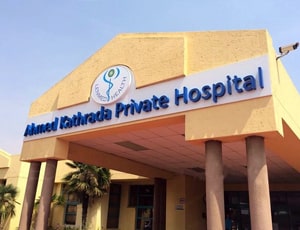
Lenmed Ahmed Kathrada Private Hospital: Top Doctors, and Reviews

Johannesburg, South Africa

Apart from in-detail treatment procedures available, Lenmed Ahmed Kathrada Private Hospital located in Johannesburg, South Africa has a wide variety of facilities available for International Patients. Some of the facilities which are provided by them are Accommodation, Airport Transfer, Choice of Meals, Interpreter, SIM, TV inside room. Also listed below are some of the most prominent infrastructural details:

  • 254 bed capacity
  • 24 Hour Emergency section
  • Cardiac Catheterisation Laboratory
  • Clinical Trial Centre
  • Sports Medicine Centre
  • Centre of Excellence for Strokes
  • 24 hour trauma and emergency
  • Many medical specialties
  • Option of Minimally invasive laparoscopic surgery in Gynaecology, Urology and General Surgery
  • Patient shuttle facility
  • International patient coordinators
Lenmed Ethekwini Hospital and Heart Centre: Top Doctors, and Reviews

Durban, South Africa

4.9 ( 1 Reviews )

Apart from in-detail treatment procedures available, Lenmed Ethekwini Hospital and Heart Centre located in Durban, South Africa has a wide variety of facilities available for International Patients. Some of the facilities which are provided by them are Accommodation, Airport Transfer, Choice of Meals, Interpreter, SIM, TV inside room. Also listed below are some of the most prominent infrastructural details:

  • 377 bed capacity
  • 24 hour accident and emergency unit
  • Heart, lung and kidney transplants available
  • Pediatric Cardiac Surgery services
  • Cardiac Centre of Excellence for Adult & Paediatric Cardiac Surgery
  • Two Cardiac Catheterisation Labs
  • Cardiac Theatre
  • 7 Major Operating Theatres
  • 42 Bed ICU
  • Neuro Operating Theatre
  • Stroke Centre of Excellence
  • Renal Centre of Excellence
  • 24/7 Emergency unit
  • Transplant Program
  • Pharmacy and Prayer Facility

Need Some Advice From Our Experts?

Request a Call Back Now!

Our team of healthcare experts would be happy to assist you

trusted Patientstrusted Patients+99
Trusted by 50000+ Patients
Required | alphabets and spaces
Required | A valid, working email address
Required | A valid contact

Instantly Connect with our Specialists

Doctor 1
Doctor 2
Doctor 3
Doctor 4
Doctor 5
Doctor 6
Doctor 7
Doctor 8
Our Services to Better your Experience

Opinion & Option

We submit the most accurate opinion and options from one or more countries for your review

Consult Privately

Consult with a certified specialist privately on our telemedicine platform even before you decide to travel

Logistics

We handle flights, visas, transfers, and accommodation—so you can focus on your health.

Recovery

Our In-house rehabilitation service packages to better your recovery and treatment outcome

Other Popular Countries

Our network connects you with the leading medical tourism destinations globally, offering a wide range of cities, top doctors, and flexible pricing options.

Thailand
Malaysia
Italy
Singapore

Frequently Asked Questions

South Africa is one of the leading medical tourism destinations with top hospitals, such as:

  1. Ahmed Al-Kadi Private Hospital
  2. Busamed Hillcrest Private Hospital
  3. Busamed Gateway Private Hospital
  4. Busamed Modderfontein Private Hospital
  5. Busamed Lowveld Hospital
  6. Lenmed Ethekwini Hospital and Heart Centre
  7. Busamed Paardevlei Private Hospital
  8. Life Bay View Private Hospital
  9. Lenmed Shifa Hospital
Below are some of the parameters which reflect the quality of these hospitals:
  1. Providing clear information about medicines to patients
  2. Effective engagement between nursing staff/doctors and patients;
  3. Suitability of the hospital environment for meeting the needs of patients
  4. Effectively managing pain.
The government of South Africa has strict healthcare regulations in place which all hospitals need to follow to ensure quality treatment. The hospitals have world-class doctors and top-notch infrastructure and provide a wide range of facilities to meet the needs of patients.

The healthcare system in South Africa is accredited by Joint Commission International (JCI) and Council for Health Service Accreditation of Southern Africa (COHSASA). To ensure that integrated and coordinated care is provided, COHSASA develops as well as measures standards in all areas and departments of a healthcare facility. The SafeCare program introduced by JCI, COHSASA, and SafeCare Foundation aims at using internationally recognized standards to provide health care delivery. Clinics and Hospitals that comply with standards are initially given two-year accreditations and this period is extended if they are consistent in providing quality care.

A large number of medical tourists visit South Africa every year due to low-cost treatment and modern infrastructure. South Africa has become the epicenter of medical tourism because of several other reasons like advanced technology, several facilities provided by hospitals, doctors trained abroad, and a large pool of accredited hospitals. In addition, South Africa’s liberal laws allow for the use of stem cells in medical practice, making it an invaluable destination for patients in need of advanced medical treatment. The hospitals in South Africa strive to take the stress out of your medical holiday by helping you with all kinds of organization and administrative tasks, as well as provide all-inclusive care and assistance on a 24/7 basis.

The doctors in South Africa strive to provide quality treatment utilizing their deep subject knowledge and hands-on experience in handling various complex cases. Majority of doctors in South Africa have received rigorous training in countries like Cuba and Australia which makes them competent in dealing with even the most complicated cases with great ease. The doctors have reported a high success rate in dental procedures and fertility treatments. South Africa has world-class doctors due to several reasons like their education at reputed colleges, adherence to global standards, patient-centric approach, and incorporation of the human touch in treatment.

You can get a medical visa to South Africa for 90 days. The High Commission of the country decides for how long a visa could be extended. People need to apply for a temporary residency permit in case they have to stay in the country for more than three months. The validity of a visa starts the day it is granted by the High Commission and not on the date of departure. Also, visa applications will not be accepted more than 30 days prior to departure. Here is a list of documents that you will require for applying for a medical visa:

  1. Passport
  2. Passport-sized photographs
  3. Online Application form
  4. Full return flight reservation
  5. Proof of stay in South Africa
  6. Signed official medical letter from medical institution
  7. Signed medical letter from a recognized local practitioner

South Africa is known to offer some procedures with high success rates, such as total knee replacement, meniscus repairs, hip replacement, anterior cruciate ligament (ACL) reconstruction. Some other procedures which have gained popularity in South Africa are cosmetic surgery and infertility treatment. Egg donation program is available at the majority of fertility clinics and you can opt for a surgical or non-surgical procedure, with quite low waiting times. People select South Africa to avail these procedures due to several reasons, such as world-class hospitals with superior infrastructure and highly-skilled doctors, fast recovery, and use of cutting-edge medical technology.

The top-ranked cities that are most preferred by medical tourists in South Africa are Cape Town, Johannesburg, Pretoria, and Durban. Cape Town, which attracts a wide variety of people from different ethnicity and cultures, has world-class doctors and state-of-the-art medical facilities. The reasons for the popularity of these cities are multiple food options, connectivity through airlines, and cheap accommodation. Healthcare in Johannesburg is similar to Great Britain’s health care, and the city’s public and private healthcare sectors work hand in hand with South Africa's medical schools to create internationally recognized medical specialists.

Yes, vaccination is mandatory before you travel to South Africa. Some of the vaccines recommended by WHO and the National Travel Health Network and Centre are Yellow fever, hepatitis A, rabies and tetanus, hepatitis B, typhoid, cholera. Infants 6 to 11 months old travelling to the country should get 1 dose of measles-mumps-rubella (MMR) vaccine before travel. You need to go for typhoid vaccination if you are going to stay with friends or relatives or visiting smaller cities or rural areas. You can connect with your doctor or the hospital in South Africa for the required vaccines. Also, refer to the travel advisory issued by the government.

The healthcare system in South Africa is accredited by Joint Commission International (JCI) and Council for Health Service Accreditation of Southern Africa (COHSASA). To ensure that integrated and coordinated care is provided, COHSASA develops as well as measures standards in all areas and departments of a healthcare facility. The SafeCare program introduced by JCI, COHSASA, and SafeCare Foundation aims at using internationally recognized standards to provide health care delivery. Clinics and Hospitals that comply with standards are initially given two-year accreditations and this period is extended if they are consistent in providing quality care.

The doctors in South Africa strive to provide quality treatment utilizing their deep subject knowledge and hands-on experience in handling various complex cases. Majority of doctors in South Africa have received rigorous training in countries like Cuba and Australia which makes them competent in dealing with even the most complicated cases with great ease. The doctors have reported a high success rate in dental procedures and fertility treatments. South Africa has world-class doctors due to several reasons like their education at reputed colleges, adherence to global standards, patient-centric approach, and incorporation of the human touch in treatment.

South Africa is known to offer some procedures with high success rates, such as total knee replacement, meniscus repairs, hip replacement, anterior cruciate ligament (ACL) reconstruction. Some other procedures which have gained popularity in South Africa are cosmetic surgery and infertility treatment. Egg donation program is available at the majority of fertility clinics and you can opt for a surgical or non-surgical procedure, with quite low waiting times. People select South Africa to avail these procedures due to several reasons, such as world-class hospitals with superior infrastructure and highly-skilled doctors, fast recovery, and use of cutting-edge medical technology.

Yes, vaccination is mandatory before you travel to South Africa. Some of the vaccines recommended by WHO and the National Travel Health Network and Centre are Yellow fever, hepatitis A, rabies and tetanus, hepatitis B, typhoid, cholera. Infants 6 to 11 months old travelling to the country should get 1 dose of measles-mumps-rubella (MMR) vaccine before travel. You need to go for typhoid vaccination if you are going to stay with friends or relatives or visiting smaller cities or rural areas. You can connect with your doctor or the hospital in South Africa for the required vaccines. Also, refer to the travel advisory issued by the government.

FAQ's Related to South Africa

The healthcare system in South Africa is accredited by Joint Commission International (JCI) and Council for Health Service Accreditation of Southern Africa (COHSASA). To ensure that integrated and coordinated care is provided, COHSASA develops as well as measures standards in all areas and departments of a healthcare facility. The SafeCare program introduced by JCI, COHSASA, and SafeCare Foundation aims at using internationally recognized standards to provide health care delivery. Clinics and Hospitals that comply with standards are initially given two-year accreditations and this period is extended if they are consistent in providing quality care.

The doctors in South Africa strive to provide quality treatment utilizing their deep subject knowledge and hands-on experience in handling various complex cases. Majority of doctors in South Africa have received rigorous training in countries like Cuba and Australia which makes them competent in dealing with even the most complicated cases with great ease. The doctors have reported a high success rate in dental procedures and fertility treatments. South Africa has world-class doctors due to several reasons like their education at reputed colleges, adherence to global standards, patient-centric approach, and incorporation of the human touch in treatment.

South Africa is known to offer some procedures with high success rates, such as total knee replacement, meniscus repairs, hip replacement, anterior cruciate ligament (ACL) reconstruction. Some other procedures which have gained popularity in South Africa are cosmetic surgery and infertility treatment. Egg donation program is available at the majority of fertility clinics and you can opt for a surgical or non-surgical procedure, with quite low waiting times. People select South Africa to avail these procedures due to several reasons, such as world-class hospitals with superior infrastructure and highly-skilled doctors, fast recovery, and use of cutting-edge medical technology.

Yes, vaccination is mandatory before you travel to South Africa. Some of the vaccines recommended by WHO and the National Travel Health Network and Centre are Yellow fever, hepatitis A, rabies and tetanus, hepatitis B, typhoid, cholera. Infants 6 to 11 months old travelling to the country should get 1 dose of measles-mumps-rubella (MMR) vaccine before travel. You need to go for typhoid vaccination if you are going to stay with friends or relatives or visiting smaller cities or rural areas. You can connect with your doctor or the hospital in South Africa for the required vaccines. Also, refer to the travel advisory issued by the government.