Affordable World-class Treatment - Accredited Hospitals - Free Treatment Plan in 24 Hrs

Share your details to receive a personalised treatment plan, estimated costs, hospital recommendations, and expert guidance, “completely free.”
Your information is protected with HIPAA-compliant security standards. We only share your details with hospitals after your consent.
India's Cervical Fusion for Tumors Procedure cost varies from USD 55000 - USD 95000. The price may vary depending on the location of the hospitals, facility types, and doctor experience and skills. However, Hospital stays, expert consultations, and necessary follow-up treatments could incur additional costs.
The following are the factors that affect the cost of cervical fusion for a tumor:
| City | Cost (USD) | |
|---|---|---|
| Basel | $55,000 – $95,000 | Explore More |


Our dedicated Medical Patient Advisors are here to answer your questions, help you compare treatment options, estimate costs, and guide you through every step of your healthcare journey.
A surgical procedure called cervical fusion for tumors is used to stabilise the cervical spine and remove a cancer that is affecting the neck area. Cervical fusion is required to restore structural integrity when a tumour, whether primary (originating in the spine) or metastatic (spreading from another part of the body), results in spinal instability, nerve compression, or excruciating pain.
Bone grafts, metal implants, or fusion techniques are used to stabilise the spine after the tumor and damaged vertebrae are either removed entirely or partially. This reduces pain, increases mobility, and keeps the spine from collapsing.
Cervical fusion for tumors is performed to stabilize the spine after removal of a spinal tumor affecting the cervical vertebrae. Tumors (primary or metastatic) can weaken the spine, causing instability, pain, or spinal cord compression. Fusion supports the spinal column, prevents neurological decline, and helps maintain structural integrity.
Consult a spine or neuro-oncology specialist if you experience unexplained neck pain, neurological symptoms (like limb weakness, numbness, or balance issues), or if a tumor is discovered on imaging. If a tumor compromises spinal stability or compresses the spinal cord, urgent evaluation is necessary. Early detection improves outcomes, especially before neurological deficits develop.
Preparation includes MRI/CT of the spine, PET scan or biopsy to assess tumor type and extent. You may need blood tests, cardiac evaluation, and oncological consultation to plan surgery and adjunct therapies. Stop blood thinners, fast before surgery, and receive pre-anesthetic clearance and cancer-specific planning (e.g., chemo/radiation timing).
After general anesthesia, the tumor is partially or fully removed (tumor resection).Then, spinal fusion is performed using bone grafts, titanium plates, screws, or cages to stabilize the affected vertebrae. The approach can be anterior, posterior, or combined, depending on tumor location and stability needs.
Surgery can last 4 to 6 hours or more, especially if both tumor removal and fusion are extensive. Hospitalization is typically 5 to 10 days, with close monitoring in the ICU post-op in complex cases. Time varies depending on tumor size, involvement, and patient condition.
Risks are higher in cancer patients but manageable with experienced surgical and oncologic care.
Recovery involves pain management, neck immobilization (brace or collar), and gradual activity increase. Rehabilitation focuses on strength, balance, and adapting to any neurologic deficits. Adjuvant therapy (radiation or chemo) may begin after healing; full recovery varies from 2\u20136 months based on overall health.
Success depends on tumor type, location, and extent, but spinal stabilization is effective in 80\u201390% of cases for pain relief and mobility preservation. Prognosis varies , fusion improves structural outcomes, but survival hinges on tumor biology and systemic therapy. Quality of life often improves post-surgery in patients with controlled disease.
85-90%
Pain relief, improved neurological function, and preservation of cervical spine mobility6-12 weeks
Initial bone fusion and healing period3-6 months
Typical return to work and routine activitiesOur experienced Medical Patient Advisors have supported 100,000+ patients across 120+ countries with personalised treatment plans, hospital recommendations, cost estimates, and travel assistance, all free.
✓ Free Consultation ✓ No Obligation ✓ Personalized Treatment Plan ✓ Response Within 24 Hours
Your medical info is kept HIPAA-style confidential. We never share with hospitals without your consent.
The patient's overall health, spinal stability, and tumor type are considered when determining eligibility. Applicants for Cervical Fusion for the Removal of Tumors
After a cervical spine tumor is removed, cervical fusion stabilises the spinal column. The following are some advantages of the procedure:

Opinion & Option
We submit the most accurate opinion and options from one or more countries for your review
Consult Privately
Consult with a certified specialist privately on our telemedicine platform even before you decide to travel
Logistics
We handle flights, visas, transfers, and accommodation—so you can focus on your health.
Recovery
Our In-house rehabilitation service packages to better your recovery and treatment outcome

Ms Patience from Uganda travelled to India for cosmetic surgery in May 2017. She got her treatment done in Asian…

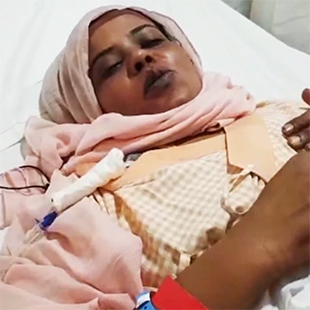
Lobna (from Sudan) was diagnosed with meningioma, a form of non-cancerous brain tumor. Her family members decided to take her…
Have your reports reviewed by independent oncology experts to help you make a confident treatment decision, all online within 48 hours.
Upload Your Reports