Your Notifications
All done, no notifications

2 Specialists

Dr. Fulya Avci Demir

Cardiologist

, Antalya, Turkey

10 Years of experience

Speaks: Turkish & English


Dr. Fulya Avci Demir is a specialized Interventional Cardiologist in Turkey. And one of the most sought after medical specialists in Antalya, Turkey. The doctor has over 10 Years of experience and is associated with Antalya Anadolu Hastanesi.

Association and Memberships Dr. Fulya Avci Demir is part of:

  • Member of Turkish Medical Association Turkish Cardiovascular Member of Association Cardiovascular Acaedemia Association Member of America Heart Association
  • Member of Europeon Association of Cardiovascular Imaging

Qualifications :

  • Akdeniz University Faculty of
  • Akdeniz University Faculty of Medicine

Hospital Address :

What is the medical expertise of Dr Fulya Avci Demir?

  • Dr Fulya Avci Demir is a respected interventional cardiologist with more than 10 years of experience in her field of expertise. Her core competencies include heart valve disease, 3-D echocardiography, heart failure, cardio-oncology, heart valve repair and replacement, speckle tracking echocardiography and angiography.
  • She completed a Fellowship in Echocardiography at King's College London, England in 2018.
  • She is a member of several leading cardiac organizations such as the Turkish Society of Cardiology, the Turkish Medical Association, the American Heart Association and the Cardiovascular Academy Association.
  • Her publications include:
    1. Relationship between serum levels of BNP and left ventricular mechanics with the severity of mitral regurgitation in asymptomatic patients with organic mitral regurgitation and preserved left ventricular function. Avcı Demir F, Papachristidis A., Altekin RE , Demir İ. Akd Med J 2020;3:364-72.
    2. Differential diagnosis of apical hypertrophic cardiomyopathy and apical displacement of the papillary muscles: a multimodality imaging point of view Ünlü S, Özden Tok Ö, Avcı Demir F, Papadopoulos K, Monaghan MJ.Echocardiography. 2021 Jan;38(1):103-113.
    3. Short and mid-term results of transcatheter aortic valve implantation: A single-centre experience. Kilinc AY, Altekin RE, Avci Demir F, Onac M, Saydam G, Demir I. Kocaeli Med J 2021;10.
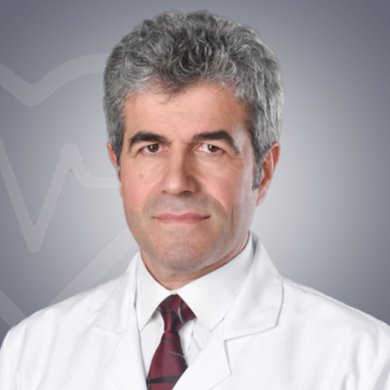
Dr. Ahmed Altinbas

Cardiologist

, Antalya, Turkey

30 Years of experience


Dr. Ahmed Altinbas is a specialized Interventional Cardiologist in Turkey. And one of the most sought after medical specialists in Antalya, Turkey. The doctor has over 30 Years of experience and is associated with Medical Park Antalya Hospital.

Association and Memberships Dr. Ahmed Altinbas is part of:

  • Turkish Cardiology Association
  • Turkish Medical Association
  • European Society of Cardiology

Qualifications :

  • 1989 - Akdeniz University (M.Sc.)
  • 1996 - Selcuk University (Specialization)
  • 2003 - Ondokuzmayis University - Suleyman Demirel University (Doctorate)
  • 2002 - Suleyman Demirel University (Associate Professor)
  • 2007 - Suleyman Demirel University (Professor)

Hospital Address :

Fener, Medical Park Antalya Hastanesi, Tekeliolu Caddesi, Muratpaa/Antalya, Turkey

Frequently Asked Questions
Which are some of the best hospitals Interventional Cardiologists in Antalya, Turkey are associated with?

Given below are some of the most popular hospitals in Antalya, Turkey where Interventional Cardiologists work:

Which are some of the procedures performed by Interventional Cardiologists in Antalya, Turkey?
Which are some of the conditions treated by Interventional Cardiologist in Antalya, Turkey?

Listed below are some of the most common conditions performed by interventional cardiologists in Antalya, Turkey are:

  • Tachycardia
  • Coronary Artery Disease
  • Atherosclerosis
  • Bradycardia
  • Blocked Arteries
  • Angina
  • Patent Foramen Ovale
  • Cardiac Arrhythmias
  • Atrial Septal Defect
What are the qualifications of an Interventional Cardiologist?

Board certification should be one of the first priorities when choosing an interventional cardiologist. A doctor might practice interventional cardiology without being board certified in the specialty. But, training, education, experience, and certification establish the doctor’s level of competence. A board certification reflects that a doctor has completed a training program and cleared an exam demonstrating their expertise in interventional cardiology.

The general steps for interventional cardiologists include:

  • Graduation from medical school to obtain MBBS degree followed by post graduation in (MD) or osteopathic medicine (DO)
  • Certification exam and residency training in internal medicine
  • Additional certification exams and training in both interventional cardiology and cardiology.
What conditions does an Interventional Cardiologist treat?

Interventional cardiologists diagnose and treat conditions of the heart and blood vessels, including:

  • Angina (chest pain)
  • Arrhythmia (abnormal heart rhythm)
  • Cardiomyopathy (weakening or enlargement of the heart muscle)
  • Congenital heart defects including patent foramen ovale and atrial septal defect
  • Heart attack (myocardial infarction)
  • Heart failure
  • Abnormalities of the valves, heart valve disorders
  • Myocarditis or heart inflammation
What diagnostic tests are required by an Interventional Cardiologist?

An interventional cardiologist can order a wide variety of diagnostic and screening tests, such as:

  • General health tests like complete blood count (CBC), chest X-ray, urinalysis, blood glucose test, liver and kidney function tests, thyroid hormone tests, cholesterol panel, and blood pressure screening
  • EKG (ECG or electrocardiogram) to record your heart rhythm
  • Echocardiogram (or ultrasound) to assess the heart structure and function
  • Cardiac stress tests to check if the heart has a decreased blood supply because of coronary heart disease
  • Cardiac enzyme tests to find out if the heart is damaged
When should you visit an Interventional Cardiologist?

Interventional cardiologists take care of patients experiencing the following symptoms:

  • Chest pain, which can move into the arms, shoulders, neck, or jaw
  • Dizziness
  • Palpitations or feeling like the heart is racing
  • Shortness of breath
  • Passing out
  • High blood pressure
What can you expect from your first visit with an Interventional Cardiologist?

Your first visit to an interventional cardiologist will involve a check of your vitals, which is a non-invasive method to measure your heart’s electrical activity. Also, the clinical staff will note all details about your family and health history that a cardiologist or heart specialist should know.

The cardiologist will examine your heart health and might suggest some tests that can include urine or blood tests, an electrocardiogram (EKG), an PET, MRI, or CT scan, or a stress test. An interventional cardiologist can diagnose any existing condition and determine future risks. They will also help create a routine that benefits your overall heart health and reduces your risk of developing heart conditions.

Which are the most common procedures performed by an Interventional Cardiologist?
  • Treatments for arteries (angioplasty and stenting)
  • Hybrid coronary revascularization
  • Balloon aortic valvuloplasty
  • Balloon mitral valvuloplasty
  • Percutaneous coronary intervention
  • Transcatheter aortic valve replacement
  • Transcatheter mitral valve repair
  • Complex coronary intervention
  • Heart defect repair
  • Atrial septal defect closure
  • Patent foramen ovale closure
  • Left atrial appendage closure
  • Reduction of stroke risk
  • Heart valve repair or replacement
  • EPS & RFA
  • Heart Port Surgery

FAQs related to Turkey