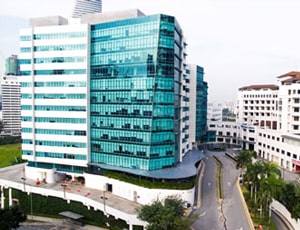
Kuala Lumpur, Malaysia
Number of Beds: 277
Year of Establishment: 2007
The Department of Ophthalmology in Prince Court Medical Centre in Malaysia specialises in eye care, covering vision problems and diseases affecting the eyes and surrounding structures. It deals with refractive errors (myopia, hyperopia), cataracts, glaucoma, diabetic retinopathy, macular degeneration, and eye injuries. Treatments range from eyeglasses and medications to laser therapy and surgical procedures like cataract removal, LASIK, corneal transplants, and retinal surgeries.
Pediatric ophthalmology addresses strabismus, amblyopia, and congenital cataracts, while neuro-ophthalmology links visual problems to neurological disorders in Malaysia. Preventive ophthalmology screenings help detect vision issues early, especially in diabetics and the elderly. Eye care also includes cosmetic procedures like eyelid surgery and correction of tear duct disorders.


Kuala Lumpur, Malaysia
Number of Beds: 724
Year of Establishment: 1999
Specialising in cataract and refractive ophthalmology, corneal transplantation, medical retinal and uveitis, glaucoma, oculoplastic ophthalmology, and pediatric ophthalmology, Sunway Medical Centre's Eye Centre is a leading provider of comprehensive eye treatment.
Modern surgical and diagnostic equipment at the facility guarantees top-notch treatment for patients of all ages. Sunway Medical Centre maintains high standards in the provision of healthcare.
It is accredited by the Joint Commission International (JCI), the Australian Council on Healthcare Standards (ACHS), and the Malaysian Society for Quality in Health (MSQH). Its competence in various medical areas has also earned it recognition in Newsweek's Asia's Top Private Hospitals 2025 ranking.

Parkcity Medical Centre in Kuala Lumpur offers comprehensive ophthalmology services, including diagnosis, treatment, and preventative care for various eye conditions. Specialised areas include paediatric ophthalmology, strabismus, oculoplastics, glaucoma, diabetic retinopathy, and cataract management. Vision correction procedures such as LASIK, PRK, and phacoemulsification cataract surgery are also available. Parkcity Medical Centre’s expert ophthalmologists use state-of-the-art technology to ensure precise care and long-term visual health, especially in children.
ParkCity Medical Centre in Kuala Lumpur has been JCI-accredited and holds MSQH accreditation. The centre maintains high standards of care and offers treatment for vascular and thoracic conditions, ensuring quality outcomes and patient satisfaction.

Kuala Lumpur, Malaysia
Number of Beds: 442
Year of Establishment: 1985
Subang Jaya Medical Centre (SJMC) in Kuala Lumpur offers comprehensive ophthalmology services, including diagnosis, treatment, and preventative care for various eye conditions. Specialised areas include paediatric ophthalmology, strabismus, oculoplastics, glaucoma, diabetic retinopathy, and cataract management. Vision correction procedures such as LASIK, PRK, and phacoemulsification cataract surgery are also available. SJMC’s expert ophthalmologists use state-of-the-art technology to ensure precise care and long-term visual health, especially in children.
With JCI accreditation and a dedicated international patient concierge service, SJMC provides high-quality, patient-centred eye care for local and international patients in a modern, supportive environment.

The Department of Ophthalmology in Ara Damansara Medical Centre in Malaysia specialises in eye care, covering vision problems and diseases affecting the eyes and surrounding structures. It deals with refractive errors (myopia, hyperopia), cataracts, glaucoma, diabetic retinopathy, macular degeneration, and eye injuries. Treatments range from eyeglasses and medications to laser therapy and surgical procedures like cataract removal, LASIK, corneal transplants, and retinal surgeries.
Pediatric ophthalmology addresses strabismus, amblyopia, and congenital cataracts, while neuro-ophthalmology links visual problems to neurological disorders in Malaysia. Preventive ophthalmology screenings help detect vision issues early, especially in diabetics and the elderly. Eye care also includes cosmetic procedures like eyelid surgery and correction of tear duct disorders.

Kuala Lumpur, Malaysia
Number of Beds: 171
Year of Establishment: 2016
Bukit Tinggi Medical Centre in Kuala Lumpur offers comprehensive ophthalmology services, including diagnosis, treatment, and preventative care for various eye conditions. Specialised areas include paediatric ophthalmology, strabismus, oculoplastics, glaucoma, diabetic retinopathy, and cataract management. Vision correction procedures such as LASIK, PRK, and phacoemulsification cataract surgery are also available. Bukit Tinggi Medical Centre’s expert ophthalmologists use state-of-the-art technology to ensure precise care and long-term visual health, especially in children.
Bukit Tinggi Medical Centre (BTMC) is accredited by the Malaysian Society for Quality in Health (MSQH), reflecting adherence to national healthcare standards.
Ask your healthcare adviser for the best multiple options and choose the one that meets your expectations

Ophthalmology hospitals in Malaysia have highly skilled doctors who specialise in treating different eye conditions. They use advanced equipment and the latest treatments to ensure your eyes get the best care possible, whether it's a regular check-up or a surgery.
Treatments in Malaysia are much more affordable than in other countries, making it an excellent option for those seeking quality care without the high cost. The hospitals also offer exceptional assistance to international patients, from arranging travel to ensuring their comfort throughout their stay. With excellent service and modern facilities, you'll feel at ease during your treatment.
Here are some simple reasons why you should go to an Ophthalmology hospital in Malaysia
Leading Ophthalmology hospitals in Malaysia give special care to international patients, making the journey smooth and stress-free. These services include:
| Procedure Name | Cost | Length of Hospital Stay |
|---|---|---|
| Cornea Transplant | Price on Request | 1 Day |
| Vitrectomy | USD 4200 | 1 Day |
| LASIK Surgery | USD 3200 | 2 Days |
| Macular Degeneration Surgery | Price on Request | 1 Day |
The popular hospital groups in Malaysia are Beverly Wilshire Medical Group, Kuala Lumpur; Parkway Pantai, Kuala Lumpur; Gleneagles Hospital, Kuala Lumpur; and KPJ Ampang Puteri Specialist Hospital, Ampang. With a two-tier healthcare system in Malaysia, the hospitals are highly advanced because of extensive support from the Malaysian government through investment in medical infrastructure. At par with most of the well-developed countries, the hospitals in Malaysia have outperformed in the last ten years with the help of well-trained staff and excellent facilities. These hospitals are more focused on providing quality treatment and are supported by the latest medical technologies and excellent infrastructure.
MSQH, which promotes safety and quality in the healthcare services in Malaysia, has entered into partnership with Malaysia’s Ministry of Health, Association of Private Hospitals Malaysia and Malaysian Medical Association. Malaysian Society for Quality in Health (MSQH) and JCI are the two main healthcare accrediting bodies in Malaysia. A set of well-defined parameters are in place to gauge the performance of hospitals in Malaysia and several rounds of evaluation are involved in the accreditation process. Around 12 hospitals in Malaysia have received JCI certification and all of them follow the global standards.
With world-class hospitals across Asia and beyond, Malaysia has reported high success rates in cardiology and fertility treatments. The quality of healthcare in Malaysia is at par with most developed countries due to its cutting-edge technology, advanced infrastructure, and skilled medical professionals. One of the leading medical tourism destinations in the world, Malaysia boasts of having a strong healthcare system supported by public-private healthcare collaboration and governmental participation. Malaysia has a rich culture and several heritage spots which make it one of the most popular medical tourism destinations in the world.
Doctors in Malaysia have been trained as well as educated in modern-day best practices in healthcare, with many having studied in premier universities abroad. Doctors in Malaysia have reported best results with many procedures, but their expertise in infertility treatments and cardiology has been globally recognized The doctors in Malaysia have deep expertise in their specialty area and most of them are trained internationally before they start work in their home country. Producing one of the finest doctors in the world, Malaysia has a strict evaluation system in place to ensure that the country has quality doctors with a high level of professionalism.
Two attendants who are close relatives are allowed to accompany theapplicant under separate Medical Attendant Visas. Malaysian Healthcare Travellers Program (MHTP) allows all medical tourists to apply for eVISA for traveling to Malaysia and residing there for a period of 30 days. To apply for an eVisa, a candidate will require:
Some of the most popular treatments available in Malaysia include cosmetic surgery, dental work, vitiligo treatment, cancer care, discectomy, prostate surgery. Cancer treatment through gene therapy is becoming popular in Malaysia as this novel technique guarantees reduced treatment costs, shorter treatment time, minimal adverse effects of current chemo-drugs. With a high success rate of 55 to 60, IVF in Malaysia is much affordable and performed using the latest technology. Malaysia has highly trained orthopedic doctors who have reported high success rates in procedures like shoulder replacement, knee replacement surgery, and hip replacement.
Some other reasons why these cities have become the world’s epicenter of medical tourism are a large number of quality hospitals, rich culture, scenic value, and availability of translators, and safety of tourists. Malaysia has some top cities having world-class hospitals, such as Kuala Lumpur, Ampang, Penang, Malacca, and Kota Kinabalu. Kuala Lumpur and Penang are the most popular destinations for medical tourism in Malaysia as these cities have an amazing public transportation system, a number of cheap hotels, and connectivity through airlines. The cities in Malaysia deliver a world-class treatment experience through their superior hospitals backed with state-of-art infrastructure and talented doctors.
Before a trip to Malaysia, you can get pre-exposure vaccination against rabies. Children are more vulnerable. If you are coming from a country with a high risk of Yellow Fever, you might need an International Certificate of Vaccination. The vaccines which are recommended before travel to Malaysia are: