Browse verified doctors or let our care team help you find the doctor best suited to your condition, treatment goals, and budget.

At Medipol Bahçelievler Hospital, ESWL is performed using specialized shock wave lithotripsy techniques and comprehensive urological and imaging assessment. Established in 2022, this JCI accredited hospital in Istanbul, Turkey has 441 beds and offers advanced stone management and minimally invasive urology services.
ESWL may be considered for selected patients with kidney or ureteral stones that are suitable for fragmentation using external shock waves. Before treatment, imaging such as ultrasound, X-ray, or CT may be used to determine the stone's size and location and assess the urinary tract. During the procedure, focused shock waves are directed at the stone to fragment it into smaller pieces, which can subsequently pass through the urine.
Florence Nightingale Hospital provides specialised ESWL with a focus on accurate stone targeting, controlled shock wave delivery, and individualized urological care. Established in 1989, the JCI accredited hospital is located in Istanbul, Turkey and operates 804 beds, with modern urology, imaging, lithotripsy, and postoperative monitoring infrastructure.
ESWL can provide a non-invasive treatment option for appropriately selected kidney and ureteral stones. Treatment planning considers stone size, number, location, density, urinary tract anatomy, kidney function, and the presence of obstruction or infection. Detailed imaging helps the urologist determine whether ESWL is suitable and select the appropriate treatment approach. Temporary effects such as blood in the urine, discomfort, bruising, or passage of stone fragments may occur after treatment, while additional procedures may be required if the stone is not adequately fragmented or cleared.
Antalya Anadolu Hastanesi is a trusted healthcare provider for ESWL, offering advanced urinary stone treatment supported by experienced urologists, radiologists, anesthesiologists, and minimally invasive surgery teams. Established in 2006, the - accredited hospital is situated in Antalya, Turkey and has 114 beds.
ESWL works by delivering repeated high-energy shock waves through the skin to the targeted urinary stone. The mechanical energy causes the stone to break into smaller fragments without requiring an incision into the urinary tract. Treatment suitability depends on factors such as stone size, location, composition, urinary anatomy, and the presence of obstruction or infection.
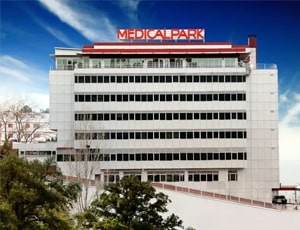
Medical Park Trabzon Star Hospital offers advanced ESWL using modern extracorporeal shock wave technology and individualized urological care plans. Established in 2011, the JCI accredited hospital is located in Trabzon, Turkey and has 120 beds, providing comprehensive urological and minimally invasive care for local and international patients.
ESWL (Extracorporeal Shock Wave Lithotripsy) is a non-invasive treatment used to break selected kidney or urinary tract stones into smaller fragments that can be passed naturally through the urinary system. The procedure uses focused shock waves directed at the stone from outside the body. Depending on the stone's size, location, composition, and the patient's clinical condition, one or more treatment sessions may be required.
VM Medical Park Ankara offers advanced ESWL using modern extracorporeal shock wave technology and individualized urological care plans. Established in 2014, the JCI accredited hospital is located in Ankara, Turkey and has 327 beds, providing comprehensive urological and minimally invasive care for local and international patients.
ESWL (Extracorporeal Shock Wave Lithotripsy) is a non-invasive treatment used to break selected kidney or urinary tract stones into smaller fragments that can be passed naturally through the urinary system. The procedure uses focused shock waves directed at the stone from outside the body. Depending on the stone's size, location, composition, and the patient's clinical condition, one or more treatment sessions may be required.
Avcilar Anadolu Hospital offers advanced ESWL using modern extracorporeal shock wave technology and individualized urological care plans. Established in 1998, the JCI accredited hospital is located in Istanbul, Turkey and has 120 beds, providing comprehensive urological and minimally invasive care for local and international patients.
ESWL (Extracorporeal Shock Wave Lithotripsy) is a non-invasive treatment used to break selected kidney or urinary tract stones into smaller fragments that can be passed naturally through the urinary system. The procedure uses focused shock waves directed at the stone from outside the body. Depending on the stone's size, location, composition, and the patient's clinical condition, one or more treatment sessions may be required.
At Ekol, ESWL is performed using specialized shock wave lithotripsy techniques and comprehensive urological and imaging assessment. Established in 2000, this ISO accredited hospital in Izmir, Turkey it has adequate bed capacity and offers advanced stone management and minimally invasive urology services.
ESWL may be considered for selected patients with kidney or ureteral stones that are suitable for fragmentation using external shock waves. Before treatment, imaging such as ultrasound, X-ray, or CT may be used to determine the stone's size and location and assess the urinary tract. During the procedure, focused shock waves are directed at the stone to fragment it into smaller pieces, which can subsequently pass through the urine.
At Eregli Anadolu Hospital, ESWL is performed using specialized shock wave lithotripsy techniques and comprehensive urological and imaging assessment. Established in 1998, this JCI accredited hospital in Zonguldak, Turkey has 75 beds and offers advanced stone management and minimally invasive urology services.
ESWL may be considered for selected patients with kidney or ureteral stones that are suitable for fragmentation using external shock waves. Before treatment, imaging such as ultrasound, X-ray, or CT may be used to determine the stone's size and location and assess the urinary tract. During the procedure, focused shock waves are directed at the stone to fragment it into smaller pieces, which can subsequently pass through the urine.
At Baskent University Istanbul Hospital, ESWL is performed using specialized shock wave lithotripsy techniques and comprehensive urological and imaging assessment. Established in 1993, this JCI, ISO accredited hospital in Istanbul, Turkey has 144 beds and offers advanced stone management and minimally invasive urology services.
ESWL may be considered for selected patients with kidney or ureteral stones that are suitable for fragmentation using external shock waves. Before treatment, imaging such as ultrasound, X-ray, or CT may be used to determine the stone's size and location and assess the urinary tract. During the procedure, focused shock waves are directed at the stone to fragment it into smaller pieces, which can subsequently pass through the urine.
Guven Hospital is a trusted healthcare provider for ESWL, offering advanced urinary stone treatment supported by experienced urologists, radiologists, anesthesiologists, and minimally invasive surgery teams. Established in 1975, the GHA- accredited hospital is situated in Ankara, Turkey and has 254 beds.
ESWL works by delivering repeated high-energy shock waves through the skin to the targeted urinary stone. The mechanical energy causes the stone to break into smaller fragments without requiring an incision into the urinary tract. Treatment suitability depends on factors such as stone size, location, composition, urinary anatomy, and the presence of obstruction or infection.
Choosing I.A.U VM Medical Park Florya Hospital for ESWL gives patients access to experienced urologists, advanced stone-localization imaging, modern lithotripsy systems, and structured post-treatment follow-up. Established in 2017, the JCI accredited hospital in Istanbul, Turkey has 300 beds and provides specialized urinary stone management services.
ESWL is generally performed as a minimally invasive or non-incisional procedure, with pain control or sedation provided according to the patient's needs and the treatment protocol. The patient is positioned so that the stone can be accurately targeted, and shock waves are delivered to fragment it. After treatment, patients may be advised to maintain appropriate fluid intake and follow instructions for monitoring or passing stone fragments. Follow-up imaging may be used to determine whether residual stones remain.
At Biruni University Hospital, ESWL is performed using specialized shock wave lithotripsy techniques and comprehensive urological and imaging assessment. Established in 2016, this JCI accredited hospital in Istanbul, Turkey has 617 beds and offers advanced stone management and minimally invasive urology services.
ESWL may be considered for selected patients with kidney or ureteral stones that are suitable for fragmentation using external shock waves. Before treatment, imaging such as ultrasound, X-ray, or CT may be used to determine the stone's size and location and assess the urinary tract. During the procedure, focused shock waves are directed at the stone to fragment it into smaller pieces, which can subsequently pass through the urine.
Medical Park Canakkale Hospital is a trusted healthcare provider for ESWL, offering advanced urinary stone treatment supported by experienced urologists, radiologists, anesthesiologists, and minimally invasive surgery teams. Established in 2017, the ISO, JCI- accredited hospital is situated in Canakkale, Turkey and has 92 beds.
ESWL works by delivering repeated high-energy shock waves through the skin to the targeted urinary stone. The mechanical energy causes the stone to break into smaller fragments without requiring an incision into the urinary tract. Treatment suitability depends on factors such as stone size, location, composition, urinary anatomy, and the presence of obstruction or infection.
Choosing Medstar Antalya Hospital for ESWL gives patients access to experienced urologists, advanced stone-localization imaging, modern lithotripsy systems, and structured post-treatment follow-up. Established in 2009, the JCI accredited hospital in Ankara, Turkey has 124 beds and provides specialized urinary stone management services.
ESWL is generally performed as a minimally invasive or non-incisional procedure, with pain control or sedation provided according to the patient's needs and the treatment protocol. The patient is positioned so that the stone can be accurately targeted, and shock waves are delivered to fragment it. After treatment, patients may be advised to maintain appropriate fluid intake and follow instructions for monitoring or passing stone fragments. Follow-up imaging may be used to determine whether residual stones remain.
Adatip Hospital provides specialised ESWL with a focus on accurate stone targeting, controlled shock wave delivery, and individualized urological care. Established in 1995, the ISO accredited hospital is located in Sakarya, Turkey and operates 450 beds, with modern urology, imaging, lithotripsy, and postoperative monitoring infrastructure.
ESWL can provide a non-invasive treatment option for appropriately selected kidney and ureteral stones. Treatment planning considers stone size, number, location, density, urinary tract anatomy, kidney function, and the presence of obstruction or infection. Detailed imaging helps the urologist determine whether ESWL is suitable and select the appropriate treatment approach. Temporary effects such as blood in the urine, discomfort, bruising, or passage of stone fragments may occur after treatment, while additional procedures may be required if the stone is not adequately fragmented or cleared.

Nigerian national Mrs. Saadatu Muhammad, 48, suffered from severe abdominal pain that affected her quality of life.

Abdullah's story highlights how modern regenerative treatments can offer new hope for men dealing with erectile dysfunction. With expert medical care, advanced technology,
| Speciality | Urology |
| Procedure | ESWL |
| Success Rate | 85-95% |
| Recovery Time | 2-3 weeks |
| Treatment Time | 30-45 minutes |
| Chances of Recurrence | Moderate |
A number of determining factors can be used to rank hospitals for your suitable procedure. In Turkey, hospitals that do ESWLs are ranked according to the mentioned factors- Popularity for the Procedure, Infrastructure, Accessibility of the treatment, Qualified Medical Personnel, Technology Used, Price, Amenities provided, and Success Rate.
MediGence integrates convenience, high-quality medical care, and cost savings. We make sure that your healthcare journey should be easy and hassle-free while receiving treatment overseas. Some of the top caregiving services available include Hotel stays, Dedicated Case Coordinator, Recovery packages, Online Consultation, round-the-clock assistance, and customized packages with discounts of up to a 30%. There are many more advantages for you besides the aforementioned services.
Absolutely! Yes. Before you plan medical travel to Turkey, you can benefit from an efficient & helpful online consultation with the chosen specialist there. While talking to one of our experts, you can request a video consultation appointment. They will get in touch with the doctor to check his/her availability. After receiving confirmation, the appointment will be scheduled and you will receive a payment link to book your session.
Turkey has some of the top-rated & eminent specialists in the world. Almost all the top-rated doctors in Turkey provide online consultations to patients worldwide. Here are some popular ones in Turkey-
Due to the high success rate and top-notch hospital infrastructure, ESWL in Turkey is considered reliable by many people around the world. Other factors that make Turkey the preferred option for ESWL include:
The recovery time for a procedure varies based on the condition of the patient and the complexity of the surgery. Other factors, such as the patient's continued participation in rehabilitation sessions and postoperative care appointments, have a significant impact on the length of their recovery. The patient is suggested to stay in close contact with their surgeon for a few months post-surgery to reduce their recovery time.