Browse verified doctors or let our care team help you find the doctor best suited to your condition, treatment goals, and budget.
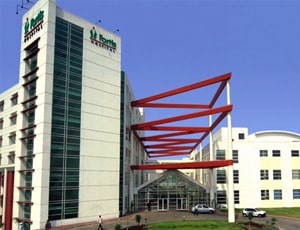
Fortis Hospital is a trusted healthcare provider for Hemodialysis, offering renal replacement therapy supported by experienced nephrologists, trained dialysis specialists, modern dialysis units, and multidisciplinary renal care. Established in 2004, the NABH, NABL- accredited hospital is situated in Noida, India and has 400 beds.
Hemodialysis helps compensate for some of the filtration and fluid-regulating functions of failing kidneys. The dialyzer contains a semipermeable membrane that allows waste products and excess substances to move out of the blood into a dialysis solution while retaining essential blood components. Depending on the patient's kidney function and clinical condition, treatment may be scheduled regularly or provided temporarily until kidney function improves or another long-term treatment option is established.
nM Virani Wockhardt provides specialised Hemodialysis with a focus on effective blood purification, precise fluid management, advanced dialysis technology, and individualized nephrology care. Established in 1998, the NABH accredited hospital is located in Rajkot, India and operates 280 beds, with modern renal, dialysis, and critical-care infrastructure.
Hemodialysis can help maintain fluid, electrolyte, and waste-product balance in patients whose kidneys can no longer adequately perform these functions. Treatment planning considers the degree of kidney failure, residual kidney function, fluid status, nutritional needs, cardiovascular health, and the type of vascular access available. A detailed nephrology assessment helps determine the appropriate dialysis prescription, including treatment frequency, duration, blood-flow parameters, and fluid removal goals.
Manipal Hospital, Dwarka is a trusted healthcare provider for Hemodialysis, offering renal replacement therapy supported by experienced nephrologists, trained dialysis specialists, modern dialysis units, and multidisciplinary renal care. Established in 2018, the NABH- accredited hospital is situated in Delhi, India and has 380 beds.
Hemodialysis helps compensate for some of the filtration and fluid-regulating functions of failing kidneys. The dialyzer contains a semipermeable membrane that allows waste products and excess substances to move out of the blood into a dialysis solution while retaining essential blood components. Depending on the patient's kidney function and clinical condition, treatment may be scheduled regularly or provided temporarily until kidney function improves or another long-term treatment option is established.
At Dr. Rela Institute and Medical Centre, Hemodialysis is performed using specialized dialysis equipment and comprehensive pre-treatment nephrology assessment. Established in 2018, this NABH, NABL accredited hospital in Chennai, India has 450 beds and offers advanced nephrology and renal replacement therapy services.
Hemodialysis may be considered when kidney function is severely reduced and the body is unable to adequately remove metabolic waste or maintain fluid and electrolyte balance. Before treatment, the nephrology team assesses kidney function, fluid status, blood pressure, electrolyte levels, and the patient's vascular access. Blood is then drawn through a suitable access, passed through the dialyzer, and returned to the circulation after filtration.
MGM Healthcare offers advanced Hemodialysis using modern renal replacement technology and individualized nephrology care plans. Established in 2016, the NABH, NABL, JCI accredited hospital is located in Chennai, India and has 400 beds, providing comprehensive kidney care for local and international patients.
Hemodialysis is a renal replacement therapy used to remove waste products, excess fluid, and certain electrolytes from the blood when the kidneys are unable to perform these functions adequately. During treatment, blood is circulated through a dialyzer, where it is filtered before being returned to the patient's body. Hemodialysis may be required for patients with advanced or end-stage kidney disease and may be provided as a regular long-term treatment or in selected acute situations.
Fortis Hospital is a trusted healthcare provider for Hemodialysis, offering renal replacement therapy supported by experienced nephrologists, trained dialysis specialists, modern dialysis units, and multidisciplinary renal care. Established in 2001, the NABH, NABL, JCI- accredited hospital is situated in Bangalore, India and has 375 beds.
Hemodialysis helps compensate for some of the filtration and fluid-regulating functions of failing kidneys. The dialyzer contains a semipermeable membrane that allows waste products and excess substances to move out of the blood into a dialysis solution while retaining essential blood components. Depending on the patient's kidney function and clinical condition, treatment may be scheduled regularly or provided temporarily until kidney function improves or another long-term treatment option is established.
Faridabad, India
Choosing Sarvodaya Hospital and Research Centre for Hemodialysis gives patients access to experienced nephrologists, advanced dialysis machines, vascular access services, continuous monitoring, and structured renal care. Established in 1997, the NABH, NABL accredited hospital in Faridabad, India has 500 beds and provides specialized hemodialysis services.
Hemodialysis is commonly performed through an arteriovenous fistula, graft, or suitable central venous catheter, depending on the patient's circumstances. During a dialysis session, blood is circulated through the dialysis machine while excess fluid and waste products are removed before the filtered blood is returned to the body. Patients are monitored for blood pressure changes, fluid removal, vascular access problems, and other potential treatment-related complications. The frequency and duration of sessions are individualized according to kidney function and clinical needs.
Batra Hospital offers advanced Hemodialysis using modern renal replacement technology and individualized nephrology care plans. Established in 1987, the NABH accredited hospital is located in Delhi, India and has 495 beds, providing comprehensive kidney care for local and international patients.
Hemodialysis is a renal replacement therapy used to remove waste products, excess fluid, and certain electrolytes from the blood when the kidneys are unable to perform these functions adequately. During treatment, blood is circulated through a dialyzer, where it is filtered before being returned to the patient's body. Hemodialysis may be required for patients with advanced or end-stage kidney disease and may be provided as a regular long-term treatment or in selected acute situations.
Aster Medcity provides specialised Hemodialysis with a focus on effective blood purification, precise fluid management, advanced dialysis technology, and individualized nephrology care. Established in 2013, the NABH, JCI accredited hospital is located in Kochi, India and operates 670 beds, with modern renal, dialysis, and critical-care infrastructure.
Hemodialysis can help maintain fluid, electrolyte, and waste-product balance in patients whose kidneys can no longer adequately perform these functions. Treatment planning considers the degree of kidney failure, residual kidney function, fluid status, nutritional needs, cardiovascular health, and the type of vascular access available. A detailed nephrology assessment helps determine the appropriate dialysis prescription, including treatment frequency, duration, blood-flow parameters, and fluid removal goals.
Aakash Healthcare Super Speciality Hospital provides specialised Hemodialysis with a focus on effective blood purification, precise fluid management, advanced dialysis technology, and individualized nephrology care. Established in 2011, the NABH, ISO accredited hospital is located in Delhi, India and operates 230 beds, with modern renal, dialysis, and critical-care infrastructure.
Hemodialysis can help maintain fluid, electrolyte, and waste-product balance in patients whose kidneys can no longer adequately perform these functions. Treatment planning considers the degree of kidney failure, residual kidney function, fluid status, nutritional needs, cardiovascular health, and the type of vascular access available. A detailed nephrology assessment helps determine the appropriate dialysis prescription, including treatment frequency, duration, blood-flow parameters, and fluid removal goals.
Choosing Pushpawati Singhania Research Institute for Hemodialysis gives patients access to experienced nephrologists, advanced dialysis machines, vascular access services, continuous monitoring, and structured renal care. Established in 1996, the NABH, NABL accredited hospital in Delhi, India has 201 beds and provides specialized hemodialysis services.
Hemodialysis is commonly performed through an arteriovenous fistula, graft, or suitable central venous catheter, depending on the patient's circumstances. During a dialysis session, blood is circulated through the dialysis machine while excess fluid and waste products are removed before the filtered blood is returned to the body. Patients are monitored for blood pressure changes, fluid removal, vascular access problems, and other potential treatment-related complications. The frequency and duration of sessions are individualized according to kidney function and clinical needs.
Rajagiri Hospital offers advanced Hemodialysis using modern renal replacement technology and individualized nephrology care plans. Established in 2014, the JCI accredited hospital is located in Kochi, India and it has adequate bed capacity, providing comprehensive kidney care for local and international patients.
Hemodialysis is a renal replacement therapy used to remove waste products, excess fluid, and certain electrolytes from the blood when the kidneys are unable to perform these functions adequately. During treatment, blood is circulated through a dialyzer, where it is filtered before being returned to the patient's body. Hemodialysis may be required for patients with advanced or end-stage kidney disease and may be provided as a regular long-term treatment or in selected acute situations.
Fortis Hiranandani Hospital offers advanced Hemodialysis using modern renal replacement technology and individualized nephrology care plans. Established in 2007, the NABH accredited hospital is located in Mumbai, India and has 149 beds, providing comprehensive kidney care for local and international patients.
Hemodialysis is a renal replacement therapy used to remove waste products, excess fluid, and certain electrolytes from the blood when the kidneys are unable to perform these functions adequately. During treatment, blood is circulated through a dialyzer, where it is filtered before being returned to the patient's body. Hemodialysis may be required for patients with advanced or end-stage kidney disease and may be provided as a regular long-term treatment or in selected acute situations.
Fortis Hospital, Shalimar Bagh provides specialised Hemodialysis with a focus on effective blood purification, precise fluid management, advanced dialysis technology, and individualized nephrology care. Established in 2010, the NABH accredited hospital is located in Delhi, India and operates 262 beds, with modern renal, dialysis, and critical-care infrastructure.
Hemodialysis can help maintain fluid, electrolyte, and waste-product balance in patients whose kidneys can no longer adequately perform these functions. Treatment planning considers the degree of kidney failure, residual kidney function, fluid status, nutritional needs, cardiovascular health, and the type of vascular access available. A detailed nephrology assessment helps determine the appropriate dialysis prescription, including treatment frequency, duration, blood-flow parameters, and fluid removal goals.
Regen Ortho Sport provides specialised Hemodialysis with a focus on effective blood purification, precise fluid management, advanced dialysis technology, and individualized nephrology care. Established in 2012, the accredited hospital is located in Mumbai, India and operates beds, with modern renal, dialysis, and critical-care infrastructure.
Hemodialysis can help maintain fluid, electrolyte, and waste-product balance in patients whose kidneys can no longer adequately perform these functions. Treatment planning considers the degree of kidney failure, residual kidney function, fluid status, nutritional needs, cardiovascular health, and the type of vascular access available. A detailed nephrology assessment helps determine the appropriate dialysis prescription, including treatment frequency, duration, blood-flow parameters, and fluid removal goals.

Koh Kiang Tong's experience highlights the importance of well-planned dialysis care for patients travelling internationally. With expert coordination, trusted hospital partnerships, and patient-focused support
| Speciality | Transplants |
| Procedure | Hemodialysis |
| Success Rate | NA |
| Recovery Time | Ongoing |
| Treatment Time | 3-5 hours, 3 times a week |
| Chances of Recurrence | NA |
Many hemodialysis hospitals in India are equipped with the latest medical technology. These hospitals use state-of-the-art dialysis machines, monitoring systems, and high-quality water purification systems to ensure safe and effective care.
The top hospitals that provide Hemodialysis in India have the following features:
In India, hemodialysis has an excellent success rate, with many patients surviving for several years with proper care and therapy. On average, 85% to 90% of hemodialysis patients can maintain kidney function for 5 years or more based on criteria like overall health, adherence to the dialysis schedule, and equipment quality.
You can explore the list of trustworthy, accredited hospitals in India that provide Hemodialysis on the MediGence platform. It also shows the profiles of nephrologists by their experience, success rates, and reviews to help you find the best ones to connect with. This results in a seamless and informed journey to find the most personalised medical solutions for treatment.
Few hospitals in India offer Hemodialysis :
The cost of Hemodialysis in India typically ranges from (USD 300 - 600), depending on the hospital, location, and the complexity of the condition.
Many hospitals in India offering Hemodialysis specialise in treating international patients. They arrange travel and accommodation and plan treatment. Even Top-Notch Hospitals like Artemis, Fortis, and Medanta provide excellent treatment and care for their global patients.
There are some of the risks associated with Hemodialysis such as:
In India, recovery time following hemodialysis is often quick, and the process lasts approximately 3 to 5 hours per session. Patients frequently feel exhausted after dialysis, although they usually recover within a few hours. Most people may return to normal activities after the treatment, but some may feel weak for the rest of the day.
You can consult with a nephrologist before travelling to India for a Hemodialysis through the MediGence platform. MediGence offers teleconsultations with top experts, allowing you to discuss your medical condition, treatment options, and expert advice.
In India, post-hemodialysis care involves rest, hydration, and monitoring of vital signs to ensure complete recovery. Patients should observe the access site for any issues, including infection or bleeding. Dietary changes may be recommended to maintain electrolyte levels, and blood pressure and anaemia drugs may be used. Patients should get enough rest after their treatments and avoid heavy activity for a day or two.
India is one of the most sought-after destinations for Hemodialysis due to its advanced healthcare facilities, well-qualified doctors, and cost-effective treatment. The country has world-class medical technology and internationally accredited hospitals.
MediGence ensures a hassle-free experience with personalised assistance from selecting the hospital, travel, and post-treatment care.
MediGence will contact you to arrange an appointment for a Hemodialysis in India. Our case manager will connect you with the top hospitals, schedule consultations with the specialists, and guide you throughout the process, including travel and treatment planning.
During hemodialysis, blood is taken from an access site (such as a fistula or catheter) and filtered by a dialysis machine to eliminate waste and excess fluids. The treatment usually takes 3 to 5 hours, and you may feel tired or lightheaded afterwards. After that, the access point is verified for any problems, and you will be briefly monitored before leaving.
Yes, there are various alternatives to Hemodialysis in India, such as:
MediGence will assist you in preparing for Hemodialysis in India by providing end-to-end assistance for a hassle-free experience. We connect you with the best hospitals and experienced nephrologists for an initial consultation, make necessary diagnostic tests, and provide a treatment plan tailored to your needs.
Our Case Manager will help you coordinate travel, visas, and accommodation and provide personalised support during your stay. MediGence offers the best and safest care in state-of-the-art medical facilities.