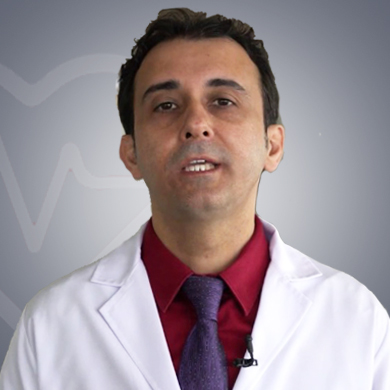
Hematologist
Medicana Bursa Hospital , Bursa, Turkey
20 Years of experience
Speaks: Turkish , English
Dr Omer Onder Savas is one of the most sought after Haematologist in Bursa, Turkey. The clinician holds over 14 years of experience and is associated with Medicana Bursa Hospital.
Qualifications :
Hospital Address :
Odunluk Mahallesi, Medicana BURSA HOSPITAL, Akp?nar Caddesi, Nilfer/Bursa, Turkey
Medical Expertise of Dr. Omer Onder Savas

Hematologist
Abu Dhabi, United Arab Emirates
8 Years of experience
Speaks: English , Arabic
Please make sure to see your doctor using Telemedicine before you even board a flight
Hematologist is a doctor specialized in diagnosing, treating and preventing disorders related to blood and lymphatic system including lymph nodes and blood vessels.
Your phycisian will recommend you to visit a hematologist for a checkup if he witnesses any disorder, abnormality or any risk for conditions involving your red blood cells (RBC), white blood cells (WBC), blood platelets, blood vessels, bone marrow, lymph nodes or spleen. Some of the major ones being:
Hematologist performs various tests for monitoring, diagnosis, treatment and prevention of blood disorders, some of the major ones being:
| Doctor | Associated Hospital |
|---|---|
| Dr. Tarek Assi | Bellevue Medical Center, Mansourieh |
| Dr. Alev Akyol | - |
| Dr. Ramaswamy N V | Aster Medicity, Kochi |
| Dr. Suporn Chuncharunee | Phyathai 2 International Hospital, Bangkok |
| Dr. Sumant Gupta | Sarvodaya Hospital and Research Centre, Faridabad |
| Dr. Nitin Sood | Medanta - The Medicity, Gurugram |
| Dr. Omer Onder Savas | Medicana Bursa Hospital, Bursa |
| Dr. Yasemin Altuner Torun | Istinye University Bahcesehir - LIV Hospital, Istanbul |
Hematologists are highly trained healthcare providers who specialize in blood diseases & disorders. Use of video consultations for patients with Hematological disorders can ease their discomfort of traveling, chronic infections, fatigue, high amount of money & time consumption, waiting in long queues, etc. They can sit back at home, and consult any of the top-notch Hematologists in 20+ countries via Telemedicine by MediGence. The need for the use of telemedicine is expected to increase more in the coming years. Following are the other reasons to consider an online consultation with a Hematologist-
Popular Transplant Surgeon in Top Countries are :
Top Speciality Doctors Worldwide:
List of Top Rated Hospitals where we can find Transplant Surgeon Worldwide are as followed:
Yes, we provide the list of Transplant Surgeon worldwide in the following languages:
Listed below are some of the top hematologists available for online consultation:
Some of the most popular procedures performed by hematologists are:
Some of the conditions performed by hematologists are:
Hematologists are internal medicine doctors who have training in disorders related to the bone marrow, blood, and lymphatic system. They may work in hospitals, clinics, or blood banks. Hematologists who practice in labs are called hematopathologists. They are well- trained in pathology, a branch of medicine that studies body tissues and the blood with microscopes or tests.
If your primary care physician has advised you to see a hematologist, it might be because you are at risk for a disease involving the red or white blood cells, blood vessels, platelets, bone marrow, spleen, and lymph nodes.
A hematologist:
A hematologist may also be known by the following names: blood disease specialist or blood doctor.
When choosing a hematologist, board certification plays a key role. A doctor might treat patients with blood disorders and conditions without being board certified in hematology. However, training, education, experience and certification establish the hematologist’s level of competence. Also, board certification tells whether the doctor has completed a training program and cleared an exam demonstrating their expertise in hematology.
This is the pathway:
• Graduation in medicine (MBBS) followed by post graduation programme (MD or DO).
• Residency training as well as certification exam in internal medicine
• More training (fellowship programs) and certification exams in hematology.
A hematologist treats conditions that involve the blood including:
A hematologist can order a wide variety of diagnostic tests, such as:
Your primary care doctor may tell you to see a hematologist if you have the following symptoms:
You might not always come face to face with a hematologist. They often work closely with your pediatrician, internist, oncologist, or other primary doctor to study your test results or to evaluate your condition. A lab technician who collects your blood sample isn’t a doctor.
They will conduct a physical exam to test the functioning of the body. In addition to tests and physical exams, you could get a lot of information at your first appointment. You may need to bring a family member or friend along with you. The person you bring can help ask questions, listen, and take notes.
Some popular procedures performed by hematologists are:
Hematologists are internal medicine doctors who have training in disorders related to the bone marrow, blood, and lymphatic system. They may work in hospitals, clinics, or blood banks. Hematologists who practice in labs are called hematopathologists. They are well- trained in pathology, a branch of medicine that studies body tissues and the blood with microscopes or tests.
If your primary care physician has advised you to see a hematologist, it might be because you are at risk for a disease involving the red or white blood cells, blood vessels, platelets, bone marrow, spleen, and lymph nodes.
A hematologist:
A hematologist may also be known by the following names: blood disease specialist or blood doctor.
When choosing a hematologist, board certification plays a key role. A doctor might treat patients with blood disorders and conditions without being board certified in hematology. However, training, education, experience and certification establish the hematologist’s level of competence. Also, board certification tells whether the doctor has completed a training program and cleared an exam demonstrating their expertise in hematology.
This is the pathway:
• Graduation in medicine (MBBS) followed by post graduation programme (MD or DO).
• Residency training as well as certification exam in internal medicine
• More training (fellowship programs) and certification exams in hematology.
A hematologist treats conditions that involve the blood including:
A hematologist can order a wide variety of diagnostic tests, such as:
Your primary care doctor may tell you to see a hematologist if you have the following symptoms:
You might not always come face to face with a hematologist. They often work closely with your pediatrician, internist, oncologist, or other primary doctor to study your test results or to evaluate your condition. A lab technician who collects your blood sample isn’t a doctor.
They will conduct a physical exam to test the functioning of the body. In addition to tests and physical exams, you could get a lot of information at your first appointment. You may need to bring a family member or friend along with you. The person you bring can help ask questions, listen, and take notes.
Some popular procedures performed by hematologists are: