Browse verified doctors or let our care team help you find the doctor best suited to your condition, treatment goals, and budget.

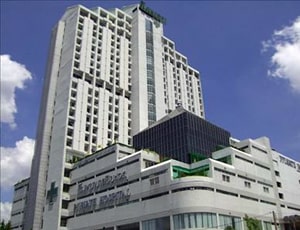
Piyavate Hospital offers advanced Radical Cystectomy using modern uro-oncological and reconstructive surgical techniques with individualized cancer care plans. Established in 1993, the JCI, ISO accredited hospital is located in Bangkok, Thailand and has 150 beds, providing comprehensive urology, uro-oncology, and multidisciplinary cancer care for local and international patients.
Radical Cystectomy is a major surgical procedure primarily used to treat muscle-invasive bladder cancer and selected high-risk or recurrent bladder tumors. The procedure involves removal of the entire urinary bladder along with nearby structures as clinically appropriate. Because the bladder is removed, a urinary diversion is created to provide an alternative pathway for urine to leave the body. The type of diversion may include an ileal conduit, continent urinary reservoir, or neobladder depending on the patient's condition and suitability.
Choosing Dr. Rela Institute and Medical Centre for Radical Cystectomy gives patients access to experienced uro-oncologists, advanced cancer imaging, robotic and laparoscopic surgical systems, specialized reconstructive facilities, pathology services, and structured postoperative monitoring. Established in 2018, the NABH, NABL accredited hospital in Chennai, India has 450 beds and provides specialized treatment for complex bladder cancer.
Radical Cystectomy is performed under general anaesthesia, with the surgical approach determined by tumor characteristics, anatomy, previous treatment, and overall health. After bladder removal, the surgeon creates a urinary diversion, such as an ileal conduit or neobladder, to allow urine to drain from the kidneys. Patients are closely monitored after surgery for bleeding, infection, blood clots, bowel complications, urinary leakage, electrolyte disturbances, and other potential complications.
Vinmec Phu Quoc Hospital provides specialised Radical Cystectomy with a focus on comprehensive tumor removal, appropriate lymph-node management, preservation of relevant anatomical structures where possible, and individualized urinary reconstruction. Established in 2015, the JCI accredited hospital is located in Phu Quoc, Vietnam and operates 150 beds, with modern uro-oncology, robotic surgery, pathology, imaging, intensive-care, and rehabilitation infrastructure.
Radical Cystectomy can provide an important treatment option for appropriately selected patients with advanced or high-risk bladder cancer. Treatment planning considers the tumor stage and location, lymph-node involvement, previous treatments, kidney function, overall health, and suitability for urinary reconstruction. A multidisciplinary oncology assessment may also determine whether chemotherapy, immunotherapy, or other cancer treatments are appropriate before or after surgery.
Vinmec Times City is a trusted healthcare provider for Radical Cystectomy, offering complex bladder cancer surgery supported by experienced urologists, uro-oncologists, reconstructive surgeons, medical oncologists, radiologists, anesthesiologists, and multidisciplinary cancer teams. Established in 2012, the JCI accredited hospital is situated in Ha noi, Vietnam and has 500 beds.
Radical Cystectomy aims to achieve comprehensive removal of bladder cancer while allowing restoration of urinary drainage through an appropriate diversion. In men, the operation may include removal of the prostate and seminal vesicles when clinically required. In women, removal of the uterus, ovaries, or part of the vaginal wall may be considered depending on tumor location and extent. Pelvic lymph-node dissection is commonly performed as part of the oncological procedure.
At Ruby Hall Clinic, Radical Cystectomy is performed using specialized uro-oncological and reconstructive techniques with comprehensive cancer staging and preoperative assessment. Established in 1959, this NABH, NABL accredited hospital in Pune, India has 600 beds and offers advanced urology, surgical oncology, minimally invasive surgery, and urinary reconstruction services.
Radical Cystectomy may be recommended for appropriately selected patients with muscle-invasive bladder cancer or certain high-risk non-muscle-invasive tumors that have not responded adequately to other treatments. Before surgery, patients may undergo cystoscopy, biopsy, CT or MRI imaging, laboratory testing, and other staging investigations. During the procedure, the bladder is removed along with selected surrounding tissues and pelvic lymph nodes when indicated, followed by reconstruction of the urinary pathway.
Choosing Yashoda Hospital, Malakpet for Radical Cystectomy gives patients access to experienced uro-oncologists, advanced cancer imaging, robotic and laparoscopic surgical systems, specialized reconstructive facilities, pathology services, and structured postoperative monitoring. Established in 1989, the NABH, NABL accredited hospital in Hyderabad, India has 404 beds and provides specialized treatment for complex bladder cancer.
Radical Cystectomy is performed under general anaesthesia, with the surgical approach determined by tumor characteristics, anatomy, previous treatment, and overall health. After bladder removal, the surgeon creates a urinary diversion, such as an ileal conduit or neobladder, to allow urine to drain from the kidneys. Patients are closely monitored after surgery for bleeding, infection, blood clots, bowel complications, urinary leakage, electrolyte disturbances, and other potential complications.
Choosing Assuta Hospital for Radical Cystectomy gives patients access to experienced uro-oncologists, advanced cancer imaging, robotic and laparoscopic surgical systems, specialized reconstructive facilities, pathology services, and structured postoperative monitoring. Established in 1934, the JCI accredited hospital in Tel Aviv, Israel has 300 beds and provides specialized treatment for complex bladder cancer.
Radical Cystectomy is performed under general anaesthesia, with the surgical approach determined by tumor characteristics, anatomy, previous treatment, and overall health. After bladder removal, the surgeon creates a urinary diversion, such as an ileal conduit or neobladder, to allow urine to drain from the kidneys. Patients are closely monitored after surgery for bleeding, infection, blood clots, bowel complications, urinary leakage, electrolyte disturbances, and other potential complications.
Kalra Hospital offers advanced Radical Cystectomy using modern uro-oncological and reconstructive surgical techniques with individualized cancer care plans. Established in 1987, the NABH accredited hospital is located in Delhi, India and has 110 beds, providing comprehensive urology, uro-oncology, and multidisciplinary cancer care for local and international patients.
Radical Cystectomy is a major surgical procedure primarily used to treat muscle-invasive bladder cancer and selected high-risk or recurrent bladder tumors. The procedure involves removal of the entire urinary bladder along with nearby structures as clinically appropriate. Because the bladder is removed, a urinary diversion is created to provide an alternative pathway for urine to leave the body. The type of diversion may include an ileal conduit, continent urinary reservoir, or neobladder depending on the patient's condition and suitability.
At Medicana Haznedar Hospital, Radical Cystectomy is performed using specialized uro-oncological and reconstructive techniques with comprehensive cancer staging and preoperative assessment. Established in 1995, this ISO, JCI accredited hospital in Istanbul, Turkey has 120 beds and offers advanced urology, surgical oncology, minimally invasive surgery, and urinary reconstruction services.
Radical Cystectomy may be recommended for appropriately selected patients with muscle-invasive bladder cancer or certain high-risk non-muscle-invasive tumors that have not responded adequately to other treatments. Before surgery, patients may undergo cystoscopy, biopsy, CT or MRI imaging, laboratory testing, and other staging investigations. During the procedure, the bladder is removed along with selected surrounding tissues and pelvic lymph nodes when indicated, followed by reconstruction of the urinary pathway.
Anadolu Medical Center offers advanced Radical Cystectomy using modern uro-oncological and reconstructive surgical techniques with individualized cancer care plans. Established in 2005, the JCI, ISO accredited hospital is located in Kocaeli, Turkey and has 268 beds, providing comprehensive urology, uro-oncology, and multidisciplinary cancer care for local and international patients.
Radical Cystectomy is a major surgical procedure primarily used to treat muscle-invasive bladder cancer and selected high-risk or recurrent bladder tumors. The procedure involves removal of the entire urinary bladder along with nearby structures as clinically appropriate. Because the bladder is removed, a urinary diversion is created to provide an alternative pathway for urine to leave the body. The type of diversion may include an ileal conduit, continent urinary reservoir, or neobladder depending on the patient's condition and suitability.
I.A.U VM Medical Park Florya Hospital provides specialised Radical Cystectomy with a focus on comprehensive tumor removal, appropriate lymph-node management, preservation of relevant anatomical structures where possible, and individualized urinary reconstruction. Established in 2017, the JCI accredited hospital is located in Istanbul, Turkey and operates 300 beds, with modern uro-oncology, robotic surgery, pathology, imaging, intensive-care, and rehabilitation infrastructure.
Radical Cystectomy can provide an important treatment option for appropriately selected patients with advanced or high-risk bladder cancer. Treatment planning considers the tumor stage and location, lymph-node involvement, previous treatments, kidney function, overall health, and suitability for urinary reconstruction. A multidisciplinary oncology assessment may also determine whether chemotherapy, immunotherapy, or other cancer treatments are appropriate before or after surgery.
Aster CMI Hospital is a trusted healthcare provider for Radical Cystectomy, offering complex bladder cancer surgery supported by experienced urologists, uro-oncologists, reconstructive surgeons, medical oncologists, radiologists, anesthesiologists, and multidisciplinary cancer teams. Established in 2014, the JCI, NABH, NABL accredited hospital is situated in Bangalore, India and has 500 beds.
Radical Cystectomy aims to achieve comprehensive removal of bladder cancer while allowing restoration of urinary drainage through an appropriate diversion. In men, the operation may include removal of the prostate and seminal vesicles when clinically required. In women, removal of the uterus, ovaries, or part of the vaginal wall may be considered depending on tumor location and extent. Pelvic lymph-node dissection is commonly performed as part of the oncological procedure.
Durban, South Africa
Lenmed Ethekwini Hospital and Heart Centre is a trusted healthcare provider for Radical Cystectomy, offering complex bladder cancer surgery supported by experienced urologists, uro-oncologists, reconstructive surgeons, medical oncologists, radiologists, anesthesiologists, and multidisciplinary cancer teams. Established in 2002, the accredited hospital is situated in Durban, South Africa and has 353 beds.
Radical Cystectomy aims to achieve comprehensive removal of bladder cancer while allowing restoration of urinary drainage through an appropriate diversion. In men, the operation may include removal of the prostate and seminal vesicles when clinically required. In women, removal of the uterus, ovaries, or part of the vaginal wall may be considered depending on tumor location and extent. Pelvic lymph-node dissection is commonly performed as part of the oncological procedure.
Czech Medical Center is a trusted healthcare provider for Radical Cystectomy, offering complex bladder cancer surgery supported by experienced urologists, uro-oncologists, reconstructive surgeons, medical oncologists, radiologists, anesthesiologists, and multidisciplinary cancer teams. Established in 1996, the JCI accredited hospital is situated in Brno, Czechia and it has adequate bed capacity.
Radical Cystectomy aims to achieve comprehensive removal of bladder cancer while allowing restoration of urinary drainage through an appropriate diversion. In men, the operation may include removal of the prostate and seminal vesicles when clinically required. In women, removal of the uterus, ovaries, or part of the vaginal wall may be considered depending on tumor location and extent. Pelvic lymph-node dissection is commonly performed as part of the oncological procedure.
At Burjeel Medical City, Radical Cystectomy is performed using specialized uro-oncological and reconstructive techniques with comprehensive cancer staging and preoperative assessment. Established in 2017, this ISO accredited hospital in Abu Dhabi, United Arab Emirates has 350 beds and offers advanced urology, surgical oncology, minimally invasive surgery, and urinary reconstruction services.
Radical Cystectomy may be recommended for appropriately selected patients with muscle-invasive bladder cancer or certain high-risk non-muscle-invasive tumors that have not responded adequately to other treatments. Before surgery, patients may undergo cystoscopy, biopsy, CT or MRI imaging, laboratory testing, and other staging investigations. During the procedure, the bladder is removed along with selected surrounding tissues and pelvic lymph nodes when indicated, followed by reconstruction of the urinary pathway.