Browse verified doctors or let our care team help you find the doctor best suited to your condition, treatment goals, and budget.

Medeor Hospital offers dedicated Congenital Pseudarthrosis of the Tibia (CPT) Surgery supported by experienced pediatric orthopedic surgeons, advanced imaging, and modern limb reconstruction technology. Established in 2007, the NABH, NABL accredited hospital is situated in Delhi, India and has 100 beds supporting specialized pediatric bone and limb care.
Congenital Pseudarthrosis of the Tibia (CPT) Surgery is aimed at correcting the abnormal tibial segment and promoting solid bone healing. Depending on the case, the surgeon may excise the pseudarthrosis, straighten the tibia, and stabilize the reconstructed bone using a rod, plate, external fixator, or other appropriate fixation method. Bone grafting may be incorporated to support union. Treatment is often individualized and may require staged procedures, particularly in complex deformities or recurrent cases.
Choosing Manipal Hospital, Hebbal for Congenital Pseudarthrosis of the Tibia (CPT) Surgery gives patients access to specialist-led pediatric limb reconstruction, advanced fixation systems, and coordinated rehabilitation. Established in 1991, the NABL, NABH accredited hospital is located in Bangalore, India and operates 280 beds with modern orthopedic infrastructure.
Congenital Pseudarthrosis of the Tibia (CPT) Surgery may be considered when abnormal tibial development causes deformity, instability, or fracture that does not heal normally. Surgical treatment generally focuses on removing the unhealthy pseudarthrosis tissue, restoring the tibia's alignment, and creating conditions for bone union. Internal or external fixation may be used to stabilize the limb, often together with bone grafting. Regular imaging and clinical follow-up are required to monitor healing and detect recurrent deformity or refracture.
At Bayindir Healthcare Group, Congenital Pseudarthrosis of the Tibia (CPT) Surgery is performed using specialized limb reconstruction techniques and individualized pediatric orthopedic planning. Established in 1992, the JCI accredited hospital in Ankara, Turkey has 153 beds and provides comprehensive orthopedic and rehabilitation services.
Congenital Pseudarthrosis of the Tibia (CPT) Surgery may be recommended when the tibia has developed a persistent nonunion or fracture associated with congenital bone weakness. During surgery, the abnormal pseudarthrosis tissue may be removed and the tibia realigned before stabilization. Bone graft or other biological materials may be used to promote union, while fixation devices help maintain proper alignment during healing. Long-term follow-up is important because CPT can have a risk of recurrent deformity or refracture.
Gurgaon, India
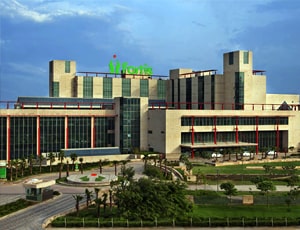
Choosing Fortis Memorial Research Institute for Congenital Pseudarthrosis of the Tibia (CPT) Surgery gives patients access to specialist-led pediatric limb reconstruction, advanced fixation systems, and coordinated rehabilitation. Established in 2013, the JCI, NABH, NABL accredited hospital is located in Gurgaon, India and operates 311 beds with modern orthopedic infrastructure.
Congenital Pseudarthrosis of the Tibia (CPT) Surgery may be considered when abnormal tibial development causes deformity, instability, or fracture that does not heal normally. Surgical treatment generally focuses on removing the unhealthy pseudarthrosis tissue, restoring the tibia's alignment, and creating conditions for bone union. Internal or external fixation may be used to stabilize the limb, often together with bone grafting. Regular imaging and clinical follow-up are required to monitor healing and detect recurrent deformity or refracture.
Medicana Avcilar offers dedicated Congenital Pseudarthrosis of the Tibia (CPT) Surgery supported by experienced pediatric orthopedic surgeons, advanced imaging, and modern limb reconstruction technology. Established in 1995, the JCI accredited hospital is situated in Istanbul, Turkey and has 63 beds supporting specialized pediatric bone and limb care.
Congenital Pseudarthrosis of the Tibia (CPT) Surgery is aimed at correcting the abnormal tibial segment and promoting solid bone healing. Depending on the case, the surgeon may excise the pseudarthrosis, straighten the tibia, and stabilize the reconstructed bone using a rod, plate, external fixator, or other appropriate fixation method. Bone grafting may be incorporated to support union. Treatment is often individualized and may require staged procedures, particularly in complex deformities or recurrent cases.
Medicana Sivas Hospital provides specialized Congenital Pseudarthrosis of the Tibia (CPT) Surgery with an emphasis on precise correction of tibial deformity, biological support for bone healing, and long-term limb preservation. Established in 2015, the JCI accredited hospital is based in Sivas, Turkey and has 105 beds supported by modern pediatric orthopedic and rehabilitation facilities.
Congenital Pseudarthrosis of the Tibia (CPT) Surgery involves reconstructing the affected portion of the tibia to achieve stable bone union and improve lower-limb function. The procedure may include excision of the pseudarthrosis, correction of angulation, fixation of the tibia, and placement of bone graft. In selected cases, additional techniques such as vascularized fibular grafting or external fixation may be considered for difficult or recurrent pseudarthrosis. Because healing can be challenging, children require prolonged orthopedic monitoring after surgery.
Dr. Rose Private Hospital provides specialized Congenital Pseudarthrosis of the Tibia (CPT) Surgery with a focus on correcting abnormal bone development, achieving union of the tibia, and restoring lower-limb alignment and function. Established in 2007, the JCI accredited hospital is located in Budapest, Hungary and operates 67 beds with advanced pediatric orthopedic facilities.
Congenital Pseudarthrosis of the Tibia (CPT) Surgery is performed to treat a rare condition in which the tibia develops an abnormal area that fails to heal properly, often leading to bowing, deformity, or fracture. Treatment may involve removal of abnormal tissue, correction of the deformity, stabilization with internal fixation or an external fixator, and bone grafting to encourage healing. The surgical plan depends on the child's age, severity of the deformity, and condition of the affected bone.
Asian Institute of Medical Sciences provides specialized Congenital Pseudarthrosis of the Tibia (CPT) Surgery with a focus on correcting abnormal bone development, achieving union of the tibia, and restoring lower-limb alignment and function. Established in 2010, the NABL, NABH accredited hospital is located in Faridabad, India and operates 425 beds with advanced pediatric orthopedic facilities.
Congenital Pseudarthrosis of the Tibia (CPT) Surgery is performed to treat a rare condition in which the tibia develops an abnormal area that fails to heal properly, often leading to bowing, deformity, or fracture. Treatment may involve removal of abnormal tissue, correction of the deformity, stabilization with internal fixation or an external fixator, and bone grafting to encourage healing. The surgical plan depends on the child's age, severity of the deformity, and condition of the affected bone.
Choosing Apollo Hospital International Limited for Congenital Pseudarthrosis of the Tibia (CPT) Surgery gives patients access to specialist-led pediatric limb reconstruction, advanced fixation systems, and coordinated rehabilitation. Established in 2003, the NABH, JCI accredited hospital is located in Ahmedabad, India and operates 300 beds with modern orthopedic infrastructure.
Congenital Pseudarthrosis of the Tibia (CPT) Surgery may be considered when abnormal tibial development causes deformity, instability, or fracture that does not heal normally. Surgical treatment generally focuses on removing the unhealthy pseudarthrosis tissue, restoring the tibia's alignment, and creating conditions for bone union. Internal or external fixation may be used to stabilize the limb, often together with bone grafting. Regular imaging and clinical follow-up are required to monitor healing and detect recurrent deformity or refracture.
Manipal Hospital, Gurugram provides specialized Congenital Pseudarthrosis of the Tibia (CPT) Surgery with an emphasis on precise correction of tibial deformity, biological support for bone healing, and long-term limb preservation. Established in 2008, the NABL, NABH accredited hospital is based in Gurgaon, India and has 380 beds supported by modern pediatric orthopedic and rehabilitation facilities.
Congenital Pseudarthrosis of the Tibia (CPT) Surgery involves reconstructing the affected portion of the tibia to achieve stable bone union and improve lower-limb function. The procedure may include excision of the pseudarthrosis, correction of angulation, fixation of the tibia, and placement of bone graft. In selected cases, additional techniques such as vascularized fibular grafting or external fixation may be considered for difficult or recurrent pseudarthrosis. Because healing can be challenging, children require prolonged orthopedic monitoring after surgery.
Choosing Manipal Hospitals Goa, Dona Paula for Congenital Pseudarthrosis of the Tibia (CPT) Surgery gives patients access to specialist-led pediatric limb reconstruction, advanced fixation systems, and coordinated rehabilitation. Established in 1994, the NABH accredited hospital is located in Panjim, India and operates 235 beds with modern orthopedic infrastructure.
Congenital Pseudarthrosis of the Tibia (CPT) Surgery may be considered when abnormal tibial development causes deformity, instability, or fracture that does not heal normally. Surgical treatment generally focuses on removing the unhealthy pseudarthrosis tissue, restoring the tibia's alignment, and creating conditions for bone union. Internal or external fixation may be used to stabilize the limb, often together with bone grafting. Regular imaging and clinical follow-up are required to monitor healing and detect recurrent deformity or refracture.
At Metro Hospital, Congenital Pseudarthrosis of the Tibia (CPT) Surgery is performed using specialized limb reconstruction techniques and individualized pediatric orthopedic planning. Established in 1997, the NABL, NABH, ISO accredited hospital in Noida, India has 289 beds and provides comprehensive orthopedic and rehabilitation services.
Congenital Pseudarthrosis of the Tibia (CPT) Surgery may be recommended when the tibia has developed a persistent nonunion or fracture associated with congenital bone weakness. During surgery, the abnormal pseudarthrosis tissue may be removed and the tibia realigned before stabilization. Bone graft or other biological materials may be used to promote union, while fixation devices help maintain proper alignment during healing. Long-term follow-up is important because CPT can have a risk of recurrent deformity or refracture.
Sharda Hospital provides specialized Congenital Pseudarthrosis of the Tibia (CPT) Surgery with an emphasis on precise correction of tibial deformity, biological support for bone healing, and long-term limb preservation. Established in 2005, the NABH accredited hospital is based in Noida, India and has 1200 beds supported by modern pediatric orthopedic and rehabilitation facilities.
Congenital Pseudarthrosis of the Tibia (CPT) Surgery involves reconstructing the affected portion of the tibia to achieve stable bone union and improve lower-limb function. The procedure may include excision of the pseudarthrosis, correction of angulation, fixation of the tibia, and placement of bone graft. In selected cases, additional techniques such as vascularized fibular grafting or external fixation may be considered for difficult or recurrent pseudarthrosis. Because healing can be challenging, children require prolonged orthopedic monitoring after surgery.
At IBS Hospital, Congenital Pseudarthrosis of the Tibia (CPT) Surgery is performed using specialized limb reconstruction techniques and individualized pediatric orthopedic planning. Established in 2011, the NABH accredited hospital in Delhi, India has 50 beds and provides comprehensive orthopedic and rehabilitation services.
Congenital Pseudarthrosis of the Tibia (CPT) Surgery may be recommended when the tibia has developed a persistent nonunion or fracture associated with congenital bone weakness. During surgery, the abnormal pseudarthrosis tissue may be removed and the tibia realigned before stabilization. Bone graft or other biological materials may be used to promote union, while fixation devices help maintain proper alignment during healing. Long-term follow-up is important because CPT can have a risk of recurrent deformity or refracture.
Acibadem Altunizade Hospital provides specialized Congenital Pseudarthrosis of the Tibia (CPT) Surgery with a focus on correcting abnormal bone development, achieving union of the tibia, and restoring lower-limb alignment and function. Established in 2017, the JCI, ISO accredited hospital is located in Istanbul, Turkey and operates 350 beds with advanced pediatric orthopedic facilities.
Congenital Pseudarthrosis of the Tibia (CPT) Surgery is performed to treat a rare condition in which the tibia develops an abnormal area that fails to heal properly, often leading to bowing, deformity, or fracture. Treatment may involve removal of abnormal tissue, correction of the deformity, stabilization with internal fixation or an external fixator, and bone grafting to encourage healing. The surgical plan depends on the child's age, severity of the deformity, and condition of the affected bone.