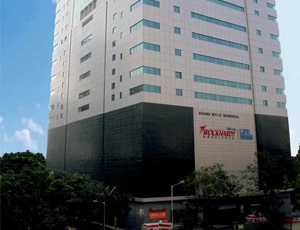
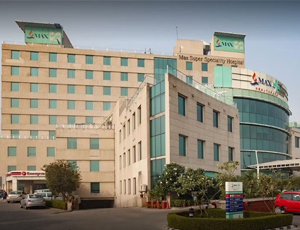
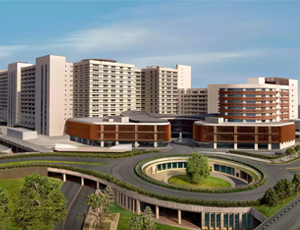
Kuala Lumpur, Malaysia
Number of Beds: 171
Year of Establishment: 2016


When kidney cells begin to multiply and expand out of proportion to form a mass known as a tumor, it can lead to kidney cancer. Early on, the tumor is benign, but if it is not treated, it can develop into malignant cancer and spread to other organs. The typical signs and symptoms of kidney cancer include pain, elevated blood pressure, blood in the urine, etc. Renal cell carcinoma, transitional cell cancer, renal sarcoma, and Wilms tumor are the four different kinds of kidney cancer. The most uncommon of these is renal sarcoma, whereas renal cell carcinoma is the most frequent type of kidney cancer detected in adults.
Radiation therapy, chemotherapy, and surgery are all forms of treatment available for kidney cancer at Jaypee Hospital. As with other malignancies, successful treatment depends on early detection. At Jaypee Hospital, the Centre of Oncology is committed to providing patients with all forms of kidney cancer with comprehensive care. To determine and assemble the most effective treatment strategy, the team reviews the patient's medical history, specifics of their disease, and diagnostic testing. In Jaypee Hospital, a lot of cancers are treated with cutting-edge, minimally invasive methods such as chemotherapy, targeted therapy, hormone therapy, and immunotherapy. The comprehensive cancer care team includes numerous professionals and cutting-edge medical technology. A skilled group of healthcare professionals, including doctors from different subspecialty fields, surgeons, radiologists, behavioral scientists, dietitians, palliative care specialists, and physiotherapists, provide care for kidney cancer patients.

The kidneys are one of the main organs in the body responsible for filtering out the blood and eliminating waste materials in form of urine An abnormal growth of cell mass inside the kidney can be a tumor which can later develop into cancer if not treated at the right time. The mass growing inside the kidneys can be benign or malignant (spread to other parts of the body). Smaller cell masses are most likely to be benign whereas large masses of cells are likely to turn out cancerous. The team at Wockhardt Hospital suggest regular screening tests and biopsies to ensure timely diagnosis of kidney cancer. There are more than one available treatment option for treatment of a kidney cancer.
The team of oncologists and oncosurgeons along with a nephrologist at Wockhardt Hospital will go through your case details including history of previous illnesses, any prescriptions drugs and comorbidities and then work out the most effective treatment plan for you. If teh cancer is detected early, there are more treatment options available that may be minimally invasive and easily resolvable, however, in later stages of cancer, surgery is the considered the best treatment option. If the cancer has gone malignant, the doctors may suggest a combination of radiation therapy, chemotherapy, and surgery. The main goal of oncology center at the Wockhardt Hospital is to protect the kidney function and help patients get back to a normal life after getting treated for a kidney cancer.

The oncology center at Sri Ramachandra Medical Centre adheres strictly to evidence-based international and national cancer treatment guidelines. They offer comprehensive treatment options for kidney cancer, including Onco Surgery, Radiotherapy, Chemotherapy, and Supportive Care. Biological therapy (targeted agents and monoclonal antibodies) is also available at the center. The SRMC cancer center has cutting-edge technology for Advanced Laparoscopy and minimal-access surgeries. Nephrectomy and ablation are procedures used to treat kidney cancer.
Elekta U.K.'s VERSA HD digital Linac, equipped with the most recent 160-leaf AGILITY MLC and USG-based Image guidance unit CLARITY, offers the fastest high-precision radiotherapy available today. Modern radiotherapy treatment techniques such as 3D CRT, IMRT, IGRT, and VMAT (Rapid Arc), as well as stereotactic and triple F treatment, are possible with the VERSA HD. The department also uses the HDR Microselectron Machine to provide HDR Brachytherapy treatment for a variety of cancers. The hospital also has an M/s Siemens of Germany Biograph Horizon model PET CT scanner. Some of the skilled doctors associated with Sri Ramachandra Medical Centre include Dr. M. Manickavasagam, Dr. S. Lakshminarasimhan, Dr. K. Satish Srinivas, Dr. Christopher John, and Dr. J.S. Lakhmi.

SevenHills Group is well-known in the healthcare industry for providing high-quality kidney cancer treatment. The Hospital places a special focus on offering cutting-edge in-patient and out-patient services. Various diagnostic state-of-the-art tools and technologies are available at the hospital including Imaging tests including ultrasound, X-ray, CT, or MRI, and removing a sample of kidney tissue (biopsy). Kidney cancer treatment options at Seven Hills Hospital include radical nephrectomy, partial nephrectomy, robot-assisted nephrectomy, immunotherapy, radiation treatment, chemotherapy, and more.
The hospital also provides CyberKnife Treatment, which treats both benign and malignant tumors. The hospital offers minimally invasive Laparoscopic or robotic nephrectomy. A keyhole approach to kidney removal surgery. Kidney removal surgery can be performed using the da Vinci robotic system. During the kidney operation, the surgeon uses robotic arms and 3D images to ensure precision. The team of specialists in Sevel Hills Hospital has years of on-ground training and experience. The hospital offers excellent care to local and international patients alike.


Ask your healthcare adviser for the best multiple options and choose the one that meets your expectations

| Speciality | Oncology |
| Procedure | Kidney Cancer Treatment |
| Success Rate | Varies as per stage, grade and type of cancer |
| Recovery Time | Few weeks to several months |
| Treatment Time | 2 and 3 hours |
| Chances of Recurrence | Varies as per stage, grade, type and location of cancer |
Kidney cancer treatment involves approaches like surgery, targeted therapy, immunotherapy, or a combination of these treatments. Radiation therapy and chemotherapy are also occasionally applied. Patients suffering from metastatic kidney cancer often receive multiple lines of therapy. Surgery is the most common form of kidney cancer treatment. Various types of surgeries include radical nephrectomy, partial nephrectomy, and laparoscopic and robotic nephrectomy.
Kidney cancer treatment is primarily focused on addressing renal cell carcinoma, which is the most common type of kidney cancer. Other medical conditions that can be treated through kidney cancer treatment include Wilms' tumor (a type of kidney cancer that primarily affects children), transitional cell carcinoma, and rare types of kidney tumors.
The recovery process after kidney cancer treatment varies depending on the treatment received and the individual patient. After surgery, patients may need weeks or months to heal and recover, and they may experience temporary discomfort or pain. Follow-up appointments and monitoring are important to detect any recurrence or new developments in the kidneys. In some cases, additional treatments or medications may be required to prevent or manage any potential complications.

Receiving a kidney cancer diagnosis is a life-altering moment, filled with a whirlwind of emotions and a daunting list of questions. Foremost among them is often, "What happens next?