Kuala Lumpur, Malaysia
Number of Beds: 277
Year of Establishment: 2007
Medical Tourism Hospital of the Year 2024
Clinical Service Initiative of the Year 2024
Best in Community Involvement of the Year 2023
Brand of the Year in Healthcare of the Year 2023
Orthopaedic Service Provider of the Year 2023
Clinical Service Initiative of the Year 2023
Medical Tourism Hospital of the Year of the Year 2023
Top Children’s Hospital of the Year 2022
MRO Service Star of the Year 2022

Burjeel Hospital for Advanced Surgery in Dubai offers comprehensive as well as personalized cancer care. The multidisciplinary approach works both vertically, with a team of expert physicians communicating with you to keep you informed, and horizontally, with the entire cancer care team. On-site laboratories and pharmacy services are available at the hospital. To provide quality cancer treatment and services, the multidisciplinary team of experts combines their expertise, knowledge, and experience in treating a wide range of cancers with compassionate care.
The advanced Radiology department is outfitted with all the latest medical technology, allowing doctors to make precise diagnoses and develop personalized treatment plans. The radiology department has X-ray machines and MRI/CT scanners, allowing patients to receive superior medical imaging exams in a timely manner. 1.5 Tesla MRI, Ultrasound, and Digital X-ray - Dual Energy X-Ray Absorptiometry are among the diagnostic technologies available (DEXA). Dr. Manish Gulabani and Dr. Sadir Al Rawi are some of the oncology specialists at the hospital.


The King’s College Hospital in the UK has expanded it’s footing in Dubai by establishing King’s College Hospital Dubai which top-notch healthcare technologies and excellent doctors on board. The hospital has an extensive wing to take care of kidney cancer patients. They offer laparoscopic treatment methods to insure quick recovery and minimal invasion. The diagnostic methods at the hospital include blood and urine tests, kidney biopsy, and imaging tests such as CT scan (Computed Tomography), and MRI (Magnetic Resonance Imaging), etc to help doctors visualize the tumor in the kidney and check for any kind of abnormality.
The majority of kidney cancers are treated with surgery, with the primary goal of removing the tumor while preserving normal kidney function. Two principal types of procedures might be used depending on your type and stage of kidney cancer. They offer radical nephrectomy and partial nephrectomy. Radical nephrectomy is an applied technique for big tumors that may have invaded the lymph node, adrenal gland, and other structures. In partial nephrectomy, the surgeon removes the tumor along with a small margin of healthy tissues rather than the entire kidney. It is an applied technique for smaller tumors. Dr. Rizwan Hamid and Dr. Samer Obeidat are the urology surgeons at the hospital.

Memorial Ankara Hospital is the 10th memorial hospital in Turkey. It is also one of the biggest hospitals, spread over an area of 42,000 square meters, consisting of 230 beds, of which 60 are in intensive care units, 11 operating rooms, and 63 polyclinics. The hospital boasts superior technological infrastructure as per international standards. The oncology department of the hospital is renowned for its skilled staff and high success rates.
Patients have access to laparoscopic and minimally invasive surgical options at the hospital. A transplant may be necessary for patients who have severe kidney damage. Excellent transplant services are offered by the hospital. Targeted drug and molecule therapies, immunotherapy, and conventional chemotherapy are all options that significantly raise the success rates and improve the quality of life of patients. The radiation oncology department at Memorial Ankara Hospital uses cutting-edge PET-CT technology for precise imaging to guarantee accurate diagnosis and efficient treatment planning. Prof. Kübra AYDIN, Prof. Umut Demirci, and MD Kaan HELVACI are some of the medical oncologists at the hospital.

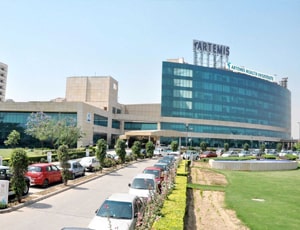
Artemis is one of the best cancer hospitals in India. The cancer care department provides interdisciplinary comprehensive cancer care with a customized touch to patients from all across India, surrounding countries, and the rest of the world. The Cancer Institute has all available treatment options for kidney cancer including medical oncology, radiation oncology, and surgical oncology. The hospital also has minimally invasive, laparoscopic, and robotic treatment options.
The institute offers various treatment modalities including up-to-date technologies like CT Digital X-Ray/Fluoroscopy, Interventional Radiology, MRI-3T, and 3D-4D Ultrasound/Doppler. In order to conduct clinical research trials, the center is also affiliated with international and national research organizations. Terminal patient care and day care chemo center is a part of Artemis hospital. Artemis also has a nuclear medicine department to ensure the best possible treatment for the patients. Dr. Tapan Singh Chauhan, Dr. Priya Tiwari, and Dr. Lalit Kumar are some of the reputed members of the oncology department at Artemis Health Institute.


Kuala Lumpur, Malaysia
Number of Beds: 724
Year of Establishment: 1999
Frost & Sullivan: 2024 Malaysian Hospital Market Leadership Award
College of American Pathologists (CAP) Accreditation
Healthcare Asia Awards 2024: Hospital of the Year (Malaysia)
Healthcare Asia Awards 2024: Health Promotion Initiative of the Year
Reader’s Digest Trusted Brand 2024
Newsweek World’s Best Hospitals 2024
World Stroke Organisation (WSO) Angels Awards 2023 - Gold Award (Q4)
World Stroke Organisation (WSO) Angels Awards 2023 - Gold Award (Q3)

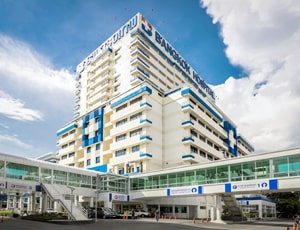
Bangpakok 9 International Hospital, a leading private healthcare institution in Thailand, offers excellent medical care to Bangpakok residents and visitors from around the world. Bangpakok 9 International Hospital has a highly skilled team of medical professionals and cutting-edge technology. The hospital is JCI accredited and is known for upholding high global standards of care. The expert team uses state-of-the-art diagnostic methods to find kidney cancer, including blood tests, biopsies, and imaging exams like CT scans and ultrasounds.
Hospital services for kidney cancer treatment may include medical oncology, chemotherapy, radiation therapy, and surgery. Patients are supported throughout their treatment journey by a team of dedicated, board-certified physicians, highly skilled nurse practitioners, and a dedicated support team. The hospital also provides options for targeted therapy and minimally invasive surgery. Dr. Adisorn Deeprasittipong is a nephrology specialist at the hospital.


Istanbul, Turkey
Number of Beds: 441
Year of Establishment: 2022

Aster's Urology Centre offers a wide range of treatments for the evaluation, diagnosis, and treatment of acute and chronic adult and pediatric urological illnesses, including kidney cancer. At Aster Hospitals, every patient receives individualized treatment. The department provides whole cancer care for both adults and children. As appropriate, patients may also receive dietary counseling and rehabilitation therapy. To create the optimal treatment plan for the patients, the specialists also examine the intended outcomes and the treatment's goals, including whether they are curative, palliative, or recurrence prevention.
The oncology team may combine chemotherapy, targeted therapy, biological therapy, HIPEC (Hyperthermic Intraperitoneal Chemotherapy), and radiation therapy to assess and treat patients. To detect kidney cancer, the hospital provides imaging tests such as ultrasound, X-ray, CT, or MRI. In some cases, kidney cancer can be detected through a more invasive method such as biopsy (the extraction of a tissue sample) or blood sample analysis. Treatments for kidney cancer include radiation therapy, chemotherapy, surgery, hormone therapy, immunotherapy, or a combination of the two. Dr. Pranoy Taori and Dr. Sivaprakash Rathanaswamy are some of the oncology specialists at Aster DM Healthcare.


Phyathai 2 International Hospital is internationally recognized and accredited by JCI. The hospital follows international standards of care and is a renowned center for treatment for international patients. The hospital is spread over an area of 11,204 square meters with about 600 patient beds, well-equipped ICU, NICU, and CCU units, and 76 diagnostic rooms. The oncology center is equipped with the latest medical technologies and is ever-evolving to provide patients with comfort, excellent treatment, and the best care plans.
Kidney cancer treatment at the hospital may include services such as medical oncology, chemotherapy, radiation therapy, and surgery. A team of dedicated and board-certified physicians, highly skilled nurse practitioners, and a dedicated support team help patients throughout their treatment journey. The diagnostic facilities available at the hospital include X-Ray, MRI, CT SCAN, tissue biopsy, ultrasound, blood tests, etc. The hospital also offers targeted therapy and minimally invasive surgical options. Asst.Prof.Dr. Ekaphop Sirachainan, Dr.Jedzada Maneechavakajorn, and Dr.Wichit Arpornwirat are some of the specialists associated with the hospital.
Ask your healthcare adviser for the best multiple options and choose the one that meets your expectations

| Speciality | Oncology |
| Procedure | Kidney Cancer Treatment |
| Success Rate | Varies as per stage, grade and type of cancer |
| Recovery Time | Few weeks to several months |
| Treatment Time | 2 and 3 hours |
| Chances of Recurrence | Varies as per stage, grade, type and location of cancer |
Kidney cancer treatment involves approaches like surgery, targeted therapy, immunotherapy, or a combination of these treatments. Radiation therapy and chemotherapy are also occasionally applied. Patients suffering from metastatic kidney cancer often receive multiple lines of therapy. Surgery is the most common form of kidney cancer treatment. Various types of surgeries include radical nephrectomy, partial nephrectomy, and laparoscopic and robotic nephrectomy.
Kidney cancer treatment is primarily focused on addressing renal cell carcinoma, which is the most common type of kidney cancer. Other medical conditions that can be treated through kidney cancer treatment include Wilms' tumor (a type of kidney cancer that primarily affects children), transitional cell carcinoma, and rare types of kidney tumors.
The recovery process after kidney cancer treatment varies depending on the treatment received and the individual patient. After surgery, patients may need weeks or months to heal and recover, and they may experience temporary discomfort or pain. Follow-up appointments and monitoring are important to detect any recurrence or new developments in the kidneys. In some cases, additional treatments or medications may be required to prevent or manage any potential complications.

Receiving a kidney cancer diagnosis is a life-altering moment, filled with a whirlwind of emotions and a daunting list of questions. Foremost among them is often, "What happens next?