Browse verified doctors or let our care team help you find the doctor best suited to your condition, treatment goals, and budget.

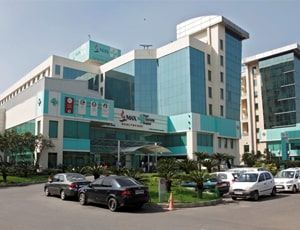
Max Super Speciality Hospital, Saket provides specialized Endovascular Embolization of AVM with a focus on minimally invasive neurovascular intervention, precise embolisation, patient safety, and comprehensive follow-up care. Established in 2006, the JCI, NABH hospital is located in Delhi, India, and operates 539 beds, equipped with modern neurointerventional infrastructure.
Endovascular Embolisation of Arteriovenous Malformation (AVM) is an advanced procedure that aims to reduce or eliminate abnormal blood flow within an AVM by selectively blocking its feeding vessels. Using real-time imaging guidance, an interventional specialist advances a catheter through the blood vessels and delivers an appropriate embolic material to the targeted vessels. The procedure may be performed in stages or combined with surgery or radiosurgery depending on the AVM. Detailed angiographic assessment and ongoing imaging follow-up are important for treatment planning and evaluation.
Bayindir Healthcare Group offers advanced Endovascular Embolisation of Arteriovenous Malformation (AVM) using modern neurointerventional techniques and internationally accepted treatment protocols. Established in 1992, the JCI hospital is located in Ankara, Turkey and has 153 beds, providing comprehensive neurological and vascular care for local and international patients.
Endovascular Embolisation of an AVM is a minimally invasive procedure used to reduce or block abnormal blood flow through an arteriovenous malformation, a cluster of abnormal blood vessels connecting arteries and veins. During the procedure, a catheter is guided through the blood vessels to the AVM, where an embolic material is delivered to reduce blood flow or close selected vessels. It may be used as a standalone treatment or as a pre-treatment before surgery or stereotactic radiosurgery. Detailed angiography and brain imaging are generally performed before treatment to assess the AVM.
Gurgaon, India
Choosing Fortis Memorial Research Institute for Endovascular Embolization of AVM gives patients access to experienced neurovascular specialists, advanced angiography systems, and multidisciplinary treatment planning. Established in 2013, the JCI, NABH, NABL hospital in Gurgaon, India has 311 beds and provides specialized neurological and vascular services.
Endovascular Embolisation of an AVM may be considered when an arteriovenous malformation requires reduction of abnormal blood flow or preparation for definitive treatment. During the procedure, a catheter is carefully advanced to the vessels supplying the AVM, and an embolic agent is delivered to block targeted blood vessels. The treatment strategy depends on the AVM's size, location, feeding arteries, drainage pattern, and relationship with surrounding structures. Patients are monitored after treatment and undergo follow-up imaging to evaluate the remaining vascular abnormality.
Medicana Avcilar offers advanced Endovascular Embolisation of Arteriovenous Malformation (AVM) using modern neurointerventional techniques and internationally accepted treatment protocols. Established in 1995, the JCI hospital is located in Istanbul, Turkey and has 63 beds, providing comprehensive neurological and vascular care for local and international patients.
Endovascular Embolisation of an AVM is a minimally invasive procedure used to reduce or block abnormal blood flow through an arteriovenous malformation, a cluster of abnormal blood vessels connecting arteries and veins. During the procedure, a catheter is guided through the blood vessels to the AVM, where an embolic material is delivered to reduce blood flow or close selected vessels. It may be used as a standalone treatment or as a pre-treatment before surgery or stereotactic radiosurgery. Detailed angiography and brain imaging are generally performed before treatment to assess the AVM.
Medicana Sivas Hospital offers advanced Endovascular Embolisation of Arteriovenous Malformation (AVM) using modern neurointerventional techniques and internationally accepted treatment protocols. Established in 2015, the JCI hospital is located in Sivas, Turkey and has 105 beds, providing comprehensive neurological and vascular care for local and international patients.
Endovascular Embolisation of an AVM is a minimally invasive procedure used to reduce or block abnormal blood flow through an arteriovenous malformation, a cluster of abnormal blood vessels connecting arteries and veins. During the procedure, a catheter is guided through the blood vessels to the AVM, where an embolic material is delivered to reduce blood flow or close selected vessels. It may be used as a standalone treatment or as a pre-treatment before surgery or stereotactic radiosurgery. Detailed angiography and brain imaging are generally performed before treatment to assess the AVM.
At Dr. Rose Private Hospital, Endovascular Embolization of AVM is performed using advanced catheter-based neurovascular techniques and personalised treatment plans based on the location, size, and characteristics of the AVM. Established in 2007, this JCI hospital in Budapest, Hungary has 67 beds and provides comprehensive neurovascular care.
Endovascular Embolisation of AVM may be recommended for selected patients with cerebral or other vascular arteriovenous malformations to reduce abnormal blood flow and lower the risk associated with the lesion. A thin catheter is navigated through the vasculature to the abnormal vessels, where materials such as liquid embolic agents or coils may be used to occlude blood flow. Pre-procedure angiography helps specialists map the AVM and plan the safest treatment strategy. Follow-up imaging is used to assess the treatment response.
At Acibadem University Hospital Atakent, Endovascular Embolization of AVM is performed using advanced catheter-based neurovascular techniques and personalised treatment plans based on the location, size, and characteristics of the AVM. Established in 2014, this JCI hospital in Istanbul, Turkey has 278 beds and provides comprehensive neurovascular care.
Endovascular Embolisation of AVM may be recommended for selected patients with cerebral or other vascular arteriovenous malformations to reduce abnormal blood flow and lower the risk associated with the lesion. A thin catheter is navigated through the vasculature to the abnormal vessels, where materials such as liquid embolic agents or coils may be used to occlude blood flow. Pre-procedure angiography helps specialists map the AVM and plan the safest treatment strategy. Follow-up imaging is used to assess the treatment response.
Iranian Hospital offers advanced Endovascular Embolisation of Arteriovenous Malformation (AVM) using modern neurointerventional techniques and internationally accepted treatment protocols. Established in 1970, the hospital is located in Dubai, United Arab Emirates and has 220 beds, providing comprehensive neurological and vascular care for local and international patients.
Endovascular Embolisation of an AVM is a minimally invasive procedure used to reduce or block abnormal blood flow through an arteriovenous malformation, a cluster of abnormal blood vessels connecting arteries and veins. During the procedure, a catheter is guided through the blood vessels to the AVM, where an embolic material is delivered to reduce blood flow or close selected vessels. It may be used as a standalone treatment or as a pre-treatment before surgery or stereotactic radiosurgery. Detailed angiography and brain imaging are generally performed before treatment to assess the AVM.
Choosing Istinye University Bahcesehir - LIV Hospital for Endovascular Embolization of AVM gives patients access to experienced neurovascular specialists, advanced angiography systems, and multidisciplinary treatment planning. Established in 2016, the ISO, JCI hospital in Istanbul, Turkey has 394 beds and provides specialized neurological and vascular services.
Endovascular Embolisation of an AVM may be considered when an arteriovenous malformation requires reduction of abnormal blood flow or preparation for definitive treatment. During the procedure, a catheter is carefully advanced to the vessels supplying the AVM, and an embolic agent is delivered to block targeted blood vessels. The treatment strategy depends on the AVM's size, location, feeding arteries, drainage pattern, and relationship with surrounding structures. Patients are monitored after treatment and undergo follow-up imaging to evaluate the remaining vascular abnormality.
Choosing KCM Clinic for Endovascular Embolization of AVM gives patients access to experienced neurovascular specialists, advanced angiography systems, and multidisciplinary treatment planning. Established in 2006, the ISO hospital in Jelenia Gora, Poland has 85 beds and provides specialized neurological and vascular services.
Endovascular Embolisation of an AVM may be considered when an arteriovenous malformation requires reduction of abnormal blood flow or preparation for definitive treatment. During the procedure, a catheter is carefully advanced to the vessels supplying the AVM, and an embolic agent is delivered to block targeted blood vessels. The treatment strategy depends on the AVM's size, location, feeding arteries, drainage pattern, and relationship with surrounding structures. Patients are monitored after treatment and undergo follow-up imaging to evaluate the remaining vascular abnormality.
VPS Rockland Hospital offers advanced Endovascular Embolisation of Arteriovenous Malformation (AVM) using modern neurointerventional techniques and internationally accepted treatment protocols. Established in 2013, the NABH, NABL hospital is located in Gurgaon, India and has 345 beds, providing comprehensive neurological and vascular care for local and international patients.
Endovascular Embolisation of an AVM is a minimally invasive procedure used to reduce or block abnormal blood flow through an arteriovenous malformation, a cluster of abnormal blood vessels connecting arteries and veins. During the procedure, a catheter is guided through the blood vessels to the AVM, where an embolic material is delivered to reduce blood flow or close selected vessels. It may be used as a standalone treatment or as a pre-treatment before surgery or stereotactic radiosurgery. Detailed angiography and brain imaging are generally performed before treatment to assess the AVM.
Life Kingsbury Hospital offers advanced Endovascular Embolisation of Arteriovenous Malformation (AVM) using modern neurointerventional techniques and internationally accepted treatment protocols. Established in 1918, the hospital is located in Cape Town, South Africa and has 212 beds, providing comprehensive neurological and vascular care for local and international patients.
Endovascular Embolisation of an AVM is a minimally invasive procedure used to reduce or block abnormal blood flow through an arteriovenous malformation, a cluster of abnormal blood vessels connecting arteries and veins. During the procedure, a catheter is guided through the blood vessels to the AVM, where an embolic material is delivered to reduce blood flow or close selected vessels. It may be used as a standalone treatment or as a pre-treatment before surgery or stereotactic radiosurgery. Detailed angiography and brain imaging are generally performed before treatment to assess the AVM.
Johannesburg, South Africa
Lenmed Ahmed Kathrada Private Hospital provides specialized Endovascular Embolization of AVM with a focus on minimally invasive neurovascular intervention, precise embolisation, patient safety, and comprehensive follow-up care. Established in 1984, the COHSASA, ISQua hospital is located in Johannesburg, South Africa, and operates 254 beds, equipped with modern neurointerventional infrastructure.
Endovascular Embolisation of Arteriovenous Malformation (AVM) is an advanced procedure that aims to reduce or eliminate abnormal blood flow within an AVM by selectively blocking its feeding vessels. Using real-time imaging guidance, an interventional specialist advances a catheter through the blood vessels and delivers an appropriate embolic material to the targeted vessels. The procedure may be performed in stages or combined with surgery or radiosurgery depending on the AVM. Detailed angiographic assessment and ongoing imaging follow-up are important for treatment planning and evaluation.
Asian Institute of Medical Sciences offers advanced Endovascular Embolisation of Arteriovenous Malformation (AVM) using modern neurointerventional techniques and internationally accepted treatment protocols. Established in 2010, the NABL, NABH hospital is located in Faridabad, India and has 425 beds, providing comprehensive neurological and vascular care for local and international patients.
Endovascular Embolisation of an AVM is a minimally invasive procedure used to reduce or block abnormal blood flow through an arteriovenous malformation, a cluster of abnormal blood vessels connecting arteries and veins. During the procedure, a catheter is guided through the blood vessels to the AVM, where an embolic material is delivered to reduce blood flow or close selected vessels. It may be used as a standalone treatment or as a pre-treatment before surgery or stereotactic radiosurgery. Detailed angiography and brain imaging are generally performed before treatment to assess the AVM.
Choosing Apollo Hospital International Limited for Endovascular Embolization of AVM gives patients access to experienced neurovascular specialists, advanced angiography systems, and multidisciplinary treatment planning. Established in 2003, the NABH, JCI hospital in Ahmedabad, India has 300 beds and provides specialized neurological and vascular services.
Endovascular Embolisation of an AVM may be considered when an arteriovenous malformation requires reduction of abnormal blood flow or preparation for definitive treatment. During the procedure, a catheter is carefully advanced to the vessels supplying the AVM, and an embolic agent is delivered to block targeted blood vessels. The treatment strategy depends on the AVM's size, location, feeding arteries, drainage pattern, and relationship with surrounding structures. Patients are monitored after treatment and undergo follow-up imaging to evaluate the remaining vascular abnormality.