Browse verified doctors or let our care team help you find the doctor best suited to your condition, treatment goals, and budget.
Choosing Life Kingsbury Hospital for PDA Closure gives patients access to experienced pediatric cardiac specialists, advanced echocardiography and catheterisation facilities, intensive care support, and structured follow-up care. Established in 1918, the accredited hospital in Cape Town, South Africa has 212 beds and provides specialised congenital cardiac services.
PDA Closure may be performed under sedation or general anaesthesia depending on the patient's age, treatment method, and clinical circumstances. During transcatheter closure, a catheter is guided through a blood vessel to deliver a closure device into the PDA. Surgical closure may be considered when catheter-based treatment is unsuitable, particularly in some small infants. After treatment, patients are monitored for blood pressure, heart function, residual blood flow, and potential complications before discharge and follow-up.
Johannesburg, South Africa
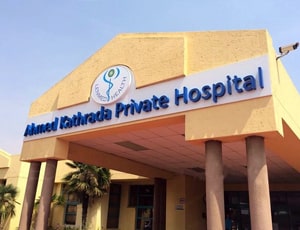
Lenmed Ahmed Kathrada Private Hospital offers advanced PDA Closure using modern congenital cardiac treatment techniques and individualized cardiovascular care plans. Established in 1984, the COHSASA, ISQua accredited hospital is located in Johannesburg, South Africa and has 254 beds, providing comprehensive cardiac care for local and international patients.
PDA Closure is a procedure used to close a patent ductus arteriosus, a persistent blood vessel connecting the pulmonary artery and aorta that normally closes shortly after birth. Closure may be recommended when the PDA is significant and causes excess blood flow to the lungs or increases the workload on the heart. Depending on the patient's age, anatomy, and clinical condition, closure may be performed using a catheter-based device or surgical technique.
Durban, South Africa
Lenmed Ethekwini Hospital and Heart Centre provides specialised PDA Closure with a focus on precise ductal closure, advanced pediatric cardiac techniques, and individualised post-treatment care. Established in 2002, the accredited hospital is located in Durban, South Africa and operates 353 beds, with modern cardiac catheterisation, surgical, and critical-care infrastructure.
PDA Closure can prevent the effects of persistent abnormal blood flow between the aorta and pulmonary artery in appropriately selected patients. The treatment approach depends on the PDA's size, shape, location, the patient's age, and associated heart conditions. A detailed evaluation using echocardiography and other cardiovascular investigations helps the cardiac team determine whether transcatheter device closure or surgical closure is appropriate and plan the patient's follow-up care.

Miora's story is a strong reminder that early diagnosis, quality pediatric care, and coordination can make a world of difference in the life of a…
| Speciality | Cardiac Sciences |
| Procedure | PDA Closure |
| Success Rate | 95-98% |
| Recovery Time | 1-2 weeks |
| Treatment Time | 1-2 hours |
| Chances of Recurrence | 1% |
A PDA closure procedure is used to seal a persistent gap between the two main blood vessels emerging from the heart. It typically shuts down soon after birth. If it remains open, it is known as a patent ductus arteriosus. The doctors can close this opening with a catheter and a plug. It is a minimally invasive procedure. However, in some cases, open heart surgery may be advised. A surgeon makes a small cut between the ribs to reach the child's heart during open heart surgery. The opening is closed with stitches or clips.
PDA closure is a typical procedure performed to correct a condition known as patient ductus arteriosus. It is a congenital heart defect that causes symptoms like:
After a PDA closure, it only takes one week for the patient to get back to their normal routine. However, they may be advised to take certain precautions and take the prescribed medications afterward. Regular follow-ups are also advised.
The ranking of hospitals according to the procedure is based on a number of elements. In South Africa, Hospitals for PDA Closure are ranked on the basis of the following factors- Availability of the Procedure, Popularity of the procedure & hospital, Infrastructure, Pricing structure, Experienced Medical Professionals, Technology Employed, Facilities Available for the Patients & Visitors, Success Rate of the Hospital.
MediGence integrates convenience, high-quality medical care, and cost savings. We provide a set of unmatched services to assist you in your medical journey to different countries in the world. Some of the top caregiving services available include Hotel stays, Dedicated Case Coordinator, Recovery packages, Online Consultation, round-the-clock assistance, and customized packages with discounts of up to a 30%. To help you receive top-notch medical treatment, we also provide a number of additional benefits.
That's Correct. Before you decide on to travel for a medical purpose, you can avail a video consultation with the specialist. When having a conversation with one of our patient advisors, you can ask them to book your video consultation with the specialist. They will finalize your appointment after confirming the doctor's availability and sending the payment link.
People from around the world are increasingly choosing to travel to South Africa for PDA Closure due to its modern infrastructure and high success rate. Other factors that contribute to South Africa being the best choice for PDA Closure include:
The recovery time of the patients can be determined based on the patient’s overall health and the criticality of the procedure undergone. In addition, post-treatment rehabilitation is extremely important for speeding up recovery and minimizing recovery time. Patients must also visit for follow-ups post-surgery to ensure proper healing and speed up the recovery process.