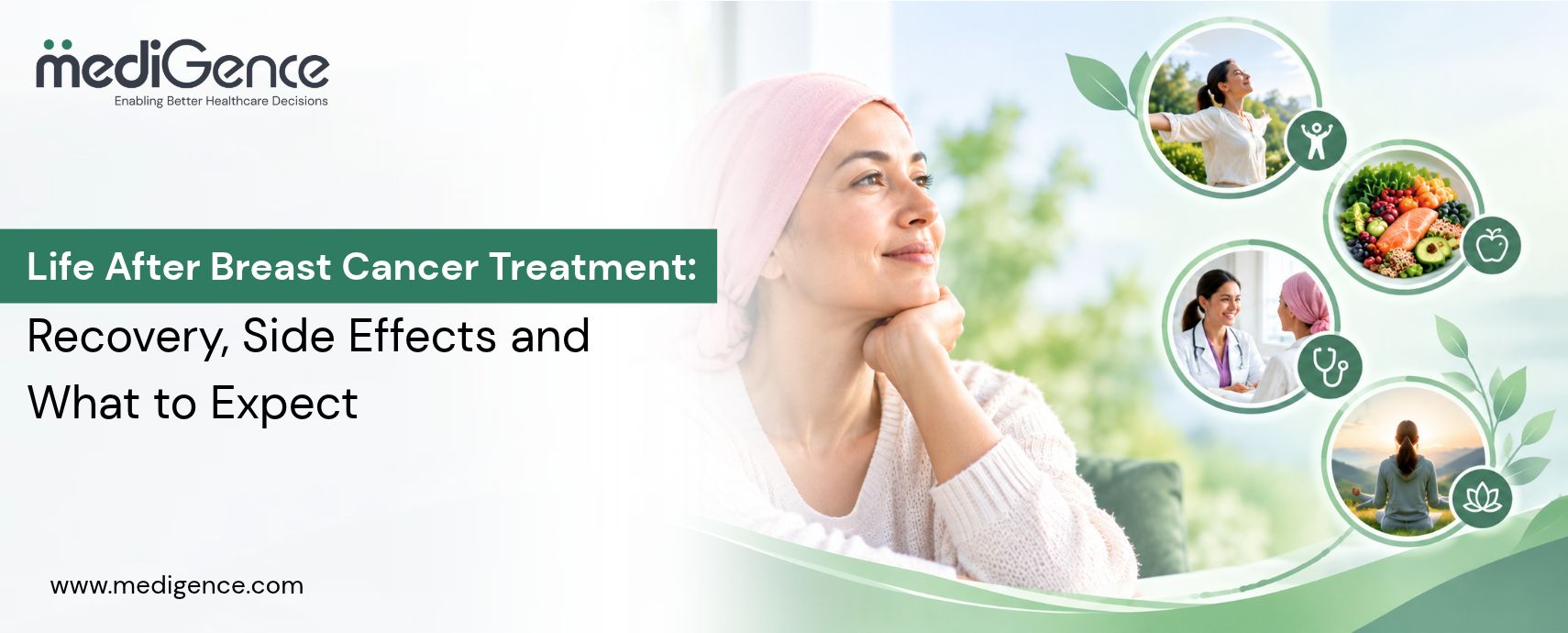
Life After Breast Cancer Treatment: Recovery, Side Effects and What to Expect
Published: Oct 30, 2026
Updated: Oct 30, 2026
Published: Oct 30, 2026
Updated: Oct 30, 2026
Completing breast cancer treatment can bring relief, hope, and a sense of achievement. However, the period after treatment may also introduce new challenges. You may feel tired, experience changes in your body, worry about cancer returning, or wonder when you will be able to resume your usual routine.
The recovery process following breast cancer treatment is unique for each individual. The recovery process can vary based on the type and stage of the cancer, treatments, overall health, and how long you take medication to lower the risk of recurrence. Some people experience treatment side effects more rapidly than others.
Knowing what to expect after treatment will make it easier to prepare for recovery, identify symptoms that need treatment, and work with healthcare staff to manage your health long term.
Breast cancer treatment can include surgery, chemotherapy, radiation therapy, hormone therapy, targeted therapy or immunotherapy. Some people get more than one of these treatments. Their recovery can be different depending on which treatments they have.
After the main treatment phase, your care team will explain the next steps. These may include follow-up appointments, breast imaging, management of ongoing side effects, and continued medication where recommended.
Need Expert Guidance After Breast Cancer Treatment? Get personalized medical advice for persistent side effects, ongoing symptoms, and long-term recovery. Connect with experienced breast cancer specialists to discuss your follow-up care and recovery options.
No single Breast Cancer Recovery Timeline fits everyone. Healing depends on your treatment and how your body responds.
After treatment, many people slowly regain strength. Feel more comfortable with daily activities, but fatigue can still linger, especially after chemotherapy or when treatments are combined. Patients may continue to have chest or breast discomfort, altered feelings in the affected area, swelling, or problems with concentration.
Depending on how recovery is going, a person might feel ready to return to work, do daily chores, and exercise after some time.
Months or even years after treatment, there are still people suffering from the above-mentioned symptoms and dealing with late effects like lymphoedema, joint pain, menopausal symptoms, sexual problems, problems with bone health, and fatigue, etc.
Regular follow-up appointments help your care team monitor these concerns and recommend appropriate support. Even after physical recovery, emotional adjustment may take longer.
The type of therapy used mainly determines the adverse effects. Not everyone experiences the same side effects, and adequate treatment may resolve them.
Lethargy is common during breast cancer therapy and after it. You may feel tired after sleeping or find that even simple tasks take too long to complete.
Try to balance rest with gentle physical activity, such as short walks, if your doctor approves. Keeping a regular sleep schedule and asking family or friends for help with demanding tasks may also help. If fatigue persists or worsens, have it evaluated, as it may have several possible causes.
Surgery can cause soreness, numbness, tingling, or tightness around the breast, chest, armpit, or upper arm. Radiation therapy can also bring skin sensitivity or tissue tightness. Your doctor may suggest pain relief, physiotherapy or specific exercises based on the cause. Report severe worsening or unexplained pain, rather than assuming pain is a normal part of healing.
Lymphoedema is swelling that can occur when lymph fluid builds up, sometimes after lymph node removal or radiation therapy. Lymphoedema often affects the arm, hand, breast, or chest on the treated side.
Signs include swelling, heaviness, tightness or changes in how clothing or jewellery fits. Lymphoedema needs assessment. Treatment for lymphoedema may include specialist exercises, skin care, compression garments, and lymphoedema therapy when appropriate.
Radiation therapy can make the skin in the treated area dry, itchy or feel different. These skin changes usually get better over time. For some people, the skin changes may stay for a longer period. Some people see hair after only a few months; others may need more time. k.
Some breast cancer treatments affect hormone levels or ovarian function. Symptoms may include hot flashes, night sweats, vaginal dryness, changes in sexual desire, sleep difficulties, and menstrual changes. These symptoms can make life harder. They might affect how you feel, how you connect with others and your overall well-being.
Recovery is not about waiting for side effects to go away. You can take steps to get stronger and handle problems that keep happening.
Compare breast cancer treatment options, explore hospital facilities. Get expert guidance to make informed decisions about your ongoing care and medical needs.

Trusted by 100000+ patients and leading medical experts.
Contact your doctor if you notice new or worsening symptoms, including:
These signs do not always mean that cancer has come back. You should have a doctor check them. Go to the emergency room if you have severe symptoms or sudden symptoms, like chest pain or trouble breathing.
Life after breast cancer treatment is a time when people need to adjust, get better and keep getting care. Even though many people slowly get back to their routines, tiredness, changes in the body, feelings, and long-lasting side effects may need more support. Following your care plan, going to checkups, staying as active as you can, and talking with your doctors and nurses about any symptoms that don't go away can help you recover.

Tanya Bose is a medical content specialist with a strong medical background. She has completed her Bachelor's and Master’s in Biotechnology from Amity University. With a deep understanding of biomedical sciences and research, she develops authoritative and patient-focused medical content covering treatments, surgical procedures, and healthcare innovations. Her writing emphasizes accuracy, clarity, and evidence-based information to help readers better understand complex medical topics. She is dedicated to improving patient awareness and supporting informed healthcare decisions by delivering trustworthy medical insights in a clear and accessible format.

Dr. Prateek Varshney is a renowned Surgical Oncologist. He has experience of more than 15+ years in surgical Oncology. He is currently practising as a consultant at Metro Mass Hospital and Cancer Institute. He was also previously associated as a consultant with Sir Ganga Ram Hospital and as a professor at Gujarat Cancer Research Institute.

Delhi, India

Istanbul, Turkey

Istanbul, Turkey

Istanbul, Turkey
 Active




.jpg)
