SBRT Treatment: How High-Precision Radiation Works, Who It Helps and What to Expect
Published: Oct 01, 2026
Updated: Oct 01, 2026

Published: Oct 01, 2026
Updated: Oct 01, 2026
Stereotactic Body Radiation Therapy (SBRT), also called stereotactic ablative body radiotherapy (SABR), is an advanced form of external-beam radiation therapy that delivers highly focused, high-dose radiation to a tumour while limiting exposure to nearby healthy tissues.
Unlike conventional radiation therapy, which may require several weeks of daily treatment, SBRT is typically completed in one to five treatment sessions, depending on the cancer type, tumour location, size, and treatment plan.
SBRT has become an important treatment option for selected patients with small, well-defined tumours, particularly in the lung, liver, prostate, spine, and other parts of the body. It can sometimes be used instead of surgery when surgery is not appropriate, and in other situations it may be used as part of a broader cancer treatment plan.
SBRT is a highly precise radiation technique that delivers a large dose of radiation to a defined tumour over a small number of sessions. The term "stereotactic" refers to the use of precise three-dimensional imaging, positioning, immobilisation, and computer-guided radiation delivery to target the treatment area accurately.
The radiation does not physically remove the tumour. Instead, high-energy radiation damages cancer cells' DNA, preventing them from continuing to divide and reproduce. Because the radiation is delivered from multiple carefully planned directions, the highest dose concentrates within the tumour while the dose reaching surrounding normal tissue is reduced.
SBRT is different from stereotactic radiosurgery (SRS), which generally refers to stereotactic radiation used for tumours or conditions in the brain and central nervous system. SBRT is used for tumours elsewhere in the body.
SBRT effectiveness depends on accurately identifying the tumour and delivering radiation with millimetre-level precision. Treatment generally involves several stages:

Find the Right SBRT Specialist for Your Treatment
SBRT suitability depends on the tumour type, size, location, previous treatment, and nearby organs. Connect with experienced radiation specialists.
SBRT is not appropriate for every cancer or every patient. Suitability depends on tumour size, location, number of lesions, cancer type, previous treatment, overall health, and the amount of radiation that nearby organs can safely receive.
It is particularly established for selected patients with small, localised tumours.
SBRT may also be considered in selected cases involving:
Its role varies by cancer type. In some cancers it may be an established primary treatment, while in others it may be used for selected metastatic sites, recurrence, or symptom control. However, SBRT should not automatically replace surgery.
The first step is a consultation with a radiation oncologist. Your doctor will review:
Additional imaging or biopsy may be required depending on the situation. The treatment team will then determine whether SBRT is appropriate and, if so, establish the number of fractions and radiation dose. The proximity of sensitive organs can sometimes limit whether SBRT can be used safely.
SBRT is generally performed as an outpatient treatment. You will lie on a treatment table in the position established during simulation.
Immobilisation equipment may help keep you still. Before radiation is delivered, imaging is usually performed to verify your position and align the treatment area.
The radiation machine then delivers highly focused beams from different directions.
Depending on the technology and treatment site, the actual treatment may take several minutes to an hour or longer, while the entire appointment may take additional time for positioning and imaging.
Most SBRT courses consist of one to five treatments, commonly delivered over approximately one to two weeks. The exact schedule varies by tumour and treatment plan.
Explore hospitals offering advanced radiation therapy. Trusted by 100000+ patients and leading medical experts. Explore SBRT Treatment Options

The main difference is the number of treatments and dose delivered per treatment. Conventional external-beam radiation therapy often involves many smaller radiation doses delivered over several weeks. SBRT uses fewer treatments with a substantially higher dose per fraction.
Feature | Conventional Radiation | SBRT |
Number of sessions | Often several weeks | Usually 1-5 sessions |
Dose per session | Lower | Higher |
Targeting | Highly precise | Very highly precise |
Treatment planning | Detailed | Particularly intensive |
Motion management | Depends on site | Often important |
Typical use | Many cancer types/stages | Selected small or well-defined tumours |
The shorter treatment schedule can be convenient for patients, but fewer sessions do not mean that SBRT is automatically suitable or safer for every tumour.
Modern SBRT relies on several technologies working together. Image-guided radiation therapy (IGRT) helps verify tumour and patient position immediately before or during treatment. 4D CT can assess breathing-related movement, particularly for lung and liver tumours.
Linear accelerators (LINACs) can deliver high-energy X-rays shaped to conform to the treatment target. Modern LINAC systems can incorporate techniques such as IMRT, VMAT, and IGRT.
SBRT generally involves few treatment sessions and does not require an incision; many patients can return to normal activities relatively quickly. However, recovery varies by treated area, underlying cancer, other treatments, and individual health.
Fatigue may persist for some time, and certain side effects can develop gradually after treatment. Patients should continue follow-up with their oncology team and report new or worsening symptoms rather than assuming they are a normal part of recovery.
SBRT represents a major advancement in precision radiation therapy, allowing radiation oncologists to deliver high doses to carefully selected tumours in a small number of treatment sessions. Advanced imaging, computerised planning, immobilisation, image guidance, and motion management work together to improve treatment precision and protect surrounding healthy tissues.
For patients with appropriately selected tumours, SBRT can provide an important local treatment option, including situations where surgery may not be suitable. However, its benefits and risks vary considerably by cancer type, tumour location, stage, and individual health. A radiation oncologist should evaluate the complete clinical picture before recommending SBRT and explain how it compares with surgery, conventional radiation, systemic therapy, or other available approaches.
SBRT is a form of radiation therapy that uses focused external radiation. Chemotherapy uses medicines that travel through the bloodstream and can affect cancer cells throughout the body.
Many SBRT treatments are completed in one to five sessions. The exact number depends on the cancer type, tumour location, size, and surrounding organs.
In selected cancers and patients, SBRT may be used as an alternative to surgery, particularly when surgery is medically unsuitable. However, it is not automatically equivalent to surgery for every cancer.
It can treat selected metastatic lesions, particularly when the number and location of metastases are limited. Whether it is appropriate depends on the overall disease pattern and the patient's systemic treatment plan.
The major advantage of SBRT is its ability to combine high-dose radiation with highly precise targeting. Instead of spreading radiation over a larger volume across many treatment sessions, SBRT concentrates a high biological dose within a carefully defined target while attempting to protect surrounding healthy structures.

Tanya Bose is a medical content specialist with a strong medical background. She has completed her Bachelor's and Master’s in Biotechnology from Amity University. With a deep understanding of biomedical sciences and research, she develops authoritative and patient-focused medical content covering treatments, surgical procedures, and healthcare innovations. Her writing emphasizes accuracy, clarity, and evidence-based information to help readers better understand complex medical topics. She is dedicated to improving patient awareness and supporting informed healthcare decisions by delivering trustworthy medical insights in a clear and accessible format.

Dr. Prateek Varshney is a renowned Surgical Oncologist. He has experience of more than 15+ years in surgical Oncology. He is currently practising as a consultant at Metro Mass Hospital and Cancer Institute. He was also previously associated as a consultant with Sir Ganga Ram Hospital and as a professor at Gujarat Cancer Research Institute.
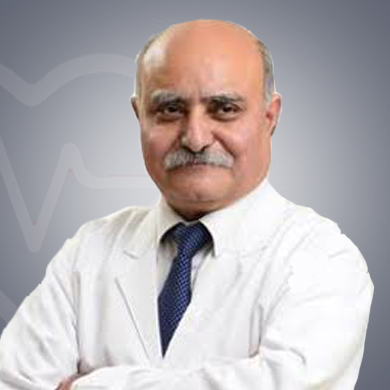



Delhi, India

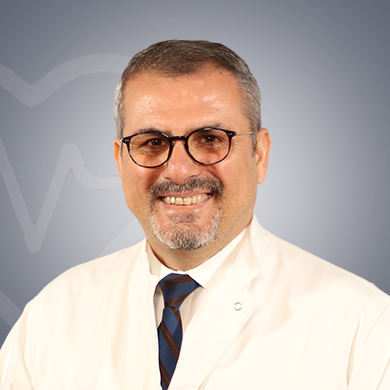
Istanbul, Turkey

Istanbul, Turkey

Istanbul, Turkey
 Active


.jpg)


