Legal Formalities For Liver Transplant: Things You Need To Know
Published: May 23, 2018
Updated: Sep 24, 2019

Published: May 23, 2018
Updated: Sep 24, 2019
The demand for different organs is increasing around the world. The act of organ transplantation is a boon to the healthcare industry. It has helped save the lives of millions of people around the world suffering from organ failure or last-stage organ disease.
There are several apprehensions in the mind of the people who think of donating an organ. They are particularly worried about how ethical it is, whether their health would get affected, or if they are actually eligible for it. One of the biggest cause of concern for them is the legal formalities. People are unclear about the organ donation laws in their own country, let alone the other countries.
The need for different organs, including lungs, heart, kidneys, and liver far increases the supply of the organs. Therefore, there is a need to promote organ donation by providing the correct information to people and motivating them to join the noble cause of saving the lives of other people in need of an organ.
This has led to the formulation of organ donation laws in all countries to account for this disparity. Apart from making things clear for the donors and people willing to become a donor, such organ donation laws also make sure that the available organ goes to the most deserving recipient and the one who would likely to benefit from it the most.
This article talks about liver transplantation trends across the world and liver donors. Additionally, it explores some of the basic formalities that donors and recipients are required to complete before the surgery takes place.
[expert_callback text="Check Out Popular Destinations and Top Hospitals for Liver Transplant" buttontext="Explore Hospitals" link="https://medigence.com/hospitals/transplants/liver-transplant"]
Considering the increasing prevalence of end-stage liver disease and liver failure patients, one of the biggest challenges is the huge gap between demand and supply. This is the reason why many liver disease patients requiring an organ are sometimes treated with methods other than transplantation. However, such treatment modalities do not have great success rates.
Some of the other challenges associated with liver donation and transplantation include the following:
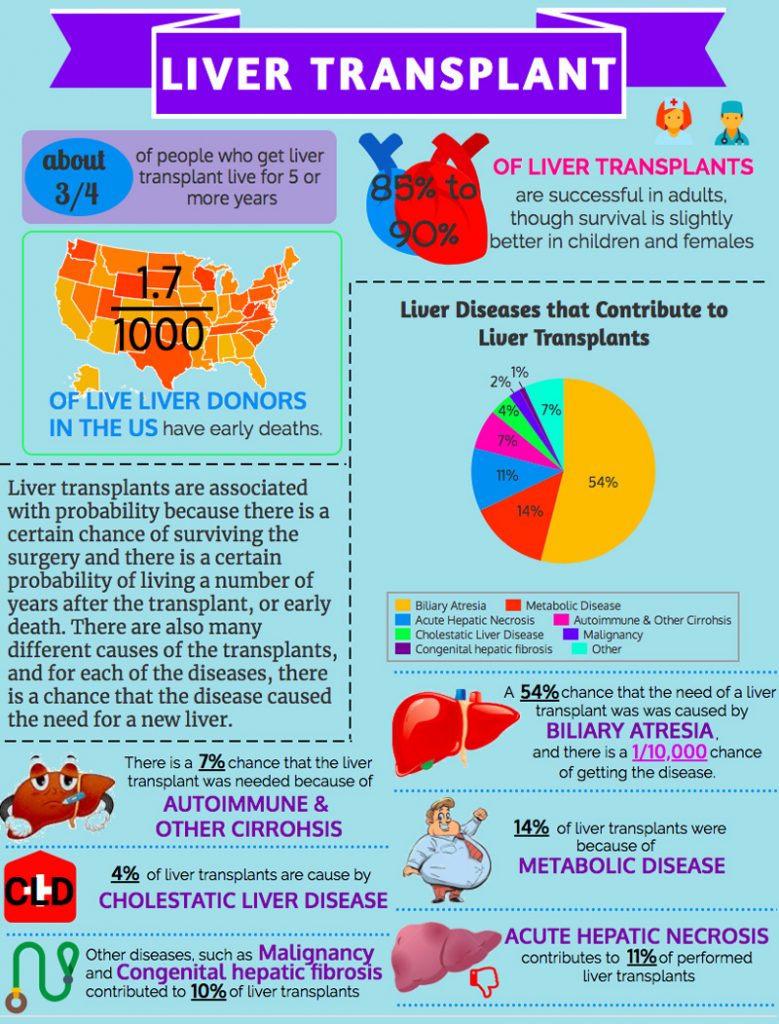
Liver transplantation is different from other types of transplants. In the case of other transplants, including lung, kidney, and heart transplant, the entire organ is removed from the donor and transplanted into the body of the patient. However, this is not the case in liver transplant surgery.
During a liver transplant, only a piece of liver is retrieved from the donor and transplanted into the body of the patient. This is because the liver has the capability to regenerate and grow rapidly to restore the normal functioning of the organ.
Therefore, in the case of cadaveric liver transplant, the complete liver can be removed because the donor is no longer alive. In the case of living liver donor transplant cases, only a part of the liver is removed, which grows back to its original capacity soon.
Usually, it is safe to remove nearly 70 percent of the liver from the body of the living donor. The remaining portion of the liver grows back to its fully functional capacity within a few days.
[expert_callback text="Know More about Recovery and other details about the Liver Transplant Treatment" buttontext="Know More" link="https://medigence.com/treatment/liver-transplant"]
Before the implementation of the Human Organ Transplantation Act across different countries, unrelated organ transplantation was being conducted. This has complications of its own. The implementation of the act was done to curb the two long-standing complications in the field of organ transplantation. One is unrelated to organ donation and the other is the legalization of brain stem death.
Now a majority of the countries in the world go by the revised definition of death – the cessation of the activity of the brain stem. Thus, the organs of the people who have been declared brain dead can now be used for transplantation purpose. However, this can happen only if the patient was a registered organ donor. It can also happen if the family of the donor has given the consent to the hospital to retrieve organs for donation.
The legal formalities for liver donation in India and other countries depend on the approach for donation. Liver transplantation can do done using a cadaveric donor or a living donor.
Irrespective of whether the organ comes from a living or a brain-dead donor, the patients with transplanted liver lead a healthy and normal life. However, the individual outcomes for every patient cannot be generalized as it depends on different factors.

With over 18 years of distinguished clinical experience, Dr. Vijita Jayan is a highly accomplished Clinical Director and Rehabilitation Specialist, renowned for her expertise in neuro-rehabilitation, functional recovery, and mobility-dependent case management. Her extensive practical knowledge enables her to design and implement individualized, evidence-based rehabilitation protocols that consistently yield measurable patient outcomes. A prolific researcher and academic writer, she has authored numerous peer-reviewed articles and research papers, significantly advancing the field of rehabilitative medicine. The recipient of multiple prestigious accolades, Dr. Jayan is widely regarded as one of the foremost authorities in Physical Medicine and Rehabilitation, continually shaping neuro-rehabilitative care through research, innovation, and clinical excellence.



Delhi, India

Istanbul, Turkey

Istanbul, Turkey

Istanbul, Turkey
 Active


