Gene Therapy in Cancer Treatment: Present and Future
Published: Jul 26, 2018
Updated: Aug 01, 2025

Published: Jul 26, 2018
Updated: Aug 01, 2025
Proteins are the molecules that control most of our life functions. Genes instruct cells on how to work and control our growth and development. Our body structure, how we look, and how our body works are decided by our genes. Genes also play an important role in repairing the damaged cells and tissues.
Gene therapy is a form of treatment that utilizes genes to treat illness. The researchers around the world are conducting studies to test different ways by which gene therapy can help treat cancer:
The clinical trial (currently in Phase III) of p53 gene for head and neck cancer involves the transfer of p53 gene through a replication inactivated adenovirus into cancer cells to inhibit cell growth and cause cell death. The MDA-7 (for melanoma) is a tumor-suppressing molecule, which is introduced into the melanoma cells in the body. The over expression of MDA-7 inhibits the cellular division and growth and induces cell death. The trial for this gene therapy is in Phase II.
The drug Gendicine, the first commercially approved gene therapy treatment, is a recombinant adenovirus which contains the tumor-suppressing gene p53. Delivery of this drug to cancer cells helps p53 to over express itself and restores its activity in cells with dysfunctional copies of this gene.
Gene transfer can be used to complement traditional treatment methods and create a more advanced and personalized approach to cancer treatment. Current gene transfer trials have shown promising results in improving the survival rates of cancers such as glioblastoma and pancreatic cancer. New delivery methods can help this form of gene therapy achieve the goal of cancer treatment
The vaccine is made by culturing tumor cells from the patient's body and modifying them genetically through the addition of genes that produce antigenic and immune-boosting proteins. When such vaccines are injected into the patient's body, it increases the activity of several immune cells and proteins. This creates a stronger anti-cancer immune response.
Example of such a vaccine, currently being tested in the clinical trial is GVAX, which targets advanced pancreatic cancer. It is currently in Phase II trials and recent reports indicate that patients with pancreatic adenocarcinoma, who were administered GVAX vaccine, had higher survival rates as compared to patients treated with standard chemotherapy. Another vaccine such as GM.CD40L has been also very successful in the treatment of malignant melanoma. It is currently in Phase II trial.
As is the case with any cancer monotherapy, cancer vaccines would prove to be more effective if used as an adjuvant therapy to other cancer therapies. With a modest immune response, they might prove more useful and beneficial when used as an adjuvant with chemotherapy to eliminate the rest of the cancer cells.
The initial phases of clinical trials for cancer vaccines are almost under completion. Most likely, they will be a part of effective cancer treatment regimen soon.
It is in Phase III trials and the response achieved is 80 percent, double the survival rate in patients who were given standard chemotherapy. ONYX-015 is an adenovirus that has been engineered to lack E1B protein. Without this protein, the virus is not able to replicate in cells with a normal p53 pathway. Cancer cells are often deficient in p53 pathway because of mutations. Thus, ONYX-015 can replicate in these cells and destroy them.
Oncolytic viro therapy is at a nascent stage and a lot of improvement can be done in the area of treatment vectors. Once this form of treatment matures and advances, it can be very beneficial. This is due to its selective nature of the minimum impact on healthy cells.
Although the CRISPR/Cas9 construct is rapidly developing, a number of ethical, moral and legal controversies are arising due to the ability to modify the genetic content of human beings. These issues need to be addressed by the regulatory bodies before further progress in this area be made.
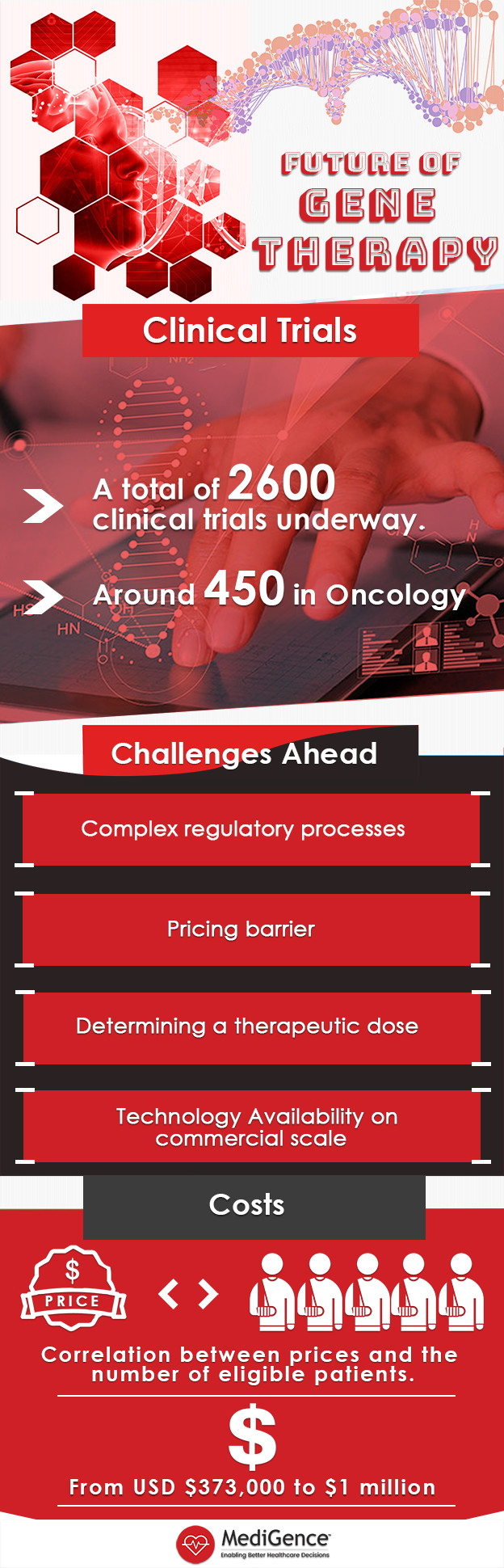
A number of new methods to deliver genes such as cDNA complexed to liposomes, retroviral, and pseudo typed retroviral vectors are being developed; the gene-delivery system is at an early stage. However, a number of advancements and breakthroughs are being made in gene therapy. It will soon become a clinically realistic approach in cancer treatment.
With the advancement in genetic screening and identification of the molecular basis of the disease, it might become possible to identify individuals at risk, vaccinate them against the disease, thus helping in early diagnosis and treatment.
[expert_callback text="Get in Touch with our Experts for a Treatment Plan" buttontext="Get me the best Quotes" link="]

With over 18 years of distinguished clinical experience, Dr. Vijita Jayan is a highly accomplished Clinical Director and Rehabilitation Specialist, renowned for her expertise in neuro-rehabilitation, functional recovery, and mobility-dependent case management. Her extensive practical knowledge enables her to design and implement individualized, evidence-based rehabilitation protocols that consistently yield measurable patient outcomes. A prolific researcher and academic writer, she has authored numerous peer-reviewed articles and research papers, significantly advancing the field of rehabilitative medicine. The recipient of multiple prestigious accolades, Dr. Jayan is widely regarded as one of the foremost authorities in Physical Medicine and Rehabilitation, continually shaping neuro-rehabilitative care through research, innovation, and clinical excellence.





Delhi, India

Istanbul, Turkey

Istanbul, Turkey

Istanbul, Turkey
 Active


