Your Notifications
All done, no notifications

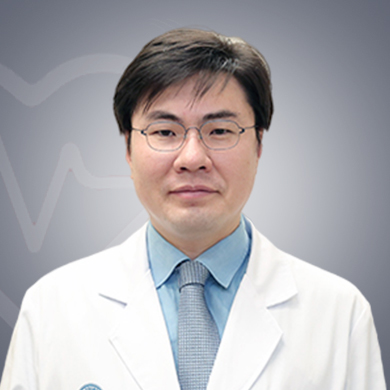
Dr. Ji Wan Kim

Bone and Joint Specialist

, Seoul, South Korea

19 Years of experience

Speaks: Korean , English


Dr. Ji Wan Kim is a specialized Orthopedic Surgeon in South Korea. And one of the most sought after medical specialists in Seoul, South Korea. The doctor has over 19 Years of experience and is associated with Asan Medical Centre.

Qualifications :

  • 2005-2009, Ulsan University Doctor of Medicine
  • 2003-2005, Ulsan University Master of Medicine
  • 1994-2000, Ulsan University, Bachelor of Medicine

Hospital Address :

Asan Medical Center, Olympic-ro 43-gil, Pungnap 2(i)-dong, Songpa-gu, Seoul, South Korea

What is the medical expertise of Dr Ji Wan Kim?

  • An eminent orthopaedic surgeon, Dr Ji Wan Kim has more than 19 years of experience in his field. He is an expert in performing trauma surgery and hip arthroplasty. His areas of expertise include osteoporosis, trauma, fracture, histomorphometry, and bone mineral density.
  • He has more than 150 publications to his credit. Some of his high-impact research works include:
    1. Oh C-W, Park K-H, Kim J-W, Kim D-H, Seo I, Lee J-H, Kim J-W, Yoon S-H. Minimally Invasive Derotational Osteotomy of Long Bones: Smartphone Application Used to Improve the Accuracy of Correction. Journal of Clinical Medicine. 2023; 12(4):1335.
    2. Kim CH, Han J, Kim JW. One-year change in handgrip strength in patients with hip fracture: a prospective comparison with hip disease. BMC Geriatr. 2023 Feb 2;23(1):65.
    3. Han, J., Kim, CH. & Kim, J.W. Handgrip strength effectiveness and optimal measurement timing for predicting functional outcomes of a geriatric hip fracture. Sci Rep 12, 20600 (2022).

Online Knee Replacement Surgeon Consultations in the South Korea

Top Knee Replacement Surgeons in South Korea

DoctorAssociated Hospital
Dr. Ji Wan KimAsan Medical Centre, Seoul

Reasons to avail Online Consultation with Knee Replacement Surgeon in South Korea

When considering a Knee Replacement treatment, it is important to explore all of the relevant considerations to ensure that your decision to have surgery is the appropriate one. A consultation with a Knee Replacement Surgeon might help make this procedure go more smoothly. It provides you with the necessary knowledge as well as the much-needed assurance in your decision to proceed with Knee Replacement surgery. We've discussed all of the benefits of scheduling an online consultation with a Knee Replacement surgeon in South Korea.

  • South Koreans have among the highest life expectancies among OECD member countries, with an average of 83.5 years in 2020.
  • South Korean hospitals had 12.4 hospital beds per 1,000 people in 2019, which was the second most after Japan.
  • The number of doctors and nurses in South Korea is gradually increasing. In Korea, doctors are paid well, with doctors earning almost five times as much as average employees.
  • After being granted permission to draw foreign patients in 2009, the influx of overseas patients in South Korea has increased dramatically, surpassing two million in 2018.
  • The South Korean government intends to continue providing institutional support and is keen on luring foreign patients, believing that this will lead to the growth of domestic medical facilities abroad.
  • The healthcare facilities providing orthopedic treatment and procedures are not just economical but equipped with the best in class cutting edge technologies.
  • These facilities measure up to international standards and protocols and are certified by globally recognized accreditation bodies.
  • Orthopedic specialists in South Korea as Knee Replacement surgeons deal with an increasing influx of conditions and treatments, from basic to complex and critical.
  • Knee replacement surgeons in South Korea have years of experience and have been associated with world class healthcare institutions in the country and overseas.
  • These specialists excel in performing a range of procedures such as Anterior Cruciate Ligament (ACL) Reconstruction, Ankle Fusion Surgery, Shoulder Tendon Repair-Rotator Cuff, Shoulder Arthroscopy, and Knee Arthroscopy.
  • The orthopedic specialists in the country are open to performing new age and cutting edge treatments which also speaks to their innovative approach towards problem solving.

About Knee Replacement Surgeon South Korea

Which are the countries where we can find Orthopedics Specialist?

Popular Orthopedics Specialist in Top Countries are :

Type of Orthopedics Specialist available in South Korea?

Top Speciality Doctors in South Korea:

Top Rated Hospitals Where We Can Find Orthopedics Specialist in South Korea?

List of Top Rated Hospitals where we can find Orthopedics Specialist in South Korea are as followed:

Can we get the list of Orthopedics Specialist in South Korea in any other language?

Yes, we provide the list of Orthopedics Specialist in South Korea in the following languages:

Frequently Asked Questions
Who are some of the top Knee Replacement Surgeons from other countries?

Listed below are some of the top knee replacement surgeons in other countries:

  • Lebanon
    • Dr. Elias Ghosn
    • Dr. Antoine Maalouf
    • Dr. Nassif Farah
    • Dr. Charbel Nemer
    • Dr. Ghassan Maalouf
Which are some of the procedures performed by Knee Replacement Surgeons in South Korea?

Most common procedures performed by knee replacement surgeons in South Korea are:

Which are some of the best hospitals in South Korea, Knee Replacement Surgeon are associated with?

Given below are some of the most popular hospitals in South Korea where knee replacement surgeons work:

Which are some of the conditions treated by Knee Replacement Surgeon in South Korea?

Most common conditions performed by knee replacement surgeons in South Korea are:

  • Knee Osteoarthritis
  • Knee Pain
  • Knee Injury
  • Deformed Knees
Who is a Knee Replacement Surgeon?

Knee replacement surgeons are the orthopaedic surgeons who are trained in the treatment of the joints, knee, and muscle of the region. Knee injuries are often caused because of sports injuries, trauma and other medical complications. Some patients may feel pain in a specific part of the knee; while others may feel pain in the entire knee.

A total knee replacement is a surgical procedure in which the affected knee joints are replaced with artificial material. The knee has a hinge joint that provides full motion at the point where your thigh meets the lower leg. The thigh bone is attached to the large bone of the lower leg at the knee joint.

In a total knee replacement, the end part of the femur bone is removed completely and replaced with a metal. The end portion of the lower leg bone is removed and then replaced with a plastic piece with a smooth metal stem. A plastic "button" might also be added below the kneecap surface depending on the condition of the kneecap of the knee joint. Knee replacement surgery is generally performed for the treatment of knee pain. The surgery helps improve the overall quality of life as well as improve mobility. The most common condition that may require knee replacement surgery is osteoarthritis.

What are the qualifications of a Knee Replacement Surgeon?

Candidates who want to become a Knee Replacement Surgeon should have a 5½ years MBBS degree followed by two to three years M.S. (orthopedics). Interested candidates can pursue M.Ch for super specialization in replacement surgery.

The training and education to become a Knee Replacement Surgeon is extensive and includes the completion of:

  • Five-and-a-half years of MBBS course.
  • Three years of MS degree
  • One year internship in transplant surgery
  • About 5 years in a neurosurgery residency program
What conditions do Knee Replacement Surgeons treat?

Some conditions treated by a knee replacement surgeons are:

  • Knee Injury
  • Deformed Knees
  • Knee Osteoarthritis
  • Knee Pain
  • Knee pain
  • Arthritis
  • Deformed knee
What diagnostic tests are required by Knee Replacement Surgeons?

Below diagnostic tests are required by Knee Replacement Surgeons:

  • Arthroscopy
  • Bone Scan
  • Computed Tomography or CAT Scan of the Bones
  • Fluoroscopy Procedure
  • Muscle Biopsy
  • Myelogram
  • Fluoroscopy
  • Magnetic resonance imaging
  • Ultrasound
  • X-ray
  • Arthrography
  • Bone scan
  • Doppler Ultrasound
When should you visit a Knee Replacement Surgeon?

You need to visit a Knee Replacement Surgeon if you experience the below-listed signs:

  • Painful joint
  • Limited movement
  • Inflammation in joint
  • Limited mobility

Multiple symptoms are common when orthopedic conditions are involved. Frequent pain in the joints and muscles as well swelling are an indication that you must consult a Knee Replacement Surgeon at the earliest. The range of motion is limited in the affected areas if you have injury or condition of this type.

What can you expect from your first visit with a Knee Replacement Surgeon?

If your primary care physician has recommended you to see a Knee Replacement Surgeon for any acute or chronic injuries or conditions you may have, it could be helpful to know what to expect during the initial consultation.

You and the surgeon would be discussing all conditions, the course of the treatment, and the rehabilitation process. The surgeon may want to perform an examination and tests to get a clearer picture of the issue.

Which are the most common procedures performed by a Knee Replacement Surgeon?

Different types of surgeries performed by a knee replacement surgeon depending on the extent of knee damage. Below are some popular procedures performed by a Knee Replacement Surgeon:

  • Total Knee Replacement
  • Unicompartmental Knee Replacement
  • Patellofemoral Arthroplasty

FAQs related to South Korea

How to avail online consultation with some of the top doctors in South Korea?

Telemedicine by MediGence makes virtual care for critical conditions easily accessible for you. You can talk to a specialist on a video call from your distant location, real-time screening of reports will be done and you will get the diagnosis, right then and there. You can also record the conversation to use later. We value your privacy, hence all the Healthcare records and teleconsultation are stored securely on HIPAA compliant servers on Cloud.

Follow the simple steps at our Telemedicine platform to book an appointment with a doctor

  • Simply search for the Doctor by a specialty/name
  • Select the best-suited Doctor for you
  • Choose your day for consultation
  • Fill in the details- Name, Mail id, Contact, Describe your symptoms, upload your reports
  • At last, Pay online via Paypal to Book an Appointment for a video consultation with the top renowned doctors/specialists in Thailand

Benefits of Telemedicine :

  • Patient Engagement Increases
  • Reduced Admission Rates and Better Mental Health
  • Cost and Time Saving
  • Optimizing Medications Intake and Reducing Outpatient Visits
  • Keeping medical records and reports up to date
How to choose some of the best rated doctors in South Korea?

Once you have consulted people in your network and researched through various sources the credentials of the doctors, their reviews and referrals, the next step is to zero in further on the basis of their specific skills. The best rated and reviewed doctors in South Korea can be chosen based on the below mentioned and outlined criteria via MediGence.com.

  • Communication skills - A doctor's communication skills are crucial in a variety of situations, including patient contact, staff collaboration, and talking with family members. They must be able to explain what is happening to their patients in a clear and simple manner, ensuring that they comprehend what is going on while staying professional and pleasant. They will also be part of a multi-disciplinary team, and it is vital that they communicate accurately with the other team members.
  • Capable of working in a team - There is no doctor who works on their own. Interdisciplinary teams are common in medical environments, and they will have to collaborate with other doctors, nurses, healthcare assistants, physiotherapists, social workers, and a variety of other professionals. They will be dealing with these employees on a daily basis, therefore it is critical that they are able to interact effectively with others in order to provide the greatest care for their patients. This necessitates them contributing ideas and assisting when possible, as well as delegating any tasks they require and according to any orders given.
  • Work ethics and compassion - A doctor's scientific brilliance may enable them to cure their patients, but without compassion, they will not be the greatest doctor they can be. They must be concerned about their patients' well-being. A doctor helps other people, and they can't do it regularly if they don't care about their patients' well-being. A strong work ethic is also important, but compassion is the attribute that will motivate a doctor to move out of bed at 2 a.m. when they are on call to assist someone who is in need.
  • Organizational Skills - As a doctor, you must juggle a large number of patients, sometimes across numerous wards and even at opposite ends of a hospital. It's easy to become overloaded with patient contact, paperwork, as well as meetings. This is where having good organizational abilities comes in handy. Knowing which activities are critical and which can wait will make one's job much easier, ensuring that patients receive the best possible care while also meeting their specific deadlines.
  • Professionalism - Even as it is a noble profession, being a doctor is a job, and as such, professionalism is essential. This entails remaining courteous, attentive, and well-dressed. One can receive complaints and be disciplined for being disrespectful to both various staff members and patients, just like in any other employment, so it's critical that one maintains a good standard of conduct while at work.

References:

Which are the most common Medical Specialities available in South Korea