Browse verified doctors or let our care team help you find the doctor best suited to your condition, treatment goals, and budget.

Faridabad, India
Sarvodaya Hospital and Research Centre offers advanced Optical Urethrotomy using modern endoscopic and minimally invasive urological techniques and individualized urethral care plans. Established in 1997, the NABH, NABL accredited hospital is located in Faridabad, India and has 500 beds, providing comprehensive urological, reconstructive, and endourological care for local and international patients.
Optical Urethrotomy is a minimally invasive procedure used to treat selected urethral strictures, in which scar tissue narrows the urethral passage and restricts urine flow. During the procedure, a specialized endoscopic instrument is introduced through the urethra and used to make a controlled incision through the scar tissue, widening the narrowed segment and improving the passage of urine.
Choosing Aster Medcity for Optical Urethrotomy gives patients access to experienced endourologists, advanced urethroscopy and urinary imaging, modern incision and laser systems, specialized anesthesia services, and structured postoperative monitoring. Established in 2013, the NABH, JCI accredited hospital in Kochi, India has 670 beds and provides specialized treatment for urethral strictures.
Optical Urethrotomy is generally performed under appropriate anaesthesia using an endoscopic instrument inserted through the urethra. The surgeon identifies the narrowed section and makes precise incisions through the scar tissue to restore the urethral opening. A urinary catheter is often placed temporarily after the procedure to support healing. Patients may experience temporary burning during urination, blood in the urine, urinary urgency, or discomfort, while potential complications include infection, bleeding, urinary retention, or recurrence of the stricture.
Aakash Healthcare Super Speciality Hospital offers advanced Optical Urethrotomy using modern endoscopic and minimally invasive urological techniques and individualized urethral care plans. Established in 2011, the NABH, ISO accredited hospital is located in Delhi, India and has 230 beds, providing comprehensive urological, reconstructive, and endourological care for local and international patients.
Optical Urethrotomy is a minimally invasive procedure used to treat selected urethral strictures, in which scar tissue narrows the urethral passage and restricts urine flow. During the procedure, a specialized endoscopic instrument is introduced through the urethra and used to make a controlled incision through the scar tissue, widening the narrowed segment and improving the passage of urine.
Choosing Pushpawati Singhania Research Institute for Optical Urethrotomy gives patients access to experienced endourologists, advanced urethroscopy and urinary imaging, modern incision and laser systems, specialized anesthesia services, and structured postoperative monitoring. Established in 1996, the NABH, NABL accredited hospital in Delhi, India has 201 beds and provides specialized treatment for urethral strictures.
Optical Urethrotomy is generally performed under appropriate anaesthesia using an endoscopic instrument inserted through the urethra. The surgeon identifies the narrowed section and makes precise incisions through the scar tissue to restore the urethral opening. A urinary catheter is often placed temporarily after the procedure to support healing. Patients may experience temporary burning during urination, blood in the urine, urinary urgency, or discomfort, while potential complications include infection, bleeding, urinary retention, or recurrence of the stricture.
Jaypee Hospital is a trusted healthcare provider for Optical Urethrotomy, offering minimally invasive treatment for urethral strictures supported by experienced urologists, endourologists, reconstructive surgeons, anesthesiologists, and multidisciplinary urinary care teams. Established in 2014, the NABH, JCI accredited hospital is situated in Noida, India and has 1200 beds.
Optical Urethrotomy works by opening the narrowed urethral segment with a controlled incision, allowing urine to pass more freely. The procedure is performed through the natural urinary passage and does not generally require an external surgical incision. Depending on the patient's anatomy and clinical circumstances, a cold-knife urethrotome or suitable laser technology may be used to divide the scar tissue.
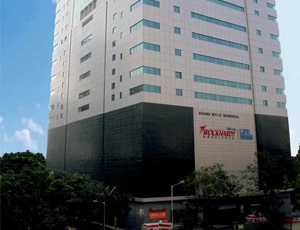
Wockhardt Hospital - A new Age Hospital offers advanced Optical Urethrotomy using modern endoscopic and minimally invasive urological techniques and individualized urethral care plans. Established in 2014, the NABH, NABL, JCI accredited hospital is located in Mumbai, India and has 350 beds, providing comprehensive urological, reconstructive, and endourological care for local and international patients.
Optical Urethrotomy is a minimally invasive procedure used to treat selected urethral strictures, in which scar tissue narrows the urethral passage and restricts urine flow. During the procedure, a specialized endoscopic instrument is introduced through the urethra and used to make a controlled incision through the scar tissue, widening the narrowed segment and improving the passage of urine.
Delhi, India
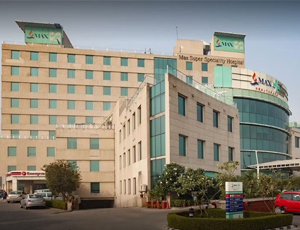
Max Smart Super Speciality Hospital provides specialised Optical Urethrotomy with a focus on precise scar-tissue incision, preservation of healthy urethral tissue, minimally invasive access, and individualized postoperative urological care. Established in 2012, the JCI, NABH accredited hospital is located in Delhi, India and operates 250 beds, with modern endourology, urethroscopy, urinary imaging, laser technology, and postoperative care infrastructure.
Optical Urethrotomy can provide an effective minimally invasive treatment option for appropriately selected patients with urethral strictures. Treatment planning considers the length, location, severity, and recurrence history of the stricture, previous procedures, urinary symptoms, and overall health. A detailed urological assessment helps determine whether optical urethrotomy is appropriate or whether a reconstructive procedure such as urethroplasty may provide a more suitable long-term solution.
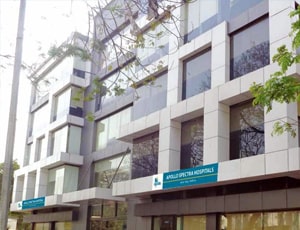
Apollo Spectra Hospital is a trusted healthcare provider for Optical Urethrotomy, offering minimally invasive treatment for urethral strictures supported by experienced urologists, endourologists, reconstructive surgeons, anesthesiologists, and multidisciplinary urinary care teams. Established in 2012, the NABH, NABL accredited hospital is situated in Pune, India and has 30 beds.
Optical Urethrotomy works by opening the narrowed urethral segment with a controlled incision, allowing urine to pass more freely. The procedure is performed through the natural urinary passage and does not generally require an external surgical incision. Depending on the patient's anatomy and clinical circumstances, a cold-knife urethrotome or suitable laser technology may be used to divide the scar tissue.
Max Super Specialty Hospital, Shalimar Bagh provides specialised Optical Urethrotomy with a focus on precise scar-tissue incision, preservation of healthy urethral tissue, minimally invasive access, and individualized postoperative urological care. Established in 2011, the NABH, NABL accredited hospital is located in Delhi, India and operates 402 beds, with modern endourology, urethroscopy, urinary imaging, laser technology, and postoperative care infrastructure.
Optical Urethrotomy can provide an effective minimally invasive treatment option for appropriately selected patients with urethral strictures. Treatment planning considers the length, location, severity, and recurrence history of the stricture, previous procedures, urinary symptoms, and overall health. A detailed urological assessment helps determine whether optical urethrotomy is appropriate or whether a reconstructive procedure such as urethroplasty may provide a more suitable long-term solution.
Choosing Amrita Hospital for Optical Urethrotomy gives patients access to experienced endourologists, advanced urethroscopy and urinary imaging, modern incision and laser systems, specialized anesthesia services, and structured postoperative monitoring. Established in 2022, the NABH accredited hospital in Faridabad, India has 2600 beds and provides specialized treatment for urethral strictures.
Optical Urethrotomy is generally performed under appropriate anaesthesia using an endoscopic instrument inserted through the urethra. The surgeon identifies the narrowed section and makes precise incisions through the scar tissue to restore the urethral opening. A urinary catheter is often placed temporarily after the procedure to support healing. Patients may experience temporary burning during urination, blood in the urine, urinary urgency, or discomfort, while potential complications include infection, bleeding, urinary retention, or recurrence of the stricture.

Nigerian national Mrs. Saadatu Muhammad, 48, suffered from severe abdominal pain that affected her quality of life.

Abdullah's story highlights how modern regenerative treatments can offer new hope for men dealing with erectile dysfunction. With expert medical care, advanced technology,