Explore trusted hospitals and care options, or get personalised support to find a suitable option based on your treatment needs, preferences, and budget.

Barcelona, Spain
With advanced spine-care infrastructure, Hospital Quironsalud Barcelona offers Adolescent Idiopathic Scoliosis Treatment for children and adolescents with abnormal spinal curvature. Established in 1944, the JCI, ISO accredited hospital is located in Barcelona, Spain, and has 165 beds.
Depending on the condition, treatment may involve observation, scoliosis-specific exercises, bracing, or surgery. Spinal fusion may be considered when the curvature is severe or continues to progress despite non-surgical management. Before treatment, specialists evaluate the curve using standing X-rays, assess skeletal maturity, and consider the patient's symptoms and overall health.
At The London Clinic, patients can access comprehensive Adolescent Idiopathic Scoliosis Treatment supported by advanced spinal imaging and experienced orthopaedic or neurosurgical specialists. Established in , the JCI accredited hospital is located in London, United Kingdom, and has 234 beds.
Treatment may include observation, physiotherapy, bracing, or corrective spinal surgery, depending on the degree and progression of the curve. Bracing may be recommended for growing adolescents with moderate scoliosis, while surgery may be considered for severe or progressive curves. X-rays and physical examinations help specialists develop an individualised treatment plan.
Sharjah, United Arab Emirates
Burjeel Specialty Hospital, Sharjah provides Adolescent Idiopathic Scoliosis Treatment using contemporary spinal correction techniques and evidence-based care. Founded in 2019, the JCI accredited hospital is based in Sharjah, United Arab Emirates, with 75 beds and services for domestic and international patients.
The treatment approach is tailored according to the spinal curvature and remaining growth potential. Patients with smaller curves may require periodic monitoring, while bracing can help limit progression in selected growing adolescents. For severe curves, spinal fusion and other corrective procedures may be recommended. Detailed spinal imaging helps determine the appropriate treatment strategy.
With advanced spine-care infrastructure, Woodlands Hospital offers Adolescent Idiopathic Scoliosis Treatment for children and adolescents with abnormal spinal curvature. Established in 2001, the accredited hospital is located in Darlington, United Kingdom, and has 38 beds.
Depending on the condition, treatment may involve observation, scoliosis-specific exercises, bracing, or surgery. Spinal fusion may be considered when the curvature is severe or continues to progress despite non-surgical management. Before treatment, specialists evaluate the curve using standing X-rays, assess skeletal maturity, and consider the patient's symptoms and overall health.
Kuala Lumpur, Malaysia
At Ara Damansara Medical Centre, patients can access comprehensive Adolescent Idiopathic Scoliosis Treatment supported by advanced spinal imaging and experienced orthopaedic or neurosurgical specialists. Established in 2012, the JCI, MSQH accredited hospital is located in Kuala Lumpur, Malaysia, and has 220 beds.
Treatment may include observation, physiotherapy, bracing, or corrective spinal surgery, depending on the degree and progression of the curve. Bracing may be recommended for growing adolescents with moderate scoliosis, while surgery may be considered for severe or progressive curves. X-rays and physical examinations help specialists develop an individualised treatment plan.
Arab Medical Center offers specialised Adolescent Idiopathic Scoliosis Treatment using modern spinal technology and established orthopaedic treatment protocols. Established in 1997, the JCI accredited hospital is situated in Amman, Jordan, with 243 beds, serving local and international patients.
Treatment aims to control curve progression and improve spinal alignment and function, while accounting for the patient's remaining growth. Depending on severity, options may include observation, physiotherapy, bracing, or corrective surgery such as spinal fusion. A comprehensive assessment of spinal curvature, growth stage, symptoms, and imaging findings helps the specialist determine the most appropriate treatment plan.
Gurgaon, India
Manipal Hospital, Gurugram offers advanced Adolescent Idiopathic Scoliosis Treatment using modern spinal techniques and internationally accepted treatment protocols. Established in 2008, the NABL, NABH accredited hospital is located in Gurgaon, India, with 380 beds, providing specialised spine care for local and international patients.
Treatment depends on the severity of the spinal curvature, the patient's age, skeletal maturity, and risk of progression. Mild curves may be monitored, while moderate curves may be managed with bracing. Severe or progressive curves may require spinal fusion or other corrective surgery. Regular imaging and clinical assessment help guide treatment decisions.
IBS Hospital provides Adolescent Idiopathic Scoliosis Treatment using contemporary spinal correction techniques and evidence-based care. Founded in 2011, the NABH accredited hospital is based in Delhi, India, with 50 beds and services for domestic and international patients.
The treatment approach is tailored according to the spinal curvature and remaining growth potential. Patients with smaller curves may require periodic monitoring, while bracing can help limit progression in selected growing adolescents. For severe curves, spinal fusion and other corrective procedures may be recommended. Detailed spinal imaging helps determine the appropriate treatment strategy.
Panjim, India
Manipal Hospitals Goa, Dona Paula provides Adolescent Idiopathic Scoliosis Treatment using contemporary spinal correction techniques and evidence-based care. Founded in 1994, the NABH accredited hospital is based in Panjim, India, with 235 beds and services for domestic and international patients.
The treatment approach is tailored according to the spinal curvature and remaining growth potential. Patients with smaller curves may require periodic monitoring, while bracing can help limit progression in selected growing adolescents. For severe curves, spinal fusion and other corrective procedures may be recommended. Detailed spinal imaging helps determine the appropriate treatment strategy.
Sharda Hospital offers specialised Adolescent Idiopathic Scoliosis Treatment using modern spinal technology and established orthopaedic treatment protocols. Established in 2005, the NABH accredited hospital is situated in Noida, India, with 1200 beds, serving local and international patients.
Treatment aims to control curve progression and improve spinal alignment and function, while accounting for the patient's remaining growth. Depending on severity, options may include observation, physiotherapy, bracing, or corrective surgery such as spinal fusion. A comprehensive assessment of spinal curvature, growth stage, symptoms, and imaging findings helps the specialist determine the most appropriate treatment plan.
Asian Institute of Medical Sciences offers advanced Adolescent Idiopathic Scoliosis Treatment using modern spinal techniques and internationally accepted treatment protocols. Established in 2010, the NABL, NABH accredited hospital is located in Faridabad, India, with 425 beds, providing specialised spine care for local and international patients.
Treatment depends on the severity of the spinal curvature, the patient's age, skeletal maturity, and risk of progression. Mild curves may be monitored, while moderate curves may be managed with bracing. Severe or progressive curves may require spinal fusion or other corrective surgery. Regular imaging and clinical assessment help guide treatment decisions.
Delhi, India
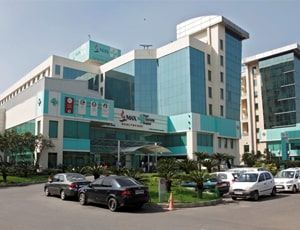
Max Super Speciality Hospital, Saket offers specialised Adolescent Idiopathic Scoliosis Treatment using modern spinal technology and established orthopaedic treatment protocols. Established in 2006, the JCI, NABH accredited hospital is situated in Delhi, India, with 539 beds, serving local and international patients.
Treatment aims to control curve progression and improve spinal alignment and function, while accounting for the patient's remaining growth. Depending on severity, options may include observation, physiotherapy, bracing, or corrective surgery such as spinal fusion. A comprehensive assessment of spinal curvature, growth stage, symptoms, and imaging findings helps the specialist determine the most appropriate treatment plan.
Bangalore, India
Manipal Hospital, Hebbal offers advanced Adolescent Idiopathic Scoliosis Treatment using modern spinal techniques and internationally accepted treatment protocols. Established in 1991, the NABL, NABH accredited hospital is located in Bangalore, India, with 280 beds, providing specialised spine care for local and international patients.
Treatment depends on the severity of the spinal curvature, the patient's age, skeletal maturity, and risk of progression. Mild curves may be monitored, while moderate curves may be managed with bracing. Severe or progressive curves may require spinal fusion or other corrective surgery. Regular imaging and clinical assessment help guide treatment decisions.
American Oncology Institute provides Adolescent Idiopathic Scoliosis Treatment using contemporary spinal correction techniques and evidence-based care. Founded in 2013, the NABH accredited hospital is based in Hyderabad, India, with 150 beds and services for domestic and international patients.
The treatment approach is tailored according to the spinal curvature and remaining growth potential. Patients with smaller curves may require periodic monitoring, while bracing can help limit progression in selected growing adolescents. For severe curves, spinal fusion and other corrective procedures may be recommended. Detailed spinal imaging helps determine the appropriate treatment strategy.
Sheba Medical Center provides Adolescent Idiopathic Scoliosis Treatment using contemporary spinal correction techniques and evidence-based care. Founded in 1948, the JCI accredited hospital is based in Ramat Gan, Israel, with 1900 beds and services for domestic and international patients.
The treatment approach is tailored according to the spinal curvature and remaining growth potential. Patients with smaller curves may require periodic monitoring, while bracing can help limit progression in selected growing adolescents. For severe curves, spinal fusion and other corrective procedures may be recommended. Detailed spinal imaging helps determine the appropriate treatment strategy.