Browse verified doctors or let our care team help you find the doctor best suited to your condition, treatment goals, and budget.

Choosing Primus Super Speciality Hospital for Cervical Laminoplasty gives patients access to specialist-led cervical decompression, modern surgical techniques, and coordinated postoperative care. Established in 2001, the NABH accredited hospital is located in Delhi, India and operates 250 beds with advanced spine surgery infrastructure.
Cervical Laminoplasty may help relieve spinal cord compression caused by degenerative changes, cervical stenosis, or other conditions that reduce the space within the spinal canal. The surgeon modifies the lamina at the affected levels to expand the canal and provide additional room for the spinal cord. The expanded lamina is supported in its new position using suitable hardware when required. Before surgery, MRI, CT, and X-rays may be used to evaluate spinal cord compression, alignment, and stability.
At Srikara Hospitals, Miyapur, Cervical Laminoplasty is performed using advanced cervical decompression techniques and individualized treatment planning. Established in 2013, the NABH accredited hospital in Hyderabad, India has 200 beds and provides comprehensive neurosurgical, orthopedic, and rehabilitation services.
Cervical Laminoplasty may be recommended when narrowing of the cervical spinal canal places pressure on the spinal cord, particularly when multiple vertebral levels are involved. During the procedure, the surgeon creates a hinge on one side of the lamina and opens the other side to expand the spinal canal. Small plates, screws, or other fixation devices may be used to maintain the expanded position. The technique aims to decompress the spinal cord while preserving more of the natural cervical anatomy than procedures that remove the lamina completely.
MindPlus Hospital Kalka provides specialized Cervical Laminoplasty with a focus on relieving cervical spinal cord compression while preserving spinal movement and stability. Established in 2020s, the NABH accredited hospital is located in Kalka, India and operates beds with modern neurosurgical and orthopedic spine facilities.
Cervical Laminoplasty is a motion-preserving procedure used to create additional space within the cervical spinal canal and relieve pressure on the spinal cord. The surgeon reshapes and opens portions of the lamina, the bony structures at the back of the vertebrae, creating more room for the spinal cord without completely removing the posterior elements. It may be considered for selected patients with multilevel cervical spinal stenosis or myelopathy. Imaging helps determine the levels requiring treatment and guide surgical planning.
Tx Hospitals Banjara Hills provides specialized Cervical Laminoplasty with an emphasis on effective spinal cord decompression, preservation of cervical motion, and personalized recovery support. Established in 2020, the JCI, NABH accredited hospital is based in Hyderabad, India and has 100 beds supported by modern neurosurgical and orthopedic facilities.
Cervical Laminoplasty involves expanding the posterior portion of the cervical spinal canal to reduce pressure on the spinal cord while retaining the lamina as a protective structure. It is particularly useful in selected cases involving compression across several cervical levels. The surgeon creates controlled cuts in the lamina and opens the bone to enlarge the canal, sometimes securing it with plates or spacers. Recovery depends on the underlying condition and extent of decompression and may include pain management, gradual activity progression, and physiotherapy.
Fortis Hospital provides specialized Cervical Laminoplasty with an emphasis on effective spinal cord decompression, preservation of cervical motion, and personalized recovery support. Established in 2006, the JCI, NABH accredited hospital is based in Mohali, India and has 276 beds supported by modern neurosurgical and orthopedic facilities.
Cervical Laminoplasty involves expanding the posterior portion of the cervical spinal canal to reduce pressure on the spinal cord while retaining the lamina as a protective structure. It is particularly useful in selected cases involving compression across several cervical levels. The surgeon creates controlled cuts in the lamina and opens the bone to enlarge the canal, sometimes securing it with plates or spacers. Recovery depends on the underlying condition and extent of decompression and may include pain management, gradual activity progression, and physiotherapy.
Delhi, India
Fortis Flt. Lt. Rajan Dhall Hospital provides specialized Cervical Laminoplasty with a focus on relieving cervical spinal cord compression while preserving spinal movement and stability. Established in 2006, the NABH accredited hospital is located in Delhi, India and operates 162 beds with modern neurosurgical and orthopedic spine facilities.
Cervical Laminoplasty is a motion-preserving procedure used to create additional space within the cervical spinal canal and relieve pressure on the spinal cord. The surgeon reshapes and opens portions of the lamina, the bony structures at the back of the vertebrae, creating more room for the spinal cord without completely removing the posterior elements. It may be considered for selected patients with multilevel cervical spinal stenosis or myelopathy. Imaging helps determine the levels requiring treatment and guide surgical planning.
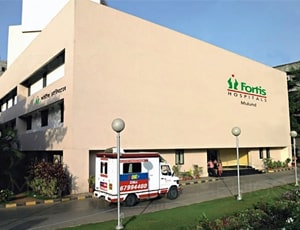
Fortis Hospital, Mulund offers dedicated Cervical Laminoplasty supported by experienced spine surgeons, advanced imaging technology, and modern spinal decompression facilities. Established in 2002, the JCI, NABH accredited hospital is situated in Mumbai, India and has 315 beds supporting specialized cervical spine care.
Cervical Laminoplasty is designed to increase the space available for the spinal cord in patients with cervical canal narrowing. The procedure is commonly performed from the back of the neck, where the lamina is carefully cut and repositioned to widen the spinal canal. Unlike cervical laminectomy, the lamina is not completely removed. It may be used for conditions such as multilevel cervical myelopathy or spinal stenosis when the spine remains sufficiently stable and appropriately aligned. Postoperative rehabilitation may help restore mobility and function.
Manipal Hospital, Hebbal provides specialized Cervical Laminoplasty with an emphasis on effective spinal cord decompression, preservation of cervical motion, and personalized recovery support. Established in 1991, the NABL, NABH accredited hospital is based in Bangalore, India and has 280 beds supported by modern neurosurgical and orthopedic facilities.
Cervical Laminoplasty involves expanding the posterior portion of the cervical spinal canal to reduce pressure on the spinal cord while retaining the lamina as a protective structure. It is particularly useful in selected cases involving compression across several cervical levels. The surgeon creates controlled cuts in the lamina and opens the bone to enlarge the canal, sometimes securing it with plates or spacers. Recovery depends on the underlying condition and extent of decompression and may include pain management, gradual activity progression, and physiotherapy.
Max Super Speciality Hospital, Saket provides specialized Cervical Laminoplasty with a focus on relieving cervical spinal cord compression while preserving spinal movement and stability. Established in 2006, the JCI, NABH accredited hospital is located in Delhi, India and operates 539 beds with modern neurosurgical and orthopedic spine facilities.
Cervical Laminoplasty is a motion-preserving procedure used to create additional space within the cervical spinal canal and relieve pressure on the spinal cord. The surgeon reshapes and opens portions of the lamina, the bony structures at the back of the vertebrae, creating more room for the spinal cord without completely removing the posterior elements. It may be considered for selected patients with multilevel cervical spinal stenosis or myelopathy. Imaging helps determine the levels requiring treatment and guide surgical planning.
Gurgaon, India
Fortis Memorial Research Institute provides specialized Cervical Laminoplasty with an emphasis on effective spinal cord decompression, preservation of cervical motion, and personalized recovery support. Established in 2013, the JCI, NABH, NABL accredited hospital is based in Gurgaon, India and has 311 beds supported by modern neurosurgical and orthopedic facilities.
Cervical Laminoplasty involves expanding the posterior portion of the cervical spinal canal to reduce pressure on the spinal cord while retaining the lamina as a protective structure. It is particularly useful in selected cases involving compression across several cervical levels. The surgeon creates controlled cuts in the lamina and opens the bone to enlarge the canal, sometimes securing it with plates or spacers. Recovery depends on the underlying condition and extent of decompression and may include pain management, gradual activity progression, and physiotherapy.
At VPS Rockland Hospital, Cervical Laminoplasty is performed using advanced cervical decompression techniques and individualized treatment planning. Established in 2013, the NABH, NABL accredited hospital in Gurgaon, India has 345 beds and provides comprehensive neurosurgical, orthopedic, and rehabilitation services.
Cervical Laminoplasty may be recommended when narrowing of the cervical spinal canal places pressure on the spinal cord, particularly when multiple vertebral levels are involved. During the procedure, the surgeon creates a hinge on one side of the lamina and opens the other side to expand the spinal canal. Small plates, screws, or other fixation devices may be used to maintain the expanded position. The technique aims to decompress the spinal cord while preserving more of the natural cervical anatomy than procedures that remove the lamina completely.
Asian Institute of Medical Sciences provides specialized Cervical Laminoplasty with an emphasis on effective spinal cord decompression, preservation of cervical motion, and personalized recovery support. Established in 2010, the NABL, NABH accredited hospital is based in Faridabad, India and has 425 beds supported by modern neurosurgical and orthopedic facilities.
Cervical Laminoplasty involves expanding the posterior portion of the cervical spinal canal to reduce pressure on the spinal cord while retaining the lamina as a protective structure. It is particularly useful in selected cases involving compression across several cervical levels. The surgeon creates controlled cuts in the lamina and opens the bone to enlarge the canal, sometimes securing it with plates or spacers. Recovery depends on the underlying condition and extent of decompression and may include pain management, gradual activity progression, and physiotherapy.
Apollo Hospital International Limited provides specialized Cervical Laminoplasty with an emphasis on effective spinal cord decompression, preservation of cervical motion, and personalized recovery support. Established in 2003, the NABH, JCI accredited hospital is based in Ahmedabad, India and has 300 beds supported by modern neurosurgical and orthopedic facilities.
Cervical Laminoplasty involves expanding the posterior portion of the cervical spinal canal to reduce pressure on the spinal cord while retaining the lamina as a protective structure. It is particularly useful in selected cases involving compression across several cervical levels. The surgeon creates controlled cuts in the lamina and opens the bone to enlarge the canal, sometimes securing it with plates or spacers. Recovery depends on the underlying condition and extent of decompression and may include pain management, gradual activity progression, and physiotherapy.
Manipal Hospital, Gurugram provides specialized Cervical Laminoplasty with a focus on relieving cervical spinal cord compression while preserving spinal movement and stability. Established in 2008, the NABL, NABH accredited hospital is located in Gurgaon, India and operates 380 beds with modern neurosurgical and orthopedic spine facilities.
Cervical Laminoplasty is a motion-preserving procedure used to create additional space within the cervical spinal canal and relieve pressure on the spinal cord. The surgeon reshapes and opens portions of the lamina, the bony structures at the back of the vertebrae, creating more room for the spinal cord without completely removing the posterior elements. It may be considered for selected patients with multilevel cervical spinal stenosis or myelopathy. Imaging helps determine the levels requiring treatment and guide surgical planning.
Manipal Hospitals Goa, Dona Paula provides specialized Cervical Laminoplasty with an emphasis on effective spinal cord decompression, preservation of cervical motion, and personalized recovery support. Established in 1994, the NABH accredited hospital is based in Panjim, India and has 235 beds supported by modern neurosurgical and orthopedic facilities.
Cervical Laminoplasty involves expanding the posterior portion of the cervical spinal canal to reduce pressure on the spinal cord while retaining the lamina as a protective structure. It is particularly useful in selected cases involving compression across several cervical levels. The surgeon creates controlled cuts in the lamina and opens the bone to enlarge the canal, sometimes securing it with plates or spacers. Recovery depends on the underlying condition and extent of decompression and may include pain management, gradual activity progression, and physiotherapy.

Ms Patience from Uganda travelled to India for cosmetic surgery in May 2017. She got her treatment done in Asian Institute of Medical Sciences in…

Lobna (from Sudan) was diagnosed with meningioma, a form of non-cancerous brain tumor. Her family members decided to take her to one of the most…