Our Platform Features
100,000+
Consultations Completed
HIPAA
Compliant Secure & Encrypted
24-48 Hours
Expert Medical Opinion
End-to-End Support
Dedicated Care Manager
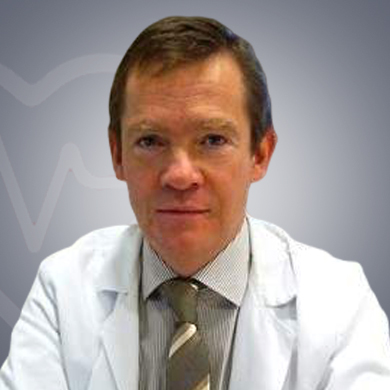
Dr. Jose Tabuenca Dumortier
University Hospital Quironsalud Madrid, Spain, Madrid
Bone and Joint Specialist • 33 years experience
Spanish EnglishDr. Jose Tabuenca Dumortier is a specialized Orthopedic Surgeon in Spain. And one of the most sought after medical specialists in Madrid, Spain. The doctor has over 28 Years of experience and is associated with University Hospital Quironsalud Madrid.
Association and Memberships Dr. Jose Tabuenca Dumortier is part of:
- Secretary of the Spanish Society of Shoulder and Elbow Surgery
- Member of the Spanish Society of Orthopedic Surgery and Traumatology (SECOT)
- Member of the Matritense Society of Orthopedic Surgery and Traumatology (SOMACOT)
- Member of the International Society of Orthopedic Surgery and Traumatology (SICOT)
- Member of AO-Alumni
- Member of the American Academy of Orthopedic Surgery (AAOS)
- Member of the Spanish Association of Arthroscopy
- Member of the Society Spanish Hand Surgery
- Member of the European Society of Wrist Arthroscopy (EWAS)
Qualifications :
- Medicine and Surgery from the Universidad Autonoma de Madrid (1986)
- Passed the ECFMG (Education Commissions For Foreign Medical Graduates) in 1987
- Doctor degree ""cum laude"" obtained by the doctoral thesis and read at the Autonomous University of Madrid. School of Medicine.
- Title of Specialist in Orthopedic Surgery and Traumatology issued in Madrid in January 1992
Hospital Address :
University Hospital Quironsalud Madrid, Calle Diego de Vel
Medical Expertise of Dr. Jose Tabuenca Dumortier
- Specialises in Arthroscopy and reconstructive surgery Shoulder and Elbow, hand and wrist, hip surgery, and knee surgery.
- He holds medical expertise in Sports Pathology and Musculoskeletal Oncology.
- The Autonomous University of Madrid has awarded him a doctorate in medicine and surgery.
- He combines his work as an orthopaedic surgeon and a professor of this subject at the European University of Madrid.
- Complementary training at the Orthopädische Universitätsklinik Balgrist in Zürich (Switzerland), Istituto Rizzoli in Bologna (Italy), and Miami Hand Center in Miami, Florida, USA.
- Training also at Mayo Clinic in Rochester, Minnesota, USA, Massachusetts General Hospital in Boston, USA, and Hessingpark Clinic in Hessingpark, Germany (Ausburg, Germany).
- From 2013 to 2016, he served as Secretary of the Spanish Society of Shoulder and Elbow Surgery.