Your Notifications
All done, no notifications

2 Specialists

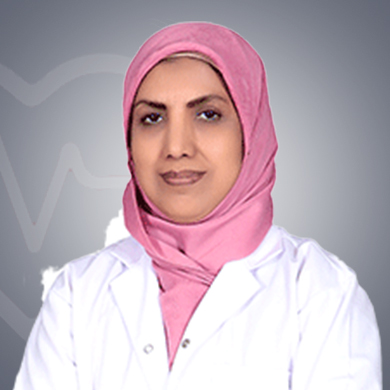
Dr. Zahida Jabeen Chaudary

Obstetrics & Gynaecologist

, Abu Dhabi, United Arab Emirates

30 Years of experience

Speaks: English , Arabic


Dr. Zahida Jabeen Chaudary is a specialized Gynecologist Laproscopic Surgeon in United Arab Emirates. And one of the most sought after medical specialists in Al Ain, United Arab Emirates. The doctor has over 30 Years of experience and is associated with Medeor 24X7 International Hospital, Al Ain.

Qualifications :

  • MBBS
  • Fellowship in Obstetrics and Gynecology
  • Austrian Board Certified Doctor

Hospital Address :

Medeor 24x7 International Hospital, Al Ain - Abu Dhabi - United Arab Emirates

What is the medical expertise of Dr Zahida Jabeen Chaudary?

  • With more than 30 years of experience, Dr Zahida Jabeen Chaudhary has expertise in a range of gynecological laparoscopic surgeries such as abdominal hysterectomy, tumour surgeries, incontinence operations, colposcopy, laparoscopic hysterectomy, vaginal hysterectomy, and endometrium ablation with nova sure. She also offers osteoporosis therapy and infertility care.
  • She is an Austrian Board-certified physician and completed a Fellowship in Obstetrics and Gynecology.

Dr. Manjula Narayan Das

Obstetrics & Gynaecologist

, Abu Dhabi, United Arab Emirates

37 Years of experience

Speaks: English


Dr. Manjula Narayan Das is a specialized Gynecologist in United Arab Emirates. And one of the most sought after medical specialists in Al Ain, United Arab Emirates. The doctor has over 25 Years of experience and is associated with Medeor 24X7 International Hospital, Al Ain.

Association and Memberships Dr. Manjula Narayan Das is part of:

  • Royal College of Obstetrician and Gynecologists, London

Certifications :

  • Fellowship - Royal College of Obstetrician and Gynecologists, London, 2014
  • International Board Certified Lactation Consultant

Qualifications :

  • MBBS - Calicut Medical College
  • DGO - KEM Hospital Pune
  • MRCOG - Royal College of Obstetrician and Gynecologists, London, 2003

Hospital Address :

Medeor 24x7 International Hospital, Al Ain - Abu Dhabi - United Arab Emirates

Frequently Asked Questions
Who are the top Gynecologists offering online consultation?

Given below are some of the most sought after gynecologists available for online consultation:

Which are some of the procedures performed by Gynecologists?
Which are some of the conditions treated by Gynecologist?

Listed below are some of the most common conditions performed by gynecologists are:

  • Prolonged labor
  • Pregnancy
  • Multiple babies
  • Birth defects
  • Chronic health conditions
  • Repeat C-section
  • Placenta problems
  • Fetal positioning
  • Dysfunctional Uterine Bleeding (DUB)
  • Polycystic Ovarian Syndrome (Pcos)
  • Endometriosis
  • Fetal distress
What are the qualifications of a Gynecologist?

For students who want to become a gynaecologist after 12th, the first step is the same as any medical profession. You have to clear NEET for entrance in MBBS.

The undergrad course is MBBS, after which the post graduation course is MD or MS. Then, super-specialization is MCH or DM. MBBS is a five-and-half-year degree, and MD or MS is a three-year degree. Some colleges offer MD gynaecology, while other colleges offer MS gynaecology. One year of internship is completed after MBBS. This internship is compulsory for students to complete their graduation. The internship period after MBBS helps in assisting doctors doing practical work. But, nowadays it has become common for medical students to spend their internship time preparing for their entrance exam for post-graduation.

What conditions do gynecologists treat?
  • Pelvic Pain
  • Polycystic Ovarian Syndrome
  • Uterine Fibroids
  • Urinary Incontinence
  • Cervical Dysplasia
  • Menstrual Disorders
  • Pelvic Floor Prolapse
  • Birth defects
  • Chronic health conditions
  • Repeat C-section
  • Prolonged labor
  • Pregnancy
  • Multiple babies
  • Dysfunctional Uterine Bleeding
  • Polycystic Ovarian Syndrome
  • Placenta problems
  • Fetal positioning
  • Endometriosis
  • Fetal distress
What diagnostic tests are required by a Gynecologist?

Below are some diagnostic tests that are required by a Gynecologist:

  • Mammogram
  • Pap test
  • Sexually transmitted disease (STD) screening
  • Bone density testing
  • Pregnancy testing
  • Hormonal imbalance testing
  • Cervical biopsy
  • Colposcopy
  • Laparoscopy
  • Cystoscopy
  • Ultrasonography
  • Hysteroscopy
  • Sonohysterography
  • Hysterosalpingography
  • Magnetic resonance imaging (MRI)
  • Amniocentesis
When should you visit a Gynecologist?

If you experience the below signs and symptoms, you should visit a gynecologist:

Polycystic ovary syndrome

  • Benign conditions of the reproductive tract
  • Ovarian cysts, fibroids, Vulvar and vaginal ulcers
  • Breast disorders
  • Premalignant conditions like cervical dysplasia
  • Endometrial hyperplasia
  • Cancers of the reproductive tract
  • Congenital abnormalities of the female reproductive tract
  • Pelvic inflammatory diseases
  • Emergency care relating to gynecology.
  • Endometriosis
  • Issues relating to sexuality
  • Sexual dysfunction
What can you expect from your first visit with a Gynecologist?

Your appointment will usually begin with a general health check. The nurse will measure your weight and blood pressure. You might have blood and urine tests done.

Then they will do the physical exam. The nurse will then take you to the exam room and ask you to undress. You will be given a dress that opens in the front, and a thin sheet to cover your lap.

You should use your annual ob-gyn appointment as an opportunity to ask your queries. Even if your questions are intimate, you can be sure that the doctor would have heard them before. It's fine to ask about your sex, periods, or whatever you want to know about your overall reproductive health.

Which are the most common procedures performed by a Gynecologist?

Most common procedures performed by a Gynecologist are:

  • Colposcopy
  • Endometrial biopsy
  • Hysteroscopy
  • dilation and curettage
  • Biopsy
  • Tubal ligation for female sterilization
  • Laser surgery
  • Hysterectomy (removal of the uterus)
  • Myomectomy (removal of fibroids)