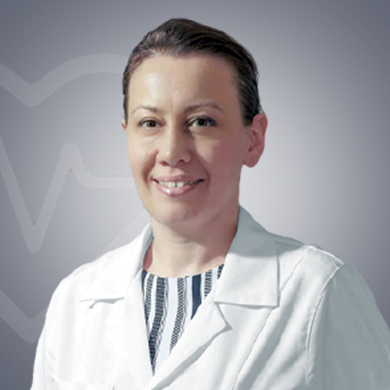
Dr. Emel Ceylan Gunay
Liv Hospital Ulus, Turkey, Istanbul
Nuclear Medicine Physician • 17 years experience
English TurkishOur Platform Features

Dr. Meltem Topalgokceli Selam
Liv Hospital Ulus, Turkey, Istanbul
Medical Oncologist • 16 years experience
English HindiMeltem Topalgokceli Selam, Istanbul University Istanbul Faculty of Medicine, is a Medical Oncologist associated with Liv Hospital Ulus in Istanbul, Turkey. The doctor has 16 years of professional experience. Meltem Topalgokceli Selam areas of expertise include Gliomas, Stomach Cancer, Colorectal or Colon Cancer, Ependymomas, Pancreatic Cancer. The doctor also offers teleconsultation services at a fee of USD 230 per consultation.
Work Experiences
- LIV, Ulus, Department of Medical Oncology
- Ministry of Health Okmeydani Education and Research Hospital, Department of Medical Oncology
- Istanbul Faculty of Medicine Oncology Institute, Department of Medical Oncology
- Ministry of Health Okmeydani Education and Research Hospital, Department of Internal Medicine
- Ministry of Health Istanbul Education and Research Hospital, Department of Internal Medicine

Dr. Tugba Cosgun
Liv Hospital Ulus, Turkey, Istanbul
Surgical Oncologist • 17 years experience
Turkish EnglishTugba Cosgun, 2007: Ankara University, is a Surgical Oncologist based in Istanbul, Turkey. The doctor has 17 years of professional experience. Tugba Cosgun areas of expertise include Skin Cancer, Pancreatic Cancer, Colorectal or Colon Cancer, Prostate Cancer, Oligodendrogliomas.
Work Experiences
- 2017-2019: Florence Nightingale Hospital, Doctor Lecturer
- 2016-2017: Acibadem Hospital, Thoracic Surgery Specialist Doctor
- 2015-2016: University of Zurich, Thoracic Clinic and Lung Transplantation Laboratory, Researcher
- 2013-2015: Agri State Hospital, Specialist Doctor
- 2011-: University of Zurich, Thoracic Clinic, Observer
- 2007-2013 - Süreyyapasa Education Research Hospital, Assistant

Dr. Orhan Tanriverdi
Liv Hospital Ulus, Turkey, Istanbul
Male Fertility Specialist • 25 years experience
Turkish & EnglishOrhan Tanriverdi, Ankara University Medical Faculty, is a Urologist based in Istanbul, Turkey. The doctor has 25 years of professional experience. Orhan Tanriverdi areas of expertise include Prostate Cancer, Polycystic Kidneys, Stones in the Kidney or Ureter, Erectile Dysfunction, End-Stage Renal Disease.
Work Experiences
- Bahcesehir University Medical Faculty Academic Member 2014-
- Bahcesehir University Lecturer Improvement Certificate, 2014
- Urology Assoc. Professor Title June 2012
- Sisli Etfal Training and Research Hospital 2nd Urology Clinic Specialist 1999
- Strasbourg-IRCAD Advanced Laparoscopic Urology Course, 2008
- Operative Laparoscopic Surgery Course, Gulhane Military Medical Academy, Surgical Research Center, 2007
- Istanbul University Cerrahpasa Medical Faculty Urology, Percutaneous Nefrolitotomy Training, 2003 Avrasya Hospital, 1999-2000
- Laser Application in Urology Certification Course October, 1998
- Wayne State University, Urology, Detroit, Mich, U.S.A.,International Observer,1997
- Sisli Etfal Training and Research Hospital 2nd Urology Clinic, Urology Asisstant, 1994-1999
- Samsat Community Clinic, 1994
Do you know?
Using MediGence’s Telemedicine Platform, you can book a personalized video consultation with renowned doctors around the world


Dr. Merdan Fayda
Liv Hospital Ulus, Turkey, Istanbul
Oncologist • 22 years experience
Turkish EnglishMerdan Fayda, Stereotactic Radiotherapy, Thoracic Oncology, University of North Carolina, NC, USA (2010 â 2011), is a Radiation Oncologist based in Istanbul, Turkey. The doctor has 22 years of professional experience. Merdan Fayda areas of expertise include Brain Tumours, Cancers near the Brain and Spinal Cord, Head and Neck Cancers, Cervical Cancer, Pancreas Tumours.
Work Experiences
- Istinye University Medical Faculty
- Liv Hospital Ulus
- Istanbul University Oncology Institution
- University of North Carolina, NC, USA
- Kocaeli University Medical Faculty
- Istanbul University, Medical Faculty

Dr. Duygu Derin
Liv Hospital Ulus, Turkey, Istanbul
Radiation oncologist • 25 years experience
Turkish EnglishDuygu Derin, Graduation from Istanbul University Istanbul Medical Faculty in 1993 , is a Medical Oncologist based in Istanbul, Turkey. The doctor has 25 years of professional experience. Duygu Derin areas of expertise include Lung Cancer, Certain Types of Cancer that have been Resistant to Chemotherapy and Radiation Treatment (e.g. Melanoma), Brain Cancer, Colon Cancer, Ependymomas.
Work Experiences
- Oncologist in Istanbul American Hospital in 2009-2010
- Compulsory Service in Kayseri Training and Research Hospital between 2006-2008
- Medical Oncology specialisation in Istanbul University İstanbul Medical Faculty Onkology Institute in 2003-2006
- Internal Diseases specialisation in Taksim Training and Research Hospital in 2001