Browse verified doctors or let our care team help you find the doctor best suited to your condition, treatment goals, and budget.
Choosing Riyadh Care Hospital for Hip Dysplasia Treatment gives patients access to experienced orthopedic specialists, pediatric hip surgeons, advanced ultrasound and radiographic imaging, modern surgical facilities, and structured rehabilitation services. Established in 1990, the JCI accredited hospital in Riyadh, Saudi Arabia has 325 beds and provides specialized hip and joint-preservation care.
Hip Dysplasia Treatment is individualized according to the patient's age, degree of hip instability, acetabular development, and response to previous treatment. Infants may be managed with a hip harness or brace, while patients requiring surgical correction may undergo closed reduction, open reduction, or bone realignment procedures. Follow-up imaging is used to monitor hip development, joint position, and treatment response, while rehabilitation supports mobility and functional recovery when appropriate.
Choosing NMC As Salama Hospital for Hip Dysplasia Treatment gives patients access to experienced orthopedic specialists, pediatric hip surgeons, advanced ultrasound and radiographic imaging, modern surgical facilities, and structured rehabilitation services. Established in 2001, the CBAHI accredited hospital in Al Khobar, Saudi Arabia has 120 beds and provides specialized hip and joint-preservation care.
Hip Dysplasia Treatment is individualized according to the patient's age, degree of hip instability, acetabular development, and response to previous treatment. Infants may be managed with a hip harness or brace, while patients requiring surgical correction may undergo closed reduction, open reduction, or bone realignment procedures. Follow-up imaging is used to monitor hip development, joint position, and treatment response, while rehabilitation supports mobility and functional recovery when appropriate.
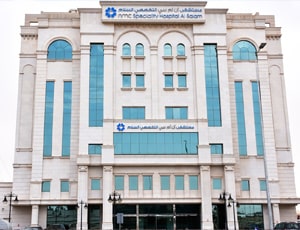
NMC Specialty Hospital Al Salam provides specialised Hip Dysplasia Treatment with a focus on accurate hip assessment, joint-preserving treatment, advanced pediatric orthopedic techniques, and individualized long-term follow-up. Established in 1999, the CBAHI accredited hospital is located in Riyadh, Saudi Arabia and operates 100 beds, with modern orthopedic, imaging, surgical, and rehabilitation infrastructure.
Hip Dysplasia Treatment can help improve hip stability and alignment and may reduce the risk of progressive joint damage when appropriately managed. Treatment planning considers the patient's age, hip morphology, severity of dysplasia, degree of displacement, skeletal maturity, and previous interventions. A detailed evaluation using physical examination and age-appropriate imaging, such as ultrasound or X-ray, helps the orthopedic team determine whether conservative management, reduction, bracing, osteotomy, or another reconstructive approach is most suitable.

Kevin Stewart from Scotland could barely walk straight due to a Slip Disc. He faced many discomforts for the past 2 years and eventually had…

Mr. Muhammed Dumia was suffering from painful left Knee and was in considerable pain for the last 2 months. He eventually underwent Knee Replacement Surgery…
| Speciality | Orthopedics |
| Procedure | Hip Dysplasia Treatment |
| Success Rate | 85-95% |
| Recovery Time | 3-6 months |
| Treatment Time | 1-3 hours |
| Chances of Recurrence | Low |
Hip dysplasia treatment aims to correct the misalignment of the hip joint. Misalignment is a condition where the hip socket is shallow or improperly formed. In infants, non-surgical methods like Pavlik harnesses or hip abduction braces may be used to guide the hip joint into proper alignment. For older children and adults, surgical interventions such as hip arthroscopy or periacetabular osteotomy (PAO) are suggested by surgeons to reposition the hip joint. The procedure helps improve hip function and stability.
Medical conditions that can be treated through hip dysplasia treatment include developmental dysplasia of the hip (DDH) in infants and adolescents and acetabular dysplasia in adults.
In the case of single hip dysplasia, the patient can return to unrestricted activity usually within 3-6 months of the surgery. However, if the dysplasia is in both hips, the second surgery is usually scheduled a few weeks after the first one. The overall recovery may therefore take longer. Rehabilitation is strictly recommended after this surgery. Follow-up doctor appointments are a must. Patients are also recommended to increase weight-bearing activities slowly so as not to put unbearable pressure on the hip.
A number of determining factors can be used to rank hospitals for your suitable procedure. The following factors are used to rank hospitals in Saudi Arabia that perform Hip Dysplasia Treatments- Infrastructure, Procedure Availability, Procedure Popularity, Technology, Affordability, Experienced Specialists, Quality of Resources, and Success Rate
Your health is a top priority for MediGence, and we make sure you get it effortlessly. We provide a set of unmatched services to assist you in your medical journey to different countries in the world. Our value-based services include airport transfers, accommodation, 24/7 assistance, Virtual consultation, case manager, and prenegotiated treatment packages with upto a 30% discount. There are many more advantages for you besides the aforementioned services.
Definitely Yes. You can get an expert medical opinion via online consultation before you decide to travel. To schedule your online consultation with the specialist, you can reach one of our patient counselors. Upon your request, our experts will check the doctor's availability, and send you the payment link to finalize the appointment.
Many people around the world consider Hip Dysplasia Treatment in Saudi Arabia to be trustworthy due to the high success rate and excellent hospital infrastructure. Many other factors make Saudi Arabia the preferred choice for Hip Dysplasia Treatment. These include:
Different procedures have varying recovery times based on the patient's health and the complexity of the treatment. The patient should make sure to take all rehabilitation sessions and follow postoperative care protocols, among other things, to reduce their recovery time. The patient is suggested to stay in close contact with their surgeon for a few months post-surgery to reduce their recovery time.