Browse verified doctors or let our care team help you find the doctor best suited to your condition, treatment goals, and budget.

At Apollo Hospitals Bannerghatta, patients can access Arthrodesis supported by advanced orthopaedic facilities and experienced joint specialists. Established in 2007, the JCI accredited hospital is located in Bangalore, India, and has 350 beds.
Joint fusion may be considered when severe pain, instability, or joint damage significantly affects function, and other treatments have not provided adequate relief. During surgery, damaged joint surfaces are prepared, and the bones are positioned and secured with plates, screws, rods, or other fixation devices to allow them to fuse together.
Fortis Hospital offers specialised Arthrodesis (Joint Fusion Surgery) using modern surgical technology and established orthopaedic treatment protocols. Established in 2001, the NABH, NABL, JCI accredited hospital is situated in Bangalore, India, with 375 beds, serving local and international patients.
Arthrodesis aims to relieve persistent joint pain and improve stability by permanently fusing the bones of a damaged joint. Depending on the joint's location and condition, plates, screws, rods, or bone grafts may be used to support fusion. Before treatment, the orthopaedic specialist evaluates joint damage, alignment, imaging findings, medical history, and functional limitations to develop an appropriate surgical plan.
Faridabad, India
Sarvodaya Hospital and Research Centre provides Arthrodesis (Joint Fusion) using contemporary surgical fixation techniques and evidence-based orthopaedic care. Founded in 1997, the NABH, NABL accredited hospital is based in Faridabad, India, with 500 beds and services for domestic and international patients.
The procedure involves removing damaged cartilage or joint surfaces and stabilising the bones in the correct position until they fuse. Arthrodesis may be performed on joints such as the ankle, wrist, foot, or spine, depending on the underlying condition. Imaging and clinical assessment help determine whether fusion is appropriate.
Sharjah, United Arab Emirates
With advanced orthopaedic infrastructure, Zulekha Hospital Sharjah offers Arthrodesis to patients with painful or unstable joints who require permanent surgical stabilisation. Established in 1992, the JCI accredited hospital is located in Sharjah, United Arab Emirates, and has 185 beds.
Joint fusion may be recommended for advanced arthritis, significant joint deformity, instability, or certain fractures and injuries. The surgeon removes damaged surfaces and uses internal fixation to maintain joint stability while the bone fuses. Pre-operative imaging and assessment help determine the most suitable surgical technique.
Medipol Mega University Hospital offers specialised Arthrodesis (Joint Fusion Surgery) using modern surgical technology and established orthopaedic treatment protocols. Established in 2012, the JCI accredited hospital is situated in Istanbul, Turkey, with 810 beds, serving local and international patients.
Arthrodesis aims to relieve persistent joint pain and improve stability by permanently fusing the bones of a damaged joint. Depending on the joint's location and condition, plates, screws, rods, or bone grafts may be used to support fusion. Before treatment, the orthopaedic specialist evaluates joint damage, alignment, imaging findings, medical history, and functional limitations to develop an appropriate surgical plan.
Fortis Hospital offers specialised Arthrodesis (Joint Fusion Surgery) using modern surgical technology and established orthopaedic treatment protocols. Established in 2011, the NABH, NABL accredited hospital is situated in Kolkata, India, with 400 beds, serving local and international patients.
Arthrodesis aims to relieve persistent joint pain and improve stability by permanently fusing the bones of a damaged joint. Depending on the joint's location and condition, plates, screws, rods, or bone grafts may be used to support fusion. Before treatment, the orthopaedic specialist evaluates joint damage, alignment, imaging findings, medical history, and functional limitations to develop an appropriate surgical plan.
HCG Kalinga Rao Road offers specialised Arthrodesis (Joint Fusion Surgery) using modern surgical technology and established orthopaedic treatment protocols. Established in 1989, the ISO, NABH accredited hospital is situated in Bangalore, India, with 250 beds, serving local and international patients.
Arthrodesis aims to relieve persistent joint pain and improve stability by permanently fusing the bones of a damaged joint. Depending on the joint's location and condition, plates, screws, rods, or bone grafts may be used to support fusion. Before treatment, the orthopaedic specialist evaluates joint damage, alignment, imaging findings, medical history, and functional limitations to develop an appropriate surgical plan.
With advanced orthopaedic infrastructure, Medicover Hungary offers Arthrodesis to patients with painful or unstable joints who require permanent surgical stabilisation. Established in 2015, the ISO accredited hospital is located in Budapest, Hungary, and has 30 beds.
Joint fusion may be recommended for advanced arthritis, significant joint deformity, instability, or certain fractures and injuries. The surgeon removes damaged surfaces and uses internal fixation to maintain joint stability while the bone fuses. Pre-operative imaging and assessment help determine the most suitable surgical technique.
With advanced orthopaedic infrastructure, Quironsalud Torrevieja Hospital offers Arthrodesis to patients with painful or unstable joints who require permanent surgical stabilisation. Established in 2006, the ISO accredited hospital is located in Torrevieja, Spain, and has 119 beds.
Joint fusion may be recommended for advanced arthritis, significant joint deformity, instability, or certain fractures and injuries. The surgeon removes damaged surfaces and uses internal fixation to maintain joint stability while the bone fuses. Pre-operative imaging and assessment help determine the most suitable surgical technique.
With advanced orthopaedic infrastructure, Medical Park Canakkale Hospital offers Arthrodesis to patients with painful or unstable joints who require permanent surgical stabilisation. Established in 2017, the ISO, JCI accredited hospital is located in Canakkale, Turkey, and has 92 beds.
Joint fusion may be recommended for advanced arthritis, significant joint deformity, instability, or certain fractures and injuries. The surgeon removes damaged surfaces and uses internal fixation to maintain joint stability while the bone fuses. Pre-operative imaging and assessment help determine the most suitable surgical technique.
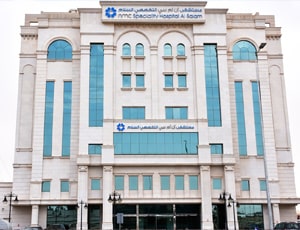
NMC Specialty Hospital Al Salam offers specialised Arthrodesis (Joint Fusion Surgery) using modern surgical technology and established orthopaedic treatment protocols. Established in 1999, the CBAHI accredited hospital is situated in Riyadh, Saudi Arabia, with 100 beds, serving local and international patients.
Arthrodesis aims to relieve persistent joint pain and improve stability by permanently fusing the bones of a damaged joint. Depending on the joint's location and condition, plates, screws, rods, or bone grafts may be used to support fusion. Before treatment, the orthopaedic specialist evaluates joint damage, alignment, imaging findings, medical history, and functional limitations to develop an appropriate surgical plan.
With advanced orthopaedic infrastructure, Medical Park Fatih Hospital offers Arthrodesis to patients with painful or unstable joints who require permanent surgical stabilisation. Established in 2007, the JCI accredited hospital is located in Istanbul, Turkey, and has 246 beds.
Joint fusion may be recommended for advanced arthritis, significant joint deformity, instability, or certain fractures and injuries. The surgeon removes damaged surfaces and uses internal fixation to maintain joint stability while the bone fuses. Pre-operative imaging and assessment help determine the most suitable surgical technique.
University Hospital Quironsalud Madrid offers advanced Arthrodesis (Joint Fusion Surgery) using modern orthopaedic techniques and internationally accepted treatment protocols. Established in 2006, the ISO, JCI accredited hospital is located in Madrid, Spain, with 575 beds, providing comprehensive orthopaedic care for local and international patients.
Arthrodesis is a surgical procedure that permanently joins the bones forming a joint to reduce pain and improve stability. It may be recommended for severe arthritis, joint deformity, instability, or damage that has not responded to non-surgical treatment. The surgeon evaluates the affected joint, imaging results, symptoms, and overall health before selecting the appropriate approach.
Istanbul, Turkey
Medical Park Bahcelievler Hospital offers specialised Arthrodesis (Joint Fusion Surgery) using modern surgical technology and established orthopaedic treatment protocols. Established in 2015, the JCI accredited hospital is situated in Istanbul, Turkey, with 242 beds, serving local and international patients.
Arthrodesis aims to relieve persistent joint pain and improve stability by permanently fusing the bones of a damaged joint. Depending on the joint's location and condition, plates, screws, rods, or bone grafts may be used to support fusion. Before treatment, the orthopaedic specialist evaluates joint damage, alignment, imaging findings, medical history, and functional limitations to develop an appropriate surgical plan.
Dexeus University Hospital offers specialised Arthrodesis (Joint Fusion Surgery) using modern surgical technology and established orthopaedic treatment protocols. Established in 1973, the JCI accredited hospital is situated in Barcelona, Spain, with 200 beds, serving local and international patients.
Arthrodesis aims to relieve persistent joint pain and improve stability by permanently fusing the bones of a damaged joint. Depending on the joint's location and condition, plates, screws, rods, or bone grafts may be used to support fusion. Before treatment, the orthopaedic specialist evaluates joint damage, alignment, imaging findings, medical history, and functional limitations to develop an appropriate surgical plan.