16 Hospitals

- ET Healthworld Hospital Awards
- AHPI: Quality Beyond Accreditation Award (Bengaluru, 2020)
- 2019 PEXA Awards
- CIMS Healthcare Excellence Award (2018)
- Reader's Digest Health Summit (2018)
- Business Excellence Awards (2018)
- India Healthcare Excellence Awards
- India Health and Wellness Summit & Awards (2015)
- Healthcare Leaders Forum Award (2015)
- Vijaywani Healthcare Leader & Achiever Award (2015)
- Honeywell Smart Building Award (2016)
- Obstetrics and Gynecology Award (2016)
- Expo-Healthcare Excellence Awards (2014)
- Award of Excellence in Ayurveda (2012)
- International Tourism Conclave & Travel Award (ITCTA)
- Best Patient Experience Technology Innovation (2019)
- Accreditation


Please Enquire

Patients suffering from an ischemic stroke can be admitted to Apollo Hospitals immediately for a variety of interventions such as intravenous thrombolysis, intra-arterial thrombolysis, and mechanical thrombolysis. A functional DSA laboratory dedicated to such intervention is also available around the clock for imaging with CT scan head and MRI. Neurologic exams, brain imaging tests (CT, or computerized tomography scan; MRI, or magnetic resonance imaging), carotid and transcranial ultrasound and angiography, blood tests, EKG (electrocardiogram) or an ultrasound examination (echocardiogram), and other diagnostic tests are available at the hospital.
For large clots that cannot be dissolved by intravenous thrombolytics, newer interventional treatments such as clot retrieval procedures are used. Mechanical retrieval can help patients for up to 12 hours. Following treatment, the patient recovers at Indraprastha Apollo Hospital's special Stroke ICU, which is equipped with round-the-clock monitoring and stringent infection control. Intensive rehabilitation begins almost immediately. Sophisticated equipment, such as robotic rehabilitation, aids in the efficient recovery of limb function. Dr. Anoop Kohli, Dr. Bhanu Pant, and Dr. C. M Malhotra are some of the neurologists at Indraprastha Apollo Hospital.
- Accreditation

Venkateshwar Hospital has world-class Neurology Services and state-of-the-art services for a variety of Neurological conditions related to the Brain, Spinal Cord, and Nervous system. An experienced team of Neurologists provides excellent clinical care for Neurological disorders and carries out its own clinical research and trials. The Neurology department has facilities like the Latest 256 SLICE CT (Computed Axial Tomography) Scan, Neck and Head Ultrasound, and 3TESLA MRI (Magnetic Resonance Imaging). The team also carries out Neurophysiologic studies of patients including EEG and EMG to ensure the best possible care.
The medical history of the patient is taken by our Neurologists at the beginning of the treatment, followed by a physical examination. In case of emergencies like stroke treatment facilities like TPA therapy and FCH are available. Treatment plans differ from patient to patient. Patients are often referred to a physiotherapist, speech therapist, or psychotherapist and put on medications, advised on lifestyle modification. Dr. Anand Kumar Saxena and Dr. Dinesh Sareen are the neuro specialists at Venkateshwar Hospital.
- Accreditation


- Received the Association of Healthcare Providers India (AHPI) Digital/Smart Hospital Award in January 2023.
- Conferred with the Stroke Accreditation by Quality Accreditation Institute (QAI), making it the first in North & West India and third in India to achieve this distinction.
- Listed among multiple awards such as “Best Hospital for Medical Value”, “Best Hospital for Patient Experience”, “Best Hospital for Quality”, etc., in earlier years.
- Received D L Shah National Award, Max Healthcare receives D L Shah National Award on 'Economics of Quality' by Quality Council of India, 2009.
- Received, Express Healthcare Awards, Max Healthcare receives Express Healthcare Awards for Excellence in Healthcare, 2008.
- Accreditation

Medeor Hospital has an excellent team of neurosurgeons who perform emergency stroke treatment. A CT scan, which shows blocked blood vessels and bleeding, is the most common method used by MeDeor Hospital experts to diagnose stroke. If the stroke is caused by an artery blockage, the CT scan can show if there is any bleeding in the brain. An MRI can also be used to detect bleeding in the brain or spinal cord by using magnetic waves rather than radiation.
The treatments available at Medeor Hospital for stroke treatment include medications to help reduce swelling in the brain, lower cholesterol levels and blood pressure, and thin the blood. Surgery is also a common approach to repair arteries or removes clot. The hospital offers treatment options like endovascular intervention including thrombectomy and stent retrieval and TPA. The treatment involves minimally invasive and endoscopic treatment options. Dr. Taher, Dr. Prem Kumar Singh, and Dr. Darakshan Naheed are some of the neuro specialists at Medeor Hospital.
- Accreditation
Please Enquire
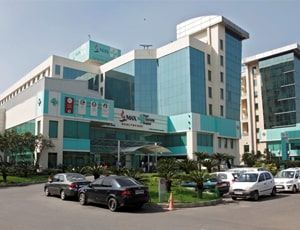
- DL Shah National Award on Economics of Quality (QCI)
- First Global Green OT Accreditation
- NABH, NABL, and JCI Accreditation
- Accreditation

IBS Hospital creates an integrated treatment strategy to deal with immediate neurological issues like stroke. The hospital utilizes the finest of modern technology and medicine. Needle biopsy (fine needle aspiration), endoscopic biopsy, excisional biopsy, computer tomography (CT) scans, magnetic resonance imaging (MRI) scans, electrophysiology investigations, and electroencephalograms are some of the diagnostic techniques offered at the facility (EEG). Neurologic exams, brain imaging tests (CT, or computerized tomography scan; MRI, or magnetic resonance imaging), carotid and transcranial ultrasound and angiography, blood tests, EKG (electrocardiogram) or an ultrasound examination (echocardiogram), and other tests are available at the hospital.
TPA (tissue plasminogen activator), blood-thinning medications such as anticoagulants (warfarin) and antiplatelet drugs (aspirin or ticlopidine); a combination of aspirin and sustained release dipyridamole; and carotid endarterectomy are all treatment options for stroke. In order to give patients the safest and best care possible, the surgeons at IBS Hospital employ transoral robotic surgery (TORS), 3-D navigation planning, intraoperative neurophysiological monitoring (IONM), surgical simulation, and cutting-edge research. Dr. Sachin Kandhari, Chairman of Neuro Surgery, is in charge of the division of neurosurgery.
Best doctors for Stroke Treatment at IBS Hospital:
- Dr. Kishan Raj, Consultant, 14 Years of Experience
- Dr. Sanjay Kumar Choudhary, Senior Consultant, 21 Years of Experience
- Accreditation

- Best Hospital in East Delhi in 2019 - Received by the hospital for its exceptional patient care and state-of-the-art facilities.
- NABH Accreditation in 2018 - Received accreditation from the National Accreditation Board for Hospitals & Healthcare Providers (NABH) for maintaining high standards in patient care and safety.
- Best Hospital in North India in 2017 - Received by the hospital for its exceptional medical services and advanced medical technology.
- Best Hospital in Patient Care in 2016 - Received by the hospital for its exceptional patient care and personalized attention to patient needs.
- Best Hospital in Customer Service in 2015 - Received by the hospital for its outstanding customer service and focus on patient satisfaction.
- Accreditation

- Celebrating Our Award-Winning Milestones: Manipal Hospitals Dwarka, Delhi, is proudly celebrating its award-winning achievements, recognised by CAHO.
- Accreditation
Please Enquire

- Accreditation

Indian Spinal Injuries Centre has a dedicated special Stroke ICU which ensures 24/7 monitoring and stringent infection control. Intense rehabilitation is done immediately. Use of advanced equipment like Robotic rehabilitation helps in efficient recovery of the patient. The doctors often use sophisticated imaging technology such as CT Brain with perfusion imaging and multi-modal MRI.
- Accreditation

- Best Neurology Hospital in Tamil Nadu, 2020, Times of India Healthcare Achievers Awards: Neuraxis Care and Research Center received this award for its exceptional neurology care services.
- Best Neurology Hospital in Tamil Nadu, 2020, Global Health & Pharma (GHP) Awards: This award recognized Neuraxis Care and Research Center as the best neurology hospital in Tamil Nadu.
- Best Neurology Hospital in Chennai, 2019, India Business Awards: This award recognized Neuraxis Care and Research Center as the best neurology hospital in Chennai.
- Excellence in Patient Care Award, 2019, International Health Care Awards: This award recognized Neuraxis Care and Research Center for its focus on providing exceptional patient care services.
- Best Neurology Hospital in South India, 2019, Worldwide Achievers Healthcare Excellence Awards: Neuraxis Care and Research Center received this award for its outstanding contributions to the field of neurology in South India.

- Excellence in Multispecialty Care Award – Recognized for comprehensive services across disciplines
- Innovation in Healthcare Technology Award – Adoption of cutting-edge medical technology in diagnostics and treatment
- Patient Safety & Quality Care Award – Commitment to international standards in safety and quality
- Community Health Initiative Award – For outreach and preventive health programs in Delhi NCR
- Center of Excellence Recognition – In cardiology, oncology, and nephrology
- Accreditation
Please Enquire

- The Center of Excellence Award: Leading center of excellence for specialized medical treatments and services.
- The Innovations in Healthcare Award: Innovative approach to healthcare, including the use of advanced technologies and cutting-edge medical procedures.
- The Patient Experience Award: Dedication to providing high-quality patient care and a positive patient experience, including patient comfort and satisfaction.
- The Quality of Care Award: Commitment to providing high-quality medical care, including advanced medical technology and experienced medical professionals.
- The Patient Safety Award: Unwavering commitment to patient safety, including the use of rigorous safety protocols and procedures.
- Accreditation

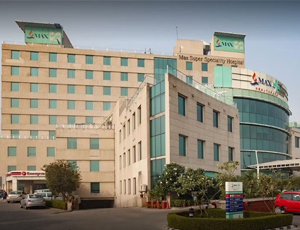
- NABH Accreditation - Recognized for meeting the highest standards of medical care and patient safety in India
- FICCI Healthcare Excellence Award 2015 - Awarded for the hospital's excellence in healthcare services and patient satisfaction
- Best Patient Safety Initiative Award 2018 - Recognized for the hospital's commitment to patient safety and quality of care
- Best Multispecialty Hospital in Delhi NCR - Global Healthcare Excellence Awards 2013 - Awarded for the hospital's exceptional performance in providing high-quality medical care and services
- Best Hospital Brand in North India - The Economic Times Best Hospital Brand Survey 2016 - Recognized for the hospital's exceptional performance in providing high-quality medical care and services
- Accreditation
Ask your healthcare adviser for the best multiple options and choose the one that meets your expectations
Request for an Expert Opinion

Outcomes of Stroke Treatment
| Speciality | Neurology |
| Procedure | Stroke Treatment |
| Success Rate | Varies by condition |
| Recovery Time | Varies by condition |
| Treatment Time | Varies by condition |
| Chances of Recurrence | Varies by condition |
What is a Stroke Treatment and how does it work?
Stroke treatment involves a combination of various interventions to minimize damage to the brain. The treatment approach depends on the type of stroke, whether it is ischemic (caused by a blood clot) or hemorrhagic (caused by bleeding in the brain). Ischemic stroke treatment may involve medications to dissolve or remove the clot, while hemorrhagic stroke treatment focuses on stopping bleeding and relieving pressure on the brain.
What medical conditions can be treated through Stroke Treatment?
Stroke treatment can address a range of medical conditions, including ischemic stroke, hemorrhagic stroke, transient ischemic attacks (TIAs), and certain underlying risk factors that contribute to stroke, such as high blood pressure, atrial fibrillation, and carotid artery disease. The goal is to prevent further damage to the brain, restore blood flow, and manage risk factors to reduce the likelihood of future strokes.
What is the recovery process after a Stroke Treatment?
The recovery process after a stroke depends on the severity of the stroke and individual factors. The recovery process includes rehabilitation programs like physical therapy, occupational therapy, speech therapy, and other specialized therapies. The focus is on improving motor skills, restoring speech and language abilities, and regaining independence in daily activities. Recovery is gradual and may take months or even years. Doctors may suggest lifestyle modifications and prescribe certain medications to prevent future strokes.
Frequently Asked Questions
According to the procedure, hospitals are ranked based on a variety of components. Some of the major factors for ranking the hospitals for Stroke Treatment in Delhi are Infrastructure, procedure accessibility, procedure popularity, Technology, Cost-effectiveness, Experienced Doctors, Patient-care Facilities, and Success Rate
MediGence offers you a blend of convenience, quality healthcare, and cost-savings. While travelling for treatment abroad, MediGence makes sure that your healthcare journey should be smooth and hassle-free. Some of the best caregiving services are Online consultation, Hotel Stays or Accommodation, Case Manager, Recovery Packages, 24/7 assistance, and Individually-crafted Packages with upto 30% savings. To help you receive top-notch medical treatment, we also provide a number of additional benefits.
Definitely Yes. You can get an expert medical opinion via online consultation before you decide to travel. You can place your request to our patient advisors for scheduling your online consultation with the specialist. They will check the doctor's availability for the consultation. Once confirmed, you will be sent a payment link to book your online consultation.
" Delhi is world-famous for its doctors who have gained their qualifications from reputable institutions in and out of the country. " Almost all the top-rated doctors in Delhi provide online consultations to patients worldwide. Here are some popular ones in Delhi-
Many people around the world consider Stroke Treatment in Delhi to be trustworthy due to the high success rate and excellent hospital infrastructure. When it comes to Delhi, many factors contribute to make Stroke Treatment the ideal choice. This includes:
- Affordable treatment plans
- Experienced and certified specialists
- Accredited hospitals
- Latest medical technologies
- Transparency and data privacy
The length of recovery after treatment is determined by the patient's overall health as well as the criticality of the treatment. Other than that, rehabilitation post-treatment also plays a crucial role in reducing the healing time and aiding in proper recovery. Patient must keep in touch with their surgeon for a few months after surgery in order to speed up recovery.