Browse verified doctors or let our care team help you find the doctor best suited to your condition, treatment goals, and budget.

Choosing Centro Medico Teknon for External Ventricular Drainage gives patients access to experienced neurosurgeons, advanced neuroimaging, specialized intensive-care facilities, intracranial pressure monitoring, and structured postoperative management. Established in 1994, the JCI accredited hospital in Barcelona, Spain has 211 beds and provides specialised neurosurgical and neurocritical care services.
External Ventricular Drainage is typically performed under sterile conditions with appropriate anaesthesia or sedation depending on the patient's clinical status. A catheter is inserted into a selected cerebral ventricle and connected to an external collection system that allows controlled CSF drainage. Patients require close monitoring because complications may include infection, bleeding, catheter blockage, excessive drainage, or changes in intracranial pressure. The drain is generally removed once it is no longer clinically required and adequate CSF circulation has been established.
Hospital Quironsalud Barcelona provides specialised External Ventricular Drainage with a focus on controlled cerebrospinal fluid drainage, accurate intracranial pressure management, advanced neurosurgical technology, and individualized critical care. Established in 1944, the JCI, ISO accredited hospital is located in Barcelona, Spain and operates 165 beds, with modern neurosurgical, neuroimaging, intensive-care, and monitoring infrastructure.
External Ventricular Drainage can provide temporary relief from elevated intracranial pressure and facilitate CSF diversion in patients with acute hydrocephalus or other neurological conditions affecting cerebrospinal fluid circulation. Treatment planning considers the underlying cause, ventricular anatomy, intracranial pressure, neurological status, imaging findings, and overall clinical condition. A detailed assessment helps the neurosurgical team determine the appropriate catheter placement, drainage strategy, monitoring requirements, and timing for weaning or removal of the ventricular drain.
Quironsalud Marbella Hospital offers advanced External Ventricular Drainage using modern neurosurgical techniques and individualized neurocritical care plans. Established in 1979, the ISO accredited hospital is located in Marbella, Spain and has 120 beds, providing comprehensive neurological and neurosurgical care for local and international patients.
External Ventricular Drainage is a temporary neurosurgical procedure used to drain cerebrospinal fluid (CSF) from the brain's ventricles when fluid accumulation or increased intracranial pressure requires urgent management. A small catheter is inserted into a cerebral ventricle and connected to an external drainage and monitoring system. The procedure may be used in conditions such as hydrocephalus, intracranial hemorrhage, traumatic brain injury, or other situations involving elevated intracranial pressure.
At University Hospital Quironsalud Madrid, External Ventricular Drainage is performed using specialised neurosurgical techniques and comprehensive neurological and imaging assessment. Established in 2006, this ISO, JCI accredited hospital in Madrid, Spain has 575 beds and offers advanced neurocritical care and neurosurgical services.
External Ventricular Drainage may be considered when excess cerebrospinal fluid needs to be temporarily diverted or intracranial pressure requires close monitoring. During the procedure, a catheter is carefully placed into one of the brain's ventricles through a small opening in the skull and connected to a sterile external drainage system. Brain imaging, neurological assessment, and intracranial pressure monitoring may be used to guide treatment and evaluate the patient's response.
Sagrat Cor University Hospital provides specialised External Ventricular Drainage with a focus on controlled cerebrospinal fluid drainage, accurate intracranial pressure management, advanced neurosurgical technology, and individualized critical care. Established in 1970, the accredited hospital is located in Barcelona, Spain and operates 323 beds, with modern neurosurgical, neuroimaging, intensive-care, and monitoring infrastructure.
External Ventricular Drainage can provide temporary relief from elevated intracranial pressure and facilitate CSF diversion in patients with acute hydrocephalus or other neurological conditions affecting cerebrospinal fluid circulation. Treatment planning considers the underlying cause, ventricular anatomy, intracranial pressure, neurological status, imaging findings, and overall clinical condition. A detailed assessment helps the neurosurgical team determine the appropriate catheter placement, drainage strategy, monitoring requirements, and timing for weaning or removal of the ventricular drain.

Ms Patience from Uganda travelled to India for cosmetic surgery in May 2017. She got her treatment done in Asian Institute of Medical Sciences in…

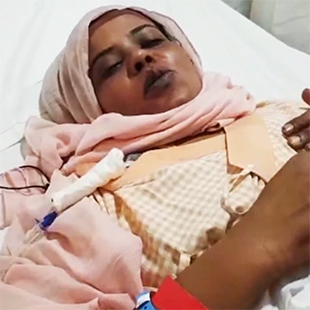
Lobna (from Sudan) was diagnosed with meningioma, a form of non-cancerous brain tumor. Her family members decided to take her to one of the most…
| Speciality | Neurology |
| Procedure | External Ventricular Drainage |
| Success Rate | Varies by condition |
| Recovery Time | Varies by condition |
| Treatment Time | Varies by condition |
| Chances of Recurrence | Varies by condition |
External Ventricular Drainage (EVD) is a medical procedure used to relieve intracranial pressure and drain excess cerebrospinal fluid from the brain's ventricles. During the procedure, a catheter is inserted into the ventricles through a small hole in the skull. The excess fluid is drained into a collection bag, helping to reduce pressure and prevent further complications.
EVD is commonly used to treat conditions such as hydrocephalus, traumatic brain injury, and intracranial hemorrhage.
The recovery process after EVD involves close monitoring of intracranial pressure and neurological status. The drainage may continue until the pressure stabilizes, and the catheter is removed once the underlying condition is treated. Patients are observed for potential complications and may require physical therapy or rehabilitation, depending on their specific medical condition. Overall the recovery may take 3-4 weeks.
Hospitals for any type of procedure can be ranked on several deciding aspects. Some of the major factors for ranking the hospitals for External Ventricular Drainage in Spain are Infrastructure, procedure accessibility, procedure popularity, Technology, Cost-effectiveness, Experienced Doctors, Patient-care Facilities, and Success Rate
MediGence offers you a blend of convenience, quality healthcare, and cost-savings. With us, you can receive top-notch medical treatment while saving money and making your journey hassle-free with some unmatched benefits & services. Some of our notable services include Hotel stays or accommodation, Video consultation, dedicated case manager, round-the-clock help, airport transfers, and customized prebundled treatment packages with discount of up to a 30%. Furthermore, we have alot more other benefits for you to recieve top-notch medical care.
Yes. MediGence gives you the privilege of scheduling an online consultation with a specialist in Spain. To schedule your online consultation with the specialist, you can reach one of our patient counselors. They will get in touch with the doctor to check his/her availability. After receiving confirmation, the appointment will be scheduled and you will receive a payment link to book your session.
Due to the high success rate and top-notch hospital infrastructure, External Ventricular Drainage in Spain is considered reliable by many people around the world. There are many additional factors making Spain the preferred choice for External Ventricular Drainage including:
The recovery time for a procedure varies based on the condition of the patient and the complexity of the surgery. Other than that, rehabilitation post-treatment also plays a crucial role in reducing the healing time and aiding in proper recovery. Following surgery, patients must return for follow-up appointments to ensure proper healing and to expedite the healing process.