Choosing Between VP Shunt and ETV: A Patient-Friendly Guide to Hydrocephalus Surgery
Published: Oct 27, 2026
Updated: Oct 27, 2026
Published: Oct 27, 2026
Updated: Oct 27, 2026
Hydrocephalus refers to a condition wherein cerebrospinal fluid (CSF) accumulates in the ventricles of the brain. This accumulation causes the pressure in the skull to increase, which can interfere with the normal functioning of the brain. Hydrocephalus can occur in individuals of any age, although its causes, symptoms, and treatment may differ depending on the patient's age.
Two well-known invasive techniques include ventriculoperitoneal shunt (VP) and endoscopic third ventriculostomy (ETV).
Although both procedures aim to improve cerebrospinal fluid circulation and reduce pressure, they differ in how they are performed. The type of intervention depends on several factors, including the cause of hydrocephalus, the patient’s age, brain structure, and medical history.
CSF continuously circulates through the brain's ventricles and surrounding spaces before being absorbed into the bloodstream. It cushions the brain, helps transport nutrients, and removes waste products.
Hydrocephalus occurs due to the interruption of the cerebrospinal fluid circulation or its absorption, or accumulation of water caused by problems with circulation. There are many potential causes of hydrocephalus, including congenital disorders, a blockage of the cerebrospinal pathways in the brain, bleeding in the brain, and many other possible causes involving brain disorders, various injuries to the head, illnesses, and other factors.
Symptoms depend on the patient's age and how quickly fluid accumulates.
Babies may develop:
Adults and older children may experience headaches, nausea, vomiting, blurred vision, balance problems, or changes in alertness. In some older adults with normal pressure hydrocephalus, they may have walking difficulties, cognitive changes, and urinary problems.
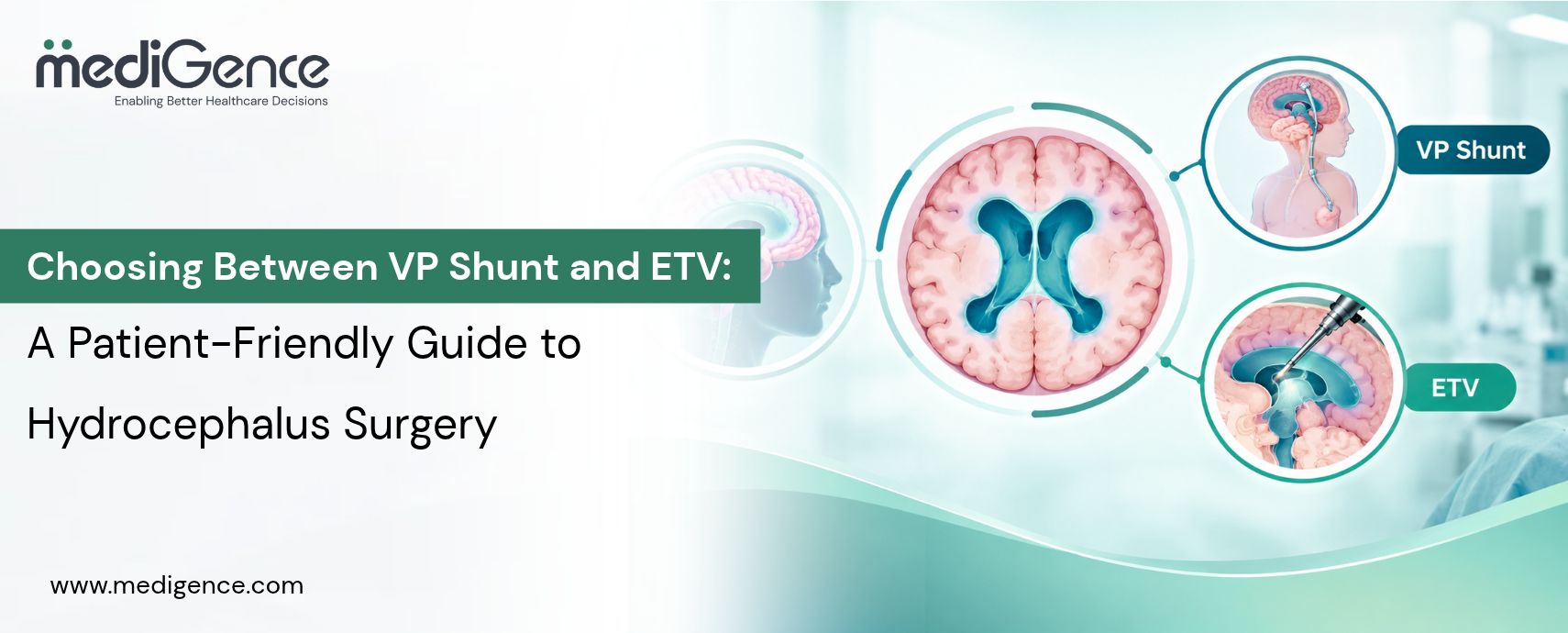
A ventriculoperitoneal shunt is a medical device that redirects excess CSF from the brain to the abdominal cavity, where the body can absorb it.
The valve helps control how much CSF drains from the brain. Some shunts use programmable valves, allowing the clinician to adjust the drainage setting externally when appropriate. VP shunts treat several types of hydrocephalus, including cases where ETV is unsuitable.
VP shunt surgery is an established treatment with broad applications across different causes of hydrocephalus. It does not require the brain to establish a new internal drainage pathway, and adjustable valves may offer flexibility in selected patients.
However, the shunt is an implanted device. It can become blocked, infected, disconnected, or damaged, and it may drain too much or too little fluid. Some patients may need additional procedures later in life to repair or replace components.
Endoscopic third ventriculostomy is a surgical procedure that creates an alternative pathway for CSF to flow within the brain. Unlike a VP shunt, it does not require a permanent implanted drainage tube.
ETV is generally considered for selected patients with obstructive hydrocephalus, in which fluid cannot flow normally through part of the ventricular system.
When successful, ETV can manage hydrocephalus without leaving a permanent shunt system inside the body. This avoids shunt-specific complications such as mechanical failure along the implanted tubing.
However, ETV is not suitable for everyone. The opening can close over time, or the body may not absorb the redirected CSF effectively. Hydrocephalus can therefore return even after an initially successful procedure, sometimes months or years later.
Feature | VP Shunt | ETV |
How it works | Redirects CSF through a tube to the abdomen | Creates an internal opening to bypass a blockage |
Permanent device |
Yes |
No permanent shunt device |
Common use | Several types of hydrocephalus, including selected communicating cases |
Selected cases of obstructive hydrocephalus |
Main procedure-related concern | Blockage, infection, or incorrect drainage | Closure of the opening or inadequate CSF absorption |
Long-term care | Monitoring for shunt malfunction and other complications | Monitoring to ensure the opening remains functional and symptoms do not return |
Suitability | Depends on the cause, anatomy, and clinical circumstances | Depends on the cause, anatomy, age, and CSF absorption |
Neither procedure is universally better. Both can be effective when used in appropriately selected patients.
Neurosurgeons consider several factors before recommending hydrocephalus surgery.
Recovery depends on the procedure, the patient's age, the cause of hydrocephalus, and any neurological complications.
Seek urgent medical attention if a patient develops a severe or worsening headache, repeated vomiting, unusual drowsiness, confusion, seizures, fever, new weakness, redness or tenderness, vision changes, or a return of symptoms that were present before surgery.
Conclusion
Deciding between a VP shunt and ETV requires more than comparing the two procedures. The best option safely and effectively addresses the patient's clinical situation.
The team performed a detailed neurosurgical assessment, obtained imaging, and explained the benefits and risks of each surgery to the patient and family members. It is important to continue monitoring for any possible development of hydrocephalus or complications afterwards.

Tanya Bose is a medical content specialist with a strong medical background. She has completed her Bachelor's and Master’s in Biotechnology from Amity University. With a deep understanding of biomedical sciences and research, she develops authoritative and patient-focused medical content covering treatments, surgical procedures, and healthcare innovations. Her writing emphasizes accuracy, clarity, and evidence-based information to help readers better understand complex medical topics. She is dedicated to improving patient awareness and supporting informed healthcare decisions by delivering trustworthy medical insights in a clear and accessible format.

Dr. Rakesh Dua has more than 25+ years of clinical experience in spine surgeries. He is currently providing his services as Director, Neuro & Spine Surgery at Fortis Hospital, Shalimar Bagh. Before joining Fortis Hospital, he was associated with Max Super-Specialist Hospital, Shalimar Bagh, as Director of Neurosurgery & Head of Neuro Spine, and with UCMS & GTB hospital as head of the neurosurgery department.


Delhi, India

Istanbul, Turkey

Istanbul, Turkey

Istanbul, Turkey
 Active


.jpg)


.png)
