Your Notifications
All done, no notifications

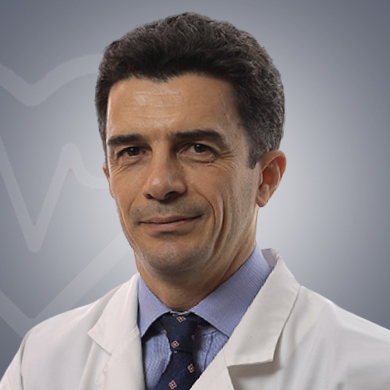
Dr. Cem Barcin

Cardiologist

, Ankara, Turkey

14 Years of experience

Speaks: Turkish , English


Dr. Cem Barcin is a specialized Interventional Cardiologist in Turkey. And one of the most sought after medical specialists in Ankara, Turkey. The doctor has over 14 Years of experience and is associated with Guven Hospital.

Qualifications :

  • Gulhane Military Medical Academy Faculty of Medicine
  • Ankara University Master of Epidemiology

Hospital Address :

Kavakldere, G

What is the medical expertise of Dr. Cem Barcin?

  • With more than 14 years of experience in the field of interventional cardiology,
    Dr Cem Barcin has expertise in coronary angiography, coronary artery disease, catheterization, coronary angioplasty, mitral valve interventions such as balloon valvuloplasty and mitraclip, paravalvular leak closure, transcatheter aortic valve implantation, closure of congenital heart defects( PDA- VSD-ASD closure), and hypertension.
  • Dr Barcin holds professional memberships in many leading organizations such as the European Society of Cardiology and the Turkish Society of Cardiology. He serves as the Vice President of the Association of Interventional Cardiology. Dr Barcin is also the Editor of the Anatolian Journal of Cardiology.
  • Over the course of his career, Dr Barcin has published more than 100 research articles in national and international journals of repute. Some of his publications are:
    1. Atrial and ventricular arrhythmia predictors with electrocardiographic parameters in myocardial infarction with non-obstructive coronary artery disease (MINOCA). Cardiovasc J Afr. 2022 Sep 8;33:1-6.
    2. Incidentally Diagnosed Double Inferior Vena Cava While Being Investigated for Pulmonary Hypertension. Anatol J Cardiol. 2022 Jun;26(6):E8-E9.
    3. Transcatheter Tricuspid Valve Replacement for Tricuspid Regurgitation: A Systematic Review and Meta-analysis. Anatol J Cardiol. 2022 Jul;26(7):505-519.
Frequently Asked Questions
Who are the top Interventional Cardiologists offering online consultation?

Here are some of the best rated interventional cardiologists available for online consultation:

Which are some of the procedures performed by Interventional Cardiologists?
Which are some of the conditions treated by Interventional Cardiologist?

Most common conditions performed by interventional cardiologists are:

  • Tachycardia
  • Coronary Artery Disease
  • Atherosclerosis
  • Bradycardia
  • Blocked Arteries
  • Angina
  • Patent Foramen Ovale
  • Cardiac Arrhythmias
  • Atrial Septal Defect
What are the qualifications of an Interventional Cardiologist?

Board certification should be one of the first priorities when choosing an interventional cardiologist. A doctor might practice interventional cardiology without being board certified in the specialty. But, training, education, experience, and certification establish the doctor’s level of competence. A board certification reflects that a doctor has completed a training program and cleared an exam demonstrating their expertise in interventional cardiology.

The general steps for interventional cardiologists include:

  • Graduation from medical school to obtain MBBS degree followed by post graduation in (MD) or osteopathic medicine (DO)
  • Certification exam and residency training in internal medicine
  • Additional certification exams and training in both interventional cardiology and cardiology.
What conditions does an Interventional Cardiologist treat?

Interventional cardiologists diagnose and treat conditions of the heart and blood vessels, including:

  • Angina (chest pain)
  • Arrhythmia (abnormal heart rhythm)
  • Cardiomyopathy (weakening or enlargement of the heart muscle)
  • Congenital heart defects including patent foramen ovale and atrial septal defect
  • Heart attack (myocardial infarction)
  • Heart failure
  • Abnormalities of the valves, heart valve disorders
  • Myocarditis or heart inflammation
What diagnostic tests are required by an Interventional Cardiologist?

An interventional cardiologist can order a wide variety of diagnostic and screening tests, such as:

  • General health tests like complete blood count (CBC), chest X-ray, urinalysis, blood glucose test, liver and kidney function tests, thyroid hormone tests, cholesterol panel, and blood pressure screening
  • EKG (ECG or electrocardiogram) to record your heart rhythm
  • Echocardiogram (or ultrasound) to assess the heart structure and function
  • Cardiac stress tests to check if the heart has a decreased blood supply because of coronary heart disease
  • Cardiac enzyme tests to find out if the heart is damaged
When should you visit an Interventional Cardiologist?

Interventional cardiologists take care of patients experiencing the following symptoms:

  • Chest pain, which can move into the arms, shoulders, neck, or jaw
  • Dizziness
  • Palpitations or feeling like the heart is racing
  • Shortness of breath
  • Passing out
  • High blood pressure
What can you expect from your first visit with an Interventional Cardiologist?

Your first visit to an interventional cardiologist will involve a check of your vitals, which is a non-invasive method to measure your heart’s electrical activity. Also, the clinical staff will note all details about your family and health history that a cardiologist or heart specialist should know.

The cardiologist will examine your heart health and might suggest some tests that can include urine or blood tests, an electrocardiogram (EKG), an PET, MRI, or CT scan, or a stress test. An interventional cardiologist can diagnose any existing condition and determine future risks. They will also help create a routine that benefits your overall heart health and reduces your risk of developing heart conditions.

Which are the most common procedures performed by an Interventional Cardiologist?
  • Treatments for arteries (angioplasty and stenting)
  • Hybrid coronary revascularization
  • Balloon aortic valvuloplasty
  • Balloon mitral valvuloplasty
  • Percutaneous coronary intervention
  • Transcatheter aortic valve replacement
  • Transcatheter mitral valve repair
  • Complex coronary intervention
  • Heart defect repair
  • Atrial septal defect closure
  • Patent foramen ovale closure
  • Left atrial appendage closure
  • Reduction of stroke risk
  • Heart valve repair or replacement
  • EPS & RFA
  • Heart Port Surgery