Browse verified doctors or let our care team help you find the doctor best suited to your condition, treatment goals, and budget.

At Aster Medcity, Radical Cystectomy is performed using specialized uro-oncological and reconstructive techniques with comprehensive cancer staging and preoperative assessment. Established in 2013, this NABH, JCI accredited hospital in Kochi, India has 670 beds and offers advanced urology, surgical oncology, minimally invasive surgery, and urinary reconstruction services.
Radical Cystectomy may be recommended for appropriately selected patients with muscle-invasive bladder cancer or certain high-risk non-muscle-invasive tumors that have not responded adequately to other treatments. Before surgery, patients may undergo cystoscopy, biopsy, CT or MRI imaging, laboratory testing, and other staging investigations. During the procedure, the bladder is removed along with selected surrounding tissues and pelvic lymph nodes when indicated, followed by reconstruction of the urinary pathway.
At Aakash Healthcare Super Speciality Hospital, Radical Cystectomy is performed using specialized uro-oncological and reconstructive techniques with comprehensive cancer staging and preoperative assessment. Established in 2011, this NABH, ISO accredited hospital in Delhi, India has 230 beds and offers advanced urology, surgical oncology, minimally invasive surgery, and urinary reconstruction services.
Radical Cystectomy may be recommended for appropriately selected patients with muscle-invasive bladder cancer or certain high-risk non-muscle-invasive tumors that have not responded adequately to other treatments. Before surgery, patients may undergo cystoscopy, biopsy, CT or MRI imaging, laboratory testing, and other staging investigations. During the procedure, the bladder is removed along with selected surrounding tissues and pelvic lymph nodes when indicated, followed by reconstruction of the urinary pathway.
At Jaypee Hospital, Radical Cystectomy is performed using specialized uro-oncological and reconstructive techniques with comprehensive cancer staging and preoperative assessment. Established in 2014, this NABH, JCI accredited hospital in Noida, India has 1200 beds and offers advanced urology, surgical oncology, minimally invasive surgery, and urinary reconstruction services.
Radical Cystectomy may be recommended for appropriately selected patients with muscle-invasive bladder cancer or certain high-risk non-muscle-invasive tumors that have not responded adequately to other treatments. Before surgery, patients may undergo cystoscopy, biopsy, CT or MRI imaging, laboratory testing, and other staging investigations. During the procedure, the bladder is removed along with selected surrounding tissues and pelvic lymph nodes when indicated, followed by reconstruction of the urinary pathway.
Fortis Hospital, Shalimar Bagh is a trusted healthcare provider for Radical Cystectomy, offering complex bladder cancer surgery supported by experienced urologists, uro-oncologists, reconstructive surgeons, medical oncologists, radiologists, anesthesiologists, and multidisciplinary cancer teams. Established in 2010, the NABH accredited hospital is situated in Delhi, India and has 262 beds.
Radical Cystectomy aims to achieve comprehensive removal of bladder cancer while allowing restoration of urinary drainage through an appropriate diversion. In men, the operation may include removal of the prostate and seminal vesicles when clinically required. In women, removal of the uterus, ovaries, or part of the vaginal wall may be considered depending on tumor location and extent. Pelvic lymph-node dissection is commonly performed as part of the oncological procedure.
Delhi, India
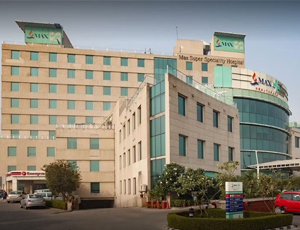
Max Smart Super Speciality Hospital offers advanced Radical Cystectomy using modern uro-oncological and reconstructive surgical techniques with individualized cancer care plans. Established in 2012, the JCI, NABH accredited hospital is located in Delhi, India and has 250 beds, providing comprehensive urology, uro-oncology, and multidisciplinary cancer care for local and international patients.
Radical Cystectomy is a major surgical procedure primarily used to treat muscle-invasive bladder cancer and selected high-risk or recurrent bladder tumors. The procedure involves removal of the entire urinary bladder along with nearby structures as clinically appropriate. Because the bladder is removed, a urinary diversion is created to provide an alternative pathway for urine to leave the body. The type of diversion may include an ileal conduit, continent urinary reservoir, or neobladder depending on the patient's condition and suitability.
Max Super Specialty Hospital, Shalimar Bagh offers advanced Radical Cystectomy using modern uro-oncological and reconstructive surgical techniques with individualized cancer care plans. Established in 2011, the NABH, NABL accredited hospital is located in Delhi, India and has 402 beds, providing comprehensive urology, uro-oncology, and multidisciplinary cancer care for local and international patients.
Radical Cystectomy is a major surgical procedure primarily used to treat muscle-invasive bladder cancer and selected high-risk or recurrent bladder tumors. The procedure involves removal of the entire urinary bladder along with nearby structures as clinically appropriate. Because the bladder is removed, a urinary diversion is created to provide an alternative pathway for urine to leave the body. The type of diversion may include an ileal conduit, continent urinary reservoir, or neobladder depending on the patient's condition and suitability.
At Amrita Hospital, Radical Cystectomy is performed using specialized uro-oncological and reconstructive techniques with comprehensive cancer staging and preoperative assessment. Established in 2022, this NABH accredited hospital in Faridabad, India has 2600 beds and offers advanced urology, surgical oncology, minimally invasive surgery, and urinary reconstruction services.
Radical Cystectomy may be recommended for appropriately selected patients with muscle-invasive bladder cancer or certain high-risk non-muscle-invasive tumors that have not responded adequately to other treatments. Before surgery, patients may undergo cystoscopy, biopsy, CT or MRI imaging, laboratory testing, and other staging investigations. During the procedure, the bladder is removed along with selected surrounding tissues and pelvic lymph nodes when indicated, followed by reconstruction of the urinary pathway.
Marengo Asia Hospitals, Faridabad offers advanced Radical Cystectomy using modern uro-oncological and reconstructive surgical techniques with individualized cancer care plans. Established in 2007, the NABH, NABL accredited hospital is located in Faridabad, India and has 325 beds, providing comprehensive urology, uro-oncology, and multidisciplinary cancer care for local and international patients.
Radical Cystectomy is a major surgical procedure primarily used to treat muscle-invasive bladder cancer and selected high-risk or recurrent bladder tumors. The procedure involves removal of the entire urinary bladder along with nearby structures as clinically appropriate. Because the bladder is removed, a urinary diversion is created to provide an alternative pathway for urine to leave the body. The type of diversion may include an ileal conduit, continent urinary reservoir, or neobladder depending on the patient's condition and suitability.
At Marengo Asia Hospitals, Gurugram, Radical Cystectomy is performed using specialized uro-oncological and reconstructive techniques with comprehensive cancer staging and preoperative assessment. Established in 2022, this NABH, NABL accredited hospital in Gurgaon, India has 250 beds and offers advanced urology, surgical oncology, minimally invasive surgery, and urinary reconstruction services.
Radical Cystectomy may be recommended for appropriately selected patients with muscle-invasive bladder cancer or certain high-risk non-muscle-invasive tumors that have not responded adequately to other treatments. Before surgery, patients may undergo cystoscopy, biopsy, CT or MRI imaging, laboratory testing, and other staging investigations. During the procedure, the bladder is removed along with selected surrounding tissues and pelvic lymph nodes when indicated, followed by reconstruction of the urinary pathway.

Nigerian national Mrs. Saadatu Muhammad, 48, suffered from severe abdominal pain that affected her quality of life.

Abdullah's story highlights how modern regenerative treatments can offer new hope for men dealing with erectile dysfunction. With expert medical care, advanced technology,