Browse verified doctors or let our care team help you find the doctor best suited to your condition, treatment goals, and budget.

At Acibadem International Hospital, Orchidectomy is performed using specialized urological and oncological surgical techniques with comprehensive preoperative assessment. Established in 1989, this JCI accredited hospital in Istanbul, Turkey has 112 beds and offers advanced urology, uro-oncology, diagnostic imaging, and surgical services.
Orchidectomy may be considered for patients with testicular tumors, selected cases of prostate cancer requiring androgen deprivation, severe infection or trauma, or other significant testicular disorders. Before surgery, the urologist may perform physical examination, ultrasound, blood tests, tumor-marker assessment, and additional imaging when indicated. For suspected testicular cancer, the affected testicle is generally removed through an inguinal approach rather than through an incision in the scrotum.
Dubai, United Arab Emirates
Burjeel Hospital for Advanced Surgery Dubai is a trusted healthcare provider for Orchidectomy, offering testicular surgery supported by experienced urologists, uro-oncologists, anesthesiologists, radiologists, and multidisciplinary cancer-care teams. Established in 2023, the JCI accredited hospital is situated in Dubai, United Arab Emirates and has 100 beds.
Orchidectomy involves surgical removal of testicular tissue through an approach selected according to the patient's diagnosis. A unilateral orchidectomy removes one testicle, while bilateral orchidectomy removes both. In patients undergoing treatment for hormone-sensitive prostate cancer, bilateral removal of the testicles reduces testosterone production and may form part of an overall androgen-deprivation treatment strategy.
Asan Medical Centre provides specialised Orchidectomy with a focus on appropriate surgical removal, oncological safety, preservation of surrounding structures where possible, and individualized postoperative care. Established in 1989, the ISO accredited hospital is located in Seoul, South Korea and operates 2700 beds, with modern urology, uro-oncology, pathology, diagnostic imaging, and postoperative care infrastructure.
Orchidectomy can provide an important treatment option for appropriately selected patients with testicular or hormone-sensitive prostate conditions. Treatment planning considers the underlying diagnosis, whether one or both testicles are affected, cancer stage when applicable, fertility considerations, hormonal status, previous treatments, and overall health. A detailed urological and oncological assessment helps determine the appropriate surgical approach and whether additional cancer treatment or hormonal management may be required.
At Bangkok Hospital, Orchidectomy is performed using specialized urological and oncological surgical techniques with comprehensive preoperative assessment. Established in 1972, this JCI accredited hospital in Bangkok, Thailand has 580 beds and offers advanced urology, uro-oncology, diagnostic imaging, and surgical services.
Orchidectomy may be considered for patients with testicular tumors, selected cases of prostate cancer requiring androgen deprivation, severe infection or trauma, or other significant testicular disorders. Before surgery, the urologist may perform physical examination, ultrasound, blood tests, tumor-marker assessment, and additional imaging when indicated. For suspected testicular cancer, the affected testicle is generally removed through an inguinal approach rather than through an incision in the scrotum.
Delhi, India
BLK-Max Super Speciality Hospital offers advanced Orchidectomy using modern urological and oncological surgical techniques and individualized patient care plans. Established in 1959, the JCI, NABH accredited hospital is located in Delhi, India and has 650 beds, providing comprehensive urological, uro-oncology, and surgical care for local and international patients.
Orchidectomy, also called orchiectomy, is a surgical procedure to remove one or both testicles. It may be performed to treat testicular cancer, certain advanced prostate cancers as part of hormonal treatment, severe testicular damage, or other conditions affecting the testicles. The surgical approach depends on the underlying condition and whether one or both testicles need to be removed.
ID Hospital provides specialised Orchidectomy with a focus on appropriate surgical removal, oncological safety, preservation of surrounding structures where possible, and individualized postoperative care. Established in 2017, the JCI, NABH accredited hospital is located in Seoul, South Korea and operates 25 beds, with modern urology, uro-oncology, pathology, diagnostic imaging, and postoperative care infrastructure.
Orchidectomy can provide an important treatment option for appropriately selected patients with testicular or hormone-sensitive prostate conditions. Treatment planning considers the underlying diagnosis, whether one or both testicles are affected, cancer stage when applicable, fertility considerations, hormonal status, previous treatments, and overall health. A detailed urological and oncological assessment helps determine the appropriate surgical approach and whether additional cancer treatment or hormonal management may be required.
Parkway Pantai is a trusted healthcare provider for Orchidectomy, offering testicular surgery supported by experienced urologists, uro-oncologists, anesthesiologists, radiologists, and multidisciplinary cancer-care teams. Established in 1974, the JCI, MSQH accredited hospital is situated in Kuala Lumpur, Malaysia and has 499 beds.
Orchidectomy involves surgical removal of testicular tissue through an approach selected according to the patient's diagnosis. A unilateral orchidectomy removes one testicle, while bilateral orchidectomy removes both. In patients undergoing treatment for hormone-sensitive prostate cancer, bilateral removal of the testicles reduces testosterone production and may form part of an overall androgen-deprivation treatment strategy.
At Vejthani Hospital, Orchidectomy is performed using specialized urological and oncological surgical techniques with comprehensive preoperative assessment. Established in 1994, this JCI accredited hospital in Bangkok, Thailand has 263 beds and offers advanced urology, uro-oncology, diagnostic imaging, and surgical services.
Orchidectomy may be considered for patients with testicular tumors, selected cases of prostate cancer requiring androgen deprivation, severe infection or trauma, or other significant testicular disorders. Before surgery, the urologist may perform physical examination, ultrasound, blood tests, tumor-marker assessment, and additional imaging when indicated. For suspected testicular cancer, the affected testicle is generally removed through an inguinal approach rather than through an incision in the scrotum.
At Memorial Ankara Hospital, Orchidectomy is performed using specialized urological and oncological surgical techniques with comprehensive preoperative assessment. Established in 2014, this JCI accredited hospital in Ankara, Turkey has 230 beds and offers advanced urology, uro-oncology, diagnostic imaging, and surgical services.
Orchidectomy may be considered for patients with testicular tumors, selected cases of prostate cancer requiring androgen deprivation, severe infection or trauma, or other significant testicular disorders. Before surgery, the urologist may perform physical examination, ultrasound, blood tests, tumor-marker assessment, and additional imaging when indicated. For suspected testicular cancer, the affected testicle is generally removed through an inguinal approach rather than through an incision in the scrotum.
Choosing Artemis Health Institute for Orchidectomy gives patients access to experienced urological surgeons, advanced ultrasound and imaging facilities, specialized anesthesia services, pathology laboratories, and structured postoperative monitoring. Established in 2007, the JCI, NABH accredited hospital in Gurgaon, India has 750 beds and provides specialized treatment for testicular and prostate-related conditions.
Orchidectomy is performed under appropriate anaesthesia, with the surgical technique determined by the underlying condition. In cases of suspected testicular cancer, the testicle and spermatic cord are typically removed through an inguinal incision and the specimen is sent for pathological examination. Patients may experience temporary pain, swelling, or bruising following surgery. Potential complications include bleeding, infection, wound problems, and, depending on whether one or both testicles are removed, hormonal or fertility-related effects.
Gleneagles Hospital provides specialised Orchidectomy with a focus on appropriate surgical removal, oncological safety, preservation of surrounding structures where possible, and individualized postoperative care. Established in 1959, the JCI accredited hospital is located in Singapore, Singapore and operates 258 beds, with modern urology, uro-oncology, pathology, diagnostic imaging, and postoperative care infrastructure.
Orchidectomy can provide an important treatment option for appropriately selected patients with testicular or hormone-sensitive prostate conditions. Treatment planning considers the underlying diagnosis, whether one or both testicles are affected, cancer stage when applicable, fertility considerations, hormonal status, previous treatments, and overall health. A detailed urological and oncological assessment helps determine the appropriate surgical approach and whether additional cancer treatment or hormonal management may be required.
At International St. Mary's Hospital, Orchidectomy is performed using specialized urological and oncological surgical techniques with comprehensive preoperative assessment. Established in 2014, this JCI accredited hospital in Seoul, South Korea has 808 beds and offers advanced urology, uro-oncology, diagnostic imaging, and surgical services.
Orchidectomy may be considered for patients with testicular tumors, selected cases of prostate cancer requiring androgen deprivation, severe infection or trauma, or other significant testicular disorders. Before surgery, the urologist may perform physical examination, ultrasound, blood tests, tumor-marker assessment, and additional imaging when indicated. For suspected testicular cancer, the affected testicle is generally removed through an inguinal approach rather than through an incision in the scrotum.
Sunway Medical Centre provides specialised Orchidectomy with a focus on appropriate surgical removal, oncological safety, preservation of surrounding structures where possible, and individualized postoperative care. Established in 1999, the ACHS accredited hospital is located in Kuala Lumpur, Malaysia and operates 724 beds, with modern urology, uro-oncology, pathology, diagnostic imaging, and postoperative care infrastructure.
Orchidectomy can provide an important treatment option for appropriately selected patients with testicular or hormone-sensitive prostate conditions. Treatment planning considers the underlying diagnosis, whether one or both testicles are affected, cancer stage when applicable, fertility considerations, hormonal status, previous treatments, and overall health. A detailed urological and oncological assessment helps determine the appropriate surgical approach and whether additional cancer treatment or hormonal management may be required.
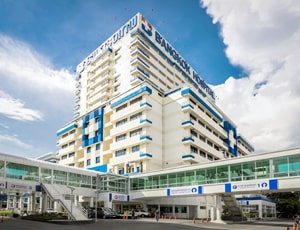
Choosing Bangpakok 9 International Hospital for Orchidectomy gives patients access to experienced urological surgeons, advanced ultrasound and imaging facilities, specialized anesthesia services, pathology laboratories, and structured postoperative monitoring. Established in 2003, the JCI, GHA accredited hospital in Bangkok, Thailand has 300 beds and provides specialized treatment for testicular and prostate-related conditions.
Orchidectomy is performed under appropriate anaesthesia, with the surgical technique determined by the underlying condition. In cases of suspected testicular cancer, the testicle and spermatic cord are typically removed through an inguinal incision and the specimen is sent for pathological examination. Patients may experience temporary pain, swelling, or bruising following surgery. Potential complications include bleeding, infection, wound problems, and, depending on whether one or both testicles are removed, hormonal or fertility-related effects.
Dubai, United Arab Emirates
Choosing Aster DM Healthcare for Orchidectomy gives patients access to experienced urological surgeons, advanced ultrasound and imaging facilities, specialized anesthesia services, pathology laboratories, and structured postoperative monitoring. Established in 1987, the JCI, NABH, NABL accredited hospital in Dubai, United Arab Emirates has 114 beds and provides specialized treatment for testicular and prostate-related conditions.
Orchidectomy is performed under appropriate anaesthesia, with the surgical technique determined by the underlying condition. In cases of suspected testicular cancer, the testicle and spermatic cord are typically removed through an inguinal incision and the specimen is sent for pathological examination. Patients may experience temporary pain, swelling, or bruising following surgery. Potential complications include bleeding, infection, wound problems, and, depending on whether one or both testicles are removed, hormonal or fertility-related effects.