Browse verified doctors or let our care team help you find the doctor best suited to your condition, treatment goals, and budget.

At Sharda Hospital, Endovascular Embolization of AVM is performed using advanced catheter-based neurovascular techniques and personalised treatment plans based on the location, size, and characteristics of the AVM. Established in 2005, this NABH hospital in Noida, India has 1200 beds and provides comprehensive neurovascular care.
Endovascular Embolisation of AVM may be recommended for selected patients with cerebral or other vascular arteriovenous malformations to reduce abnormal blood flow and lower the risk associated with the lesion. A thin catheter is navigated through the vasculature to the abnormal vessels, where materials such as liquid embolic agents or coils may be used to occlude blood flow. Pre-procedure angiography helps specialists map the AVM and plan the safest treatment strategy. Follow-up imaging is used to assess the treatment response.
Delhi, India
Choosing Fortis Flt. Lt. Rajan Dhall Hospital for Endovascular Embolization of AVM gives patients access to experienced neurovascular specialists, advanced angiography systems, and multidisciplinary treatment planning. Established in 2006, the NABH hospital in Delhi, India has 162 beds and provides specialized neurological and vascular services.
Endovascular Embolisation of an AVM may be considered when an arteriovenous malformation requires reduction of abnormal blood flow or preparation for definitive treatment. During the procedure, a catheter is carefully advanced to the vessels supplying the AVM, and an embolic agent is delivered to block targeted blood vessels. The treatment strategy depends on the AVM's size, location, feeding arteries, drainage pattern, and relationship with surrounding structures. Patients are monitored after treatment and undergo follow-up imaging to evaluate the remaining vascular abnormality.
Choosing IBS Hospital for Endovascular Embolization of AVM gives patients access to experienced neurovascular specialists, advanced angiography systems, and multidisciplinary treatment planning. Established in 2011, the NABH hospital in Delhi, India has 50 beds and provides specialized neurological and vascular services.
Endovascular Embolisation of an AVM may be considered when an arteriovenous malformation requires reduction of abnormal blood flow or preparation for definitive treatment. During the procedure, a catheter is carefully advanced to the vessels supplying the AVM, and an embolic agent is delivered to block targeted blood vessels. The treatment strategy depends on the AVM's size, location, feeding arteries, drainage pattern, and relationship with surrounding structures. Patients are monitored after treatment and undergo follow-up imaging to evaluate the remaining vascular abnormality.
At Clear Medi Hospital, Karkardooma, Endovascular Embolization of AVM is performed using advanced catheter-based neurovascular techniques and personalised treatment plans based on the location, size, and characteristics of the AVM. Established in 2017, this NABH, NABL hospital in Delhi, India has 100 beds and provides comprehensive neurovascular care.
Endovascular Embolisation of AVM may be recommended for selected patients with cerebral or other vascular arteriovenous malformations to reduce abnormal blood flow and lower the risk associated with the lesion. A thin catheter is navigated through the vasculature to the abnormal vessels, where materials such as liquid embolic agents or coils may be used to occlude blood flow. Pre-procedure angiography helps specialists map the AVM and plan the safest treatment strategy. Follow-up imaging is used to assess the treatment response.
VPS Rockland Hospital offers advanced Endovascular Embolisation of Arteriovenous Malformation (AVM) using modern neurointerventional techniques and internationally accepted treatment protocols. Established in 2013, the NABH, NABL hospital is located in Gurgaon, India and has 345 beds, providing comprehensive neurological and vascular care for local and international patients.
Endovascular Embolisation of an AVM is a minimally invasive procedure used to reduce or block abnormal blood flow through an arteriovenous malformation, a cluster of abnormal blood vessels connecting arteries and veins. During the procedure, a catheter is guided through the blood vessels to the AVM, where an embolic material is delivered to reduce blood flow or close selected vessels. It may be used as a standalone treatment or as a pre-treatment before surgery or stereotactic radiosurgery. Detailed angiography and brain imaging are generally performed before treatment to assess the AVM.
Choosing Bai Jerbai Wadia Hospital for Children for Endovascular Embolization of AVM gives patients access to experienced neurovascular specialists, advanced angiography systems, and multidisciplinary treatment planning. Established in 1929, the AACI hospital in Mumbai, India has 350 beds and provides specialized neurological and vascular services.
Endovascular Embolisation of an AVM may be considered when an arteriovenous malformation requires reduction of abnormal blood flow or preparation for definitive treatment. During the procedure, a catheter is carefully advanced to the vessels supplying the AVM, and an embolic agent is delivered to block targeted blood vessels. The treatment strategy depends on the AVM's size, location, feeding arteries, drainage pattern, and relationship with surrounding structures. Patients are monitored after treatment and undergo follow-up imaging to evaluate the remaining vascular abnormality.
Chennai, India
The Madras Institute of Orthopedics and Traumatology offers advanced Endovascular Embolisation of Arteriovenous Malformation (AVM) using modern neurointerventional techniques and internationally accepted treatment protocols. Established in 1999, the JCI, NABH hospital is located in Chennai, India and has 1000 beds, providing comprehensive neurological and vascular care for local and international patients.
Endovascular Embolisation of an AVM is a minimally invasive procedure used to reduce or block abnormal blood flow through an arteriovenous malformation, a cluster of abnormal blood vessels connecting arteries and veins. During the procedure, a catheter is guided through the blood vessels to the AVM, where an embolic material is delivered to reduce blood flow or close selected vessels. It may be used as a standalone treatment or as a pre-treatment before surgery or stereotactic radiosurgery. Detailed angiography and brain imaging are generally performed before treatment to assess the AVM.
Choosing Sanar International Hospital for Endovascular Embolization of AVM gives patients access to experienced neurovascular specialists, advanced angiography systems, and multidisciplinary treatment planning. Established in 2018, the NABH, JCI, AACI hospital in Gurugram, India has 150 beds and provides specialized neurological and vascular services.
Endovascular Embolisation of an AVM may be considered when an arteriovenous malformation requires reduction of abnormal blood flow or preparation for definitive treatment. During the procedure, a catheter is carefully advanced to the vessels supplying the AVM, and an embolic agent is delivered to block targeted blood vessels. The treatment strategy depends on the AVM's size, location, feeding arteries, drainage pattern, and relationship with surrounding structures. Patients are monitored after treatment and undergo follow-up imaging to evaluate the remaining vascular abnormality.
Choosing Manipal Hospital, Ghaziabad for Endovascular Embolization of AVM gives patients access to experienced neurovascular specialists, advanced angiography systems, and multidisciplinary treatment planning. Established in 2010, the NABH, NABL hospital in Ghaziabad, India has 9500 beds and provides specialized neurological and vascular services.
Endovascular Embolisation of an AVM may be considered when an arteriovenous malformation requires reduction of abnormal blood flow or preparation for definitive treatment. During the procedure, a catheter is carefully advanced to the vessels supplying the AVM, and an embolic agent is delivered to block targeted blood vessels. The treatment strategy depends on the AVM's size, location, feeding arteries, drainage pattern, and relationship with surrounding structures. Patients are monitored after treatment and undergo follow-up imaging to evaluate the remaining vascular abnormality.
Shanti Mukand Hospital is a trusted healthcare provider for Endovascular Embolization of AVM, offering specialised endovascular treatment supported by experienced interventional neuroradiologists and neurosurgeons, as well as a modern neurovascular infrastructure. Established in 1995, the NABH, NABL hospital is situated in Delhi, India and has 200 beds.
AVM Embolisation is a catheter-based treatment designed to reduce blood flow through an abnormal artery-to-vein connection. It may be considered when an AVM requires treatment and can be safely accessed through the blood vessels. Depending on the lesion's anatomy, embolisation may partially or completely occlude the abnormal vascular channels and may be combined with surgical removal or stereotactic radiosurgery. Comprehensive vascular imaging, particularly cerebral angiography for brain AVMs, helps determine the treatment approach.
VPS Lakeshore Hospital offers advanced Endovascular Embolisation of Arteriovenous Malformation (AVM) using modern neurointerventional techniques and internationally accepted treatment protocols. Established in 2003, the NABH, ISO hospital is located in Kochi, India and has 350 beds, providing comprehensive neurological and vascular care for local and international patients.
Endovascular Embolisation of an AVM is a minimally invasive procedure used to reduce or block abnormal blood flow through an arteriovenous malformation, a cluster of abnormal blood vessels connecting arteries and veins. During the procedure, a catheter is guided through the blood vessels to the AVM, where an embolic material is delivered to reduce blood flow or close selected vessels. It may be used as a standalone treatment or as a pre-treatment before surgery or stereotactic radiosurgery. Detailed angiography and brain imaging are generally performed before treatment to assess the AVM.
The Medical Park is a trusted healthcare provider for Endovascular Embolization of AVM, offering specialised endovascular treatment supported by experienced interventional neuroradiologists and neurosurgeons, as well as a modern neurovascular infrastructure. Established in 1987, the hospital is situated in Chennai, India and has 300 beds.
AVM Embolisation is a catheter-based treatment designed to reduce blood flow through an abnormal artery-to-vein connection. It may be considered when an AVM requires treatment and can be safely accessed through the blood vessels. Depending on the lesion's anatomy, embolisation may partially or completely occlude the abnormal vascular channels and may be combined with surgical removal or stereotactic radiosurgery. Comprehensive vascular imaging, particularly cerebral angiography for brain AVMs, helps determine the treatment approach.
NeuroGen Brain and Spine Institute offers advanced Endovascular Embolisation of Arteriovenous Malformation (AVM) using modern neurointerventional techniques and internationally accepted treatment protocols. Established in 2008, the ISO hospital is located in Mumbai, India and has 40 beds, providing comprehensive neurological and vascular care for local and international patients.
Endovascular Embolisation of an AVM is a minimally invasive procedure used to reduce or block abnormal blood flow through an arteriovenous malformation, a cluster of abnormal blood vessels connecting arteries and veins. During the procedure, a catheter is guided through the blood vessels to the AVM, where an embolic material is delivered to reduce blood flow or close selected vessels. It may be used as a standalone treatment or as a pre-treatment before surgery or stereotactic radiosurgery. Detailed angiography and brain imaging are generally performed before treatment to assess the AVM.
Apollo Multispecialty Hospitals offers advanced Endovascular Embolisation of Arteriovenous Malformation (AVM) using modern neurointerventional techniques and internationally accepted treatment protocols. Established in 2003, the JCI, ISO hospital is located in Kolkata, India and has 700 beds, providing comprehensive neurological and vascular care for local and international patients.
Endovascular Embolisation of an AVM is a minimally invasive procedure used to reduce or block abnormal blood flow through an arteriovenous malformation, a cluster of abnormal blood vessels connecting arteries and veins. During the procedure, a catheter is guided through the blood vessels to the AVM, where an embolic material is delivered to reduce blood flow or close selected vessels. It may be used as a standalone treatment or as a pre-treatment before surgery or stereotactic radiosurgery. Detailed angiography and brain imaging are generally performed before treatment to assess the AVM.
Apollo Hospital offers advanced Endovascular Embolisation of Arteriovenous Malformation (AVM) using modern neurointerventional techniques and internationally accepted treatment protocols. Established in 1983, the JCI hospital is located in Chennai, India and has 550 beds, providing comprehensive neurological and vascular care for local and international patients.
Endovascular Embolisation of an AVM is a minimally invasive procedure used to reduce or block abnormal blood flow through an arteriovenous malformation, a cluster of abnormal blood vessels connecting arteries and veins. During the procedure, a catheter is guided through the blood vessels to the AVM, where an embolic material is delivered to reduce blood flow or close selected vessels. It may be used as a standalone treatment or as a pre-treatment before surgery or stereotactic radiosurgery. Detailed angiography and brain imaging are generally performed before treatment to assess the AVM.

Ms Patience from Uganda travelled to India for cosmetic surgery in May 2017. She got her treatment done in Asian Institute of Medical Sciences in…

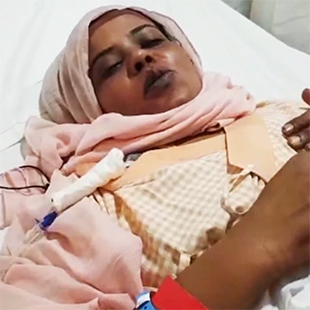
Lobna (from Sudan) was diagnosed with meningioma, a form of non-cancerous brain tumor. Her family members decided to take her to one of the most…