Explore trusted hospitals and care options, or get personalised support to find a suitable option based on your treatment needs, preferences, and budget.

Abu Dhabi, United Arab Emirates
NMC Specialty Hospital - Al Ain provides specialized Cranioplasty with a focus on restoring the shape and structural integrity of the skull, protecting the brain, and supporting functional recovery. Established in 2007, the JCI accredited hospital is located in Abu Dhabi, United Arab Emirates and operates 100 beds with modern neurosurgical and reconstructive facilities.
Cranioplasty is a surgical procedure used to repair or reconstruct a portion of the skull that is missing, damaged, or removed during an earlier operation. The skull defect may be reconstructed using the patient's own preserved bone or a synthetic material such as a customized implant. It may be performed after trauma, decompressive craniectomy, infection-related bone loss, or other conditions. Preoperative imaging helps assess the skull defect and plan the reconstruction.
Dubai, United Arab Emirates
Medeor 24X7 Hospital provides specialized Cranioplasty with an emphasis on precise skull reconstruction, secure implant fixation, and personalized postoperative monitoring. Established in 2007, the JCI accredited hospital is based in Dubai, United Arab Emirates and has 100 beds supported by modern neurosurgical and reconstructive facilities.
Cranioplasty is performed to reconstruct a section of the skull that has been surgically removed or lost because of injury, disease, or a previous procedure. The surgeon carefully positions the replacement bone or implant to match the patient's skull anatomy and secures it using appropriate fixation systems. Depending on the case, reconstruction may use stored autologous bone or materials such as titanium or customized synthetic implants. Postoperative care includes monitoring for infection, bleeding, neurological changes, and proper healing of the reconstructed area.
Sharjah, United Arab Emirates
Zulekha Hospital Sharjah offers dedicated Cranioplasty supported by experienced neurosurgeons, advanced 3D imaging, and modern cranial reconstruction facilities. Established in 1992, the JCI accredited hospital is situated in Sharjah, United Arab Emirates and has 185 beds supporting specialized neuroreconstructive care.
Cranioplasty involves surgically repairing a defect in the skull by replacing the missing section with an appropriate graft or implant. The procedure may follow decompressive craniectomy, skull fracture, congenital defects, or other causes of bone loss. Depending on the circumstances, the patient's preserved skull bone, titanium, or a patient-specific synthetic implant may be used. CT imaging is commonly performed before surgery to accurately assess the defect and design or select the reconstruction.
Abu Dhabi, United Arab Emirates
Burjeel Medical City offers dedicated Cranioplasty supported by experienced neurosurgeons, advanced 3D imaging, and modern cranial reconstruction facilities. Established in 2017, the ISO accredited hospital is situated in Abu Dhabi, United Arab Emirates and has 350 beds supporting specialized neuroreconstructive care.
Cranioplasty involves surgically repairing a defect in the skull by replacing the missing section with an appropriate graft or implant. The procedure may follow decompressive craniectomy, skull fracture, congenital defects, or other causes of bone loss. Depending on the circumstances, the patient's preserved skull bone, titanium, or a patient-specific synthetic implant may be used. CT imaging is commonly performed before surgery to accurately assess the defect and design or select the reconstruction.
Abu Dhabi, United Arab Emirates
NMC Specialty Hospital offers dedicated Cranioplasty supported by experienced neurosurgeons, advanced 3D imaging, and modern cranial reconstruction facilities. Established in 1975, the JCI, NABH accredited hospital is situated in Abu Dhabi, United Arab Emirates and has 104 beds supporting specialized neuroreconstructive care.
Cranioplasty involves surgically repairing a defect in the skull by replacing the missing section with an appropriate graft or implant. The procedure may follow decompressive craniectomy, skull fracture, congenital defects, or other causes of bone loss. Depending on the circumstances, the patient's preserved skull bone, titanium, or a patient-specific synthetic implant may be used. CT imaging is commonly performed before surgery to accurately assess the defect and design or select the reconstruction.
Dubai, United Arab Emirates
NMC Specialty Hospital, Al Nahda provides specialized Cranioplasty with an emphasis on precise skull reconstruction, secure implant fixation, and personalized postoperative monitoring. Established in 2004, the JCI accredited hospital is based in Dubai, United Arab Emirates and has 187 beds supported by modern neurosurgical and reconstructive facilities.
Cranioplasty is performed to reconstruct a section of the skull that has been surgically removed or lost because of injury, disease, or a previous procedure. The surgeon carefully positions the replacement bone or implant to match the patient's skull anatomy and secures it using appropriate fixation systems. Depending on the case, reconstruction may use stored autologous bone or materials such as titanium or customized synthetic implants. Postoperative care includes monitoring for infection, bleeding, neurological changes, and proper healing of the reconstructed area.
Abu Dhabi, United Arab Emirates
Lifecare Hospital, Musaffah provides specialized Cranioplasty with an emphasis on precise skull reconstruction, secure implant fixation, and personalized postoperative monitoring. Established in 2007, the JCI accredited hospital is based in Abu Dhabi, United Arab Emirates and has 200 beds supported by modern neurosurgical and reconstructive facilities.
Cranioplasty is performed to reconstruct a section of the skull that has been surgically removed or lost because of injury, disease, or a previous procedure. The surgeon carefully positions the replacement bone or implant to match the patient's skull anatomy and secures it using appropriate fixation systems. Depending on the case, reconstruction may use stored autologous bone or materials such as titanium or customized synthetic implants. Postoperative care includes monitoring for infection, bleeding, neurological changes, and proper healing of the reconstructed area.
Ajman, United Arab Emirates
Thumbay University Hospital, Ajman provides specialized Cranioplasty with a focus on restoring the shape and structural integrity of the skull, protecting the brain, and supporting functional recovery. Established in 2002, the JCI accredited hospital is located in Ajman, United Arab Emirates and operates 350 beds with modern neurosurgical and reconstructive facilities.
Cranioplasty is a surgical procedure used to repair or reconstruct a portion of the skull that is missing, damaged, or removed during an earlier operation. The skull defect may be reconstructed using the patient's own preserved bone or a synthetic material such as a customized implant. It may be performed after trauma, decompressive craniectomy, infection-related bone loss, or other conditions. Preoperative imaging helps assess the skull defect and plan the reconstruction.

Ms Patience from Uganda travelled to India for cosmetic surgery in May 2017. She got her treatment done in Asian Institute of Medical Sciences in…

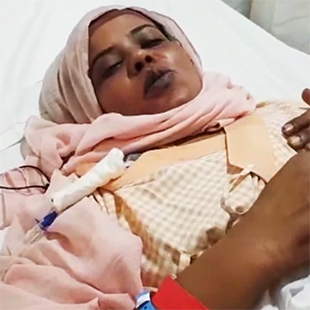
Lobna (from Sudan) was diagnosed with meningioma, a form of non-cancerous brain tumor. Her family members decided to take her to one of the most…