Browse verified doctors or let our care team help you find the doctor best suited to your condition, treatment goals, and budget.
Delhi, India
BLK-Max Super Speciality Hospital offers dedicated Cerebral Angioplasty supported by experienced neurointerventional specialists, advanced angiography systems, and modern catheterization facilities. Established in 1959, the JCI, NABH accredited hospital is situated in Delhi, India and has 650 beds supporting specialized stroke and neurovascular treatment.
Cerebral Angioplasty is a catheter-based treatment intended to restore or improve circulation through a narrowed cerebral artery. The specialist introduces a catheter through an access artery and carefully advances it to the affected blood vessel. A small balloon is then inflated at the site of stenosis to enlarge the narrowed segment. Depending on the anatomy and clinical situation, additional stenting may be performed. Patients are closely monitored after treatment for neurological and vascular complications.
At Medanta - The Medicity, Cerebral Angioplasty is performed using advanced catheter-based techniques and specialized neurovascular imaging. Established in 2009, the JCI, NABH accredited hospital in Gurgaon, India has 1250 beds and provides comprehensive neurological and interventional care.
Cerebral Angioplasty aims to improve blood flow through a narrowed artery within or supplying the brain. During the procedure, a thin catheter is guided to the affected vessel and a small balloon is positioned across the narrowed segment. Controlled balloon inflation helps widen the artery, after which the balloon is removed. A stent may be considered in selected situations. Detailed angiographic imaging is generally used to identify the narrowing and guide the intervention.
Ghaziabad, India
Max Super Specialty Hospital, Vaishali offers dedicated Cerebral Angioplasty supported by experienced neurointerventional specialists, advanced angiography systems, and modern catheterization facilities. Established in 2008, the NABL, NABH accredited hospital is situated in Ghaziabad, India and has 370 beds supporting specialized stroke and neurovascular treatment.
Cerebral Angioplasty is a catheter-based treatment intended to restore or improve circulation through a narrowed cerebral artery. The specialist introduces a catheter through an access artery and carefully advances it to the affected blood vessel. A small balloon is then inflated at the site of stenosis to enlarge the narrowed segment. Depending on the anatomy and clinical situation, additional stenting may be performed. Patients are closely monitored after treatment for neurological and vascular complications.
Max Hospital, Gurgaon provides specialized Cerebral Angioplasty with a focus on restoring blood flow through narrowed cerebral arteries and providing individualized neurovascular care. Established in 2007, the ISO, NABH, NABL accredited hospital is located in Gurgaon, India and operates 104 beds with modern neurointerventional and stroke-care facilities.
Cerebral Angioplasty is a minimally invasive procedure used to widen a significantly narrowed artery supplying the brain. A catheter with a small balloon is guided through the blood vessels to the narrowed area, where the balloon is carefully inflated to improve the vessel's diameter and blood flow. In selected cases, a stent may also be placed to help keep the artery open. The procedure may be considered for carefully selected patients with intracranial arterial stenosis.
Fortis Escorts Heart Institute, Okhla provides specialized Cerebral Angioplasty with a focus on restoring blood flow through narrowed cerebral arteries and providing individualized neurovascular care. Established in 1988, the NABL accredited hospital is located in Delhi, India and operates 310 beds with modern neurointerventional and stroke-care facilities.
Cerebral Angioplasty is a minimally invasive procedure used to widen a significantly narrowed artery supplying the brain. A catheter with a small balloon is guided through the blood vessels to the narrowed area, where the balloon is carefully inflated to improve the vessel's diameter and blood flow. In selected cases, a stent may also be placed to help keep the artery open. The procedure may be considered for carefully selected patients with intracranial arterial stenosis.
Indraprastha Apollo Hospital offers dedicated Cerebral Angioplasty supported by experienced neurointerventional specialists, advanced angiography systems, and modern catheterization facilities. Established in 1996, the JCI accredited hospital is situated in Delhi, India and has 710 beds supporting specialized stroke and neurovascular treatment.
Cerebral Angioplasty is a catheter-based treatment intended to restore or improve circulation through a narrowed cerebral artery. The specialist introduces a catheter through an access artery and carefully advances it to the affected blood vessel. A small balloon is then inflated at the site of stenosis to enlarge the narrowed segment. Depending on the anatomy and clinical situation, additional stenting may be performed. Patients are closely monitored after treatment for neurological and vascular complications.
At Apollo Hospitals, Cerebral Angioplasty is performed using advanced catheter-based techniques and specialized neurovascular imaging. Established in 1988, the JCI accredited hospital in Hyderabad, India has 550 beds and provides comprehensive neurological and interventional care.
Cerebral Angioplasty aims to improve blood flow through a narrowed artery within or supplying the brain. During the procedure, a thin catheter is guided to the affected vessel and a small balloon is positioned across the narrowed segment. Controlled balloon inflation helps widen the artery, after which the balloon is removed. A stent may be considered in selected situations. Detailed angiographic imaging is generally used to identify the narrowing and guide the intervention.
Star Hospitals offers dedicated Cerebral Angioplasty supported by experienced neurointerventional specialists, advanced angiography systems, and modern catheterization facilities. Established in 2008, the NABH, NABL accredited hospital is situated in Hyderabad, India and has 435 beds supporting specialized stroke and neurovascular treatment.
Cerebral Angioplasty is a catheter-based treatment intended to restore or improve circulation through a narrowed cerebral artery. The specialist introduces a catheter through an access artery and carefully advances it to the affected blood vessel. A small balloon is then inflated at the site of stenosis to enlarge the narrowed segment. Depending on the anatomy and clinical situation, additional stenting may be performed. Patients are closely monitored after treatment for neurological and vascular complications.
Choosing Sterling Wockhardt Hospital for Cerebral Angioplasty gives patients access to specialist-led neurovascular intervention, advanced imaging technology, and coordinated stroke-care services. Established in 2001, the NABL accredited hospital is located in Mumbai, India and operates 225 beds with modern interventional neurology infrastructure.
Cerebral Angioplasty may be considered for selected patients with severe narrowing of arteries supplying the brain when improved blood flow is clinically indicated. The procedure involves guiding a balloon catheter to the narrowed section and inflating it under imaging guidance to widen the vessel. In certain cases, a stent may be used to support the treated artery. Careful assessment with angiography and other vascular imaging helps determine whether angioplasty is appropriate and plan the intervention safely.
At Global Health City, Cerebral Angioplasty is performed using advanced catheter-based techniques and specialized neurovascular imaging. Established in 1999, the NABH, NABL accredited hospital in Chennai, India has 200 beds and provides comprehensive neurological and interventional care.
Cerebral Angioplasty aims to improve blood flow through a narrowed artery within or supplying the brain. During the procedure, a thin catheter is guided to the affected vessel and a small balloon is positioned across the narrowed segment. Controlled balloon inflation helps widen the artery, after which the balloon is removed. A stent may be considered in selected situations. Detailed angiographic imaging is generally used to identify the narrowing and guide the intervention.
Fortis Malar Hospital offers dedicated Cerebral Angioplasty supported by experienced neurointerventional specialists, advanced angiography systems, and modern catheterization facilities. Established in 1989, the NABH accredited hospital is situated in Chennai, India and has 180 beds supporting specialized stroke and neurovascular treatment.
Cerebral Angioplasty is a catheter-based treatment intended to restore or improve circulation through a narrowed cerebral artery. The specialist introduces a catheter through an access artery and carefully advances it to the affected blood vessel. A small balloon is then inflated at the site of stenosis to enlarge the narrowed segment. Depending on the anatomy and clinical situation, additional stenting may be performed. Patients are closely monitored after treatment for neurological and vascular complications.
Choosing nanavati Super Speciality Hospital for Cerebral Angioplasty gives patients access to specialist-led neurovascular intervention, advanced imaging technology, and coordinated stroke-care services. Established in 1950, the NABH accredited hospital is located in Mumbai, India and operates 350 beds with modern interventional neurology infrastructure.
Cerebral Angioplasty may be considered for selected patients with severe narrowing of arteries supplying the brain when improved blood flow is clinically indicated. The procedure involves guiding a balloon catheter to the narrowed section and inflating it under imaging guidance to widen the vessel. In certain cases, a stent may be used to support the treated artery. Careful assessment with angiography and other vascular imaging helps determine whether angioplasty is appropriate and plan the intervention safely.
Delhi, India
Max Super Speciality Hospital, Patparganj provides specialized Cerebral Angioplasty with a focus on restoring blood flow through narrowed cerebral arteries and providing individualized neurovascular care. Established in 2005, the NABH, NABL, AACI accredited hospital is located in Delhi, India and operates 400 beds with modern neurointerventional and stroke-care facilities.
Cerebral Angioplasty is a minimally invasive procedure used to widen a significantly narrowed artery supplying the brain. A catheter with a small balloon is guided through the blood vessels to the narrowed area, where the balloon is carefully inflated to improve the vessel's diameter and blood flow. In selected cases, a stent may also be placed to help keep the artery open. The procedure may be considered for carefully selected patients with intracranial arterial stenosis.
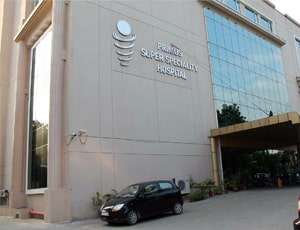
At Primus Super Speciality Hospital, Cerebral Angioplasty is performed using advanced catheter-based techniques and specialized neurovascular imaging. Established in 2001, the NABH accredited hospital in Delhi, India has 250 beds and provides comprehensive neurological and interventional care.
Cerebral Angioplasty aims to improve blood flow through a narrowed artery within or supplying the brain. During the procedure, a thin catheter is guided to the affected vessel and a small balloon is positioned across the narrowed segment. Controlled balloon inflation helps widen the artery, after which the balloon is removed. A stent may be considered in selected situations. Detailed angiographic imaging is generally used to identify the narrowing and guide the intervention.
Srikara Hospitals, Miyapur provides specialized Cerebral Angioplasty with an emphasis on precise vessel treatment, restoration of cerebral circulation, and comprehensive neurointerventional care. Established in 2013, the NABH accredited hospital is based in Hyderabad, India and has 200 beds supported by advanced neurological and catheter-based treatment facilities.
Cerebral Angioplasty involves mechanically widening a narrowed blood vessel to improve blood flow to the brain. After vascular access is obtained, the catheter is directed to the affected artery using real-time imaging. A small balloon is positioned within the stenotic segment and inflated in a controlled manner before being withdrawn. In selected cases, angioplasty may be accompanied by stent placement. The medical team monitors neurological status and the access site following the procedure to identify any complications early.

Ms Patience from Uganda travelled to India for cosmetic surgery in May 2017. She got her treatment done in Asian Institute of Medical Sciences in…

Lobna (from Sudan) was diagnosed with meningioma, a form of non-cancerous brain tumor. Her family members decided to take her to one of the most…